The paranoia of the 1960s Cold War pushed American intelligence to the absolute brink of reason. Desperate to eavesdrop on Soviet officials without detection, the CIA’s Directorate of Science and Technology needed an operative that could slip into foreign embassies, secure compounds, and clandestine park-bench meetings entirely unnoticed. Their solution was as audacious as it was unhinged: they would turn a common housecat into a living, breathing cybernetic spy.
Welcome to the unbelievable, slightly gruesome, and completely chaotic reality of Project Acoustic Kitty.
The $20 Million Cyborg Feline
The premise sounded like a fever dream from a James Bond villain. Who, after all, suspects a stray tabby of working for the federal government?
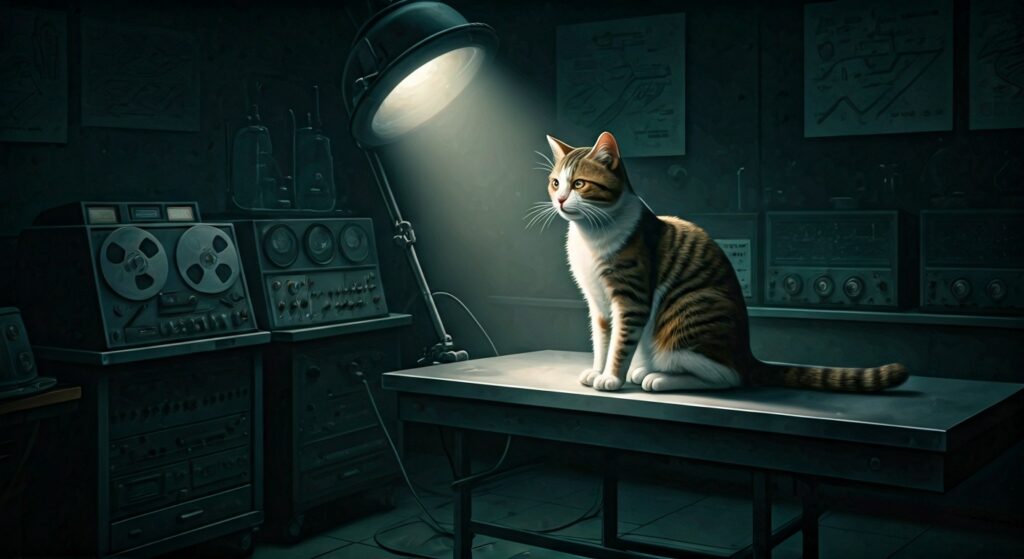
But the technical execution of Acoustic Kitty was a jaw-dropping marvel of 1960s miniaturization—and a frankly horrifying feat of veterinary surgery. In a highly classified procedure, a veterinary surgeon implanted a microscopic microphone directly into a cat’s ear canal. A small radio transmitter was embedded at the base of its skull, and a fine wire antenna was meticulously woven through the animal’s long fur, trailing all the way down its tail.
The project took five grueling years and cost American taxpayers an estimated $20 million. Yet, despite the cutting-edge technology, the agency quickly slammed into a fundamental, age-old problem that any pet owner could have warned them about: cats are notoriously impossible to train.
The cybernetic feline frequently wandered off-script, easily distracted by passing birds, environmental noises, or simple hunger. To combat this, the CIA allegedly performed additional procedures to override the cat’s natural hunger responses, attempting to train the animal to respond to ultrasonic cues. The feline was no longer just a pet; it was a million-dollar machine living on the edge of science and madness.
The Wisconsin Avenue Stakeout
After years of development, the CIA finally deemed their furry operative ready for its first field test. The tension inside the agency must have been palpable.
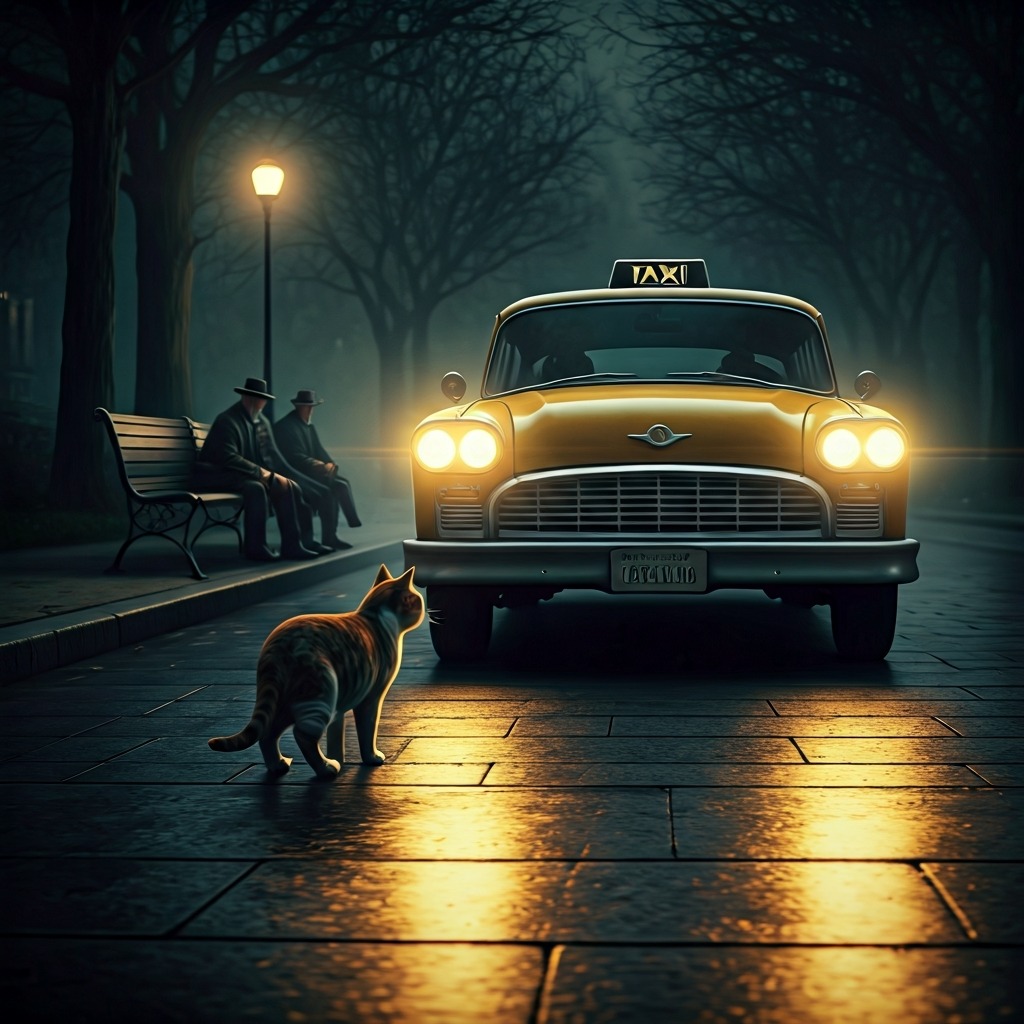
Operatives loaded the cat into an unmarked surveillance van and drove to a park on Wisconsin Avenue in Washington, D.C. Their target: two men sitting on a park bench, believed to be Soviet personnel. The plan was elegantly simple. They would open the van door, release the cat, and listen in as it casually strolled past the bench, broadcasting the enemy’s deepest secrets directly into the ears of American intelligence.
Operatives slid the van door open. The cat stepped out into the daylight.
What happened next is the stuff of legendary Cold War lore. Depending on who you ask, the climax of Project Acoustic Kitty ends in either a dark comedy of errors or a quiet bureaucratic whimper.
The Taxi vs. The Truth
For decades, the most famous version of the story came from Victor Marchetti, a former CIA officer turned whistleblower in the 1970s. According to Marchetti’s dramatic account, disaster struck almost immediately. Mere seconds after stepping into the street, the multi-million-dollar feline was struck and killed by a passing taxi. In the blink of an eye, $20 million and five years of cutting-edge research were flattened on the asphalt.
It is a story that perfectly encapsulates the sheer hubris of government overreach. But is it true?
Decades later, a plot twist emerged that challenged the infamous “taxi myth.” In 2013, Robert Wallace, a former director of the CIA’s Office of Technical Service, co-authored a book detailing the agency’s historical gadgetry. Wallace firmly disputed Marchetti’s gruesome account, stating unequivocally that the cat was never killed by a taxi.
Instead, the field tests revealed a much more mundane, yet equally defeating reality: the cat’s behavior was simply too unpredictable for reliable espionage. The project wasn’t a failure because of a sudden, violent accident, but because of the inherent, untamable nature of felines. You can wire a cat with millions of dollars of state-of-the-art tech, but if it decides it would rather sleep under a bush than spy on the Soviets, it is going to sleep under a bush. According to Wallace, the expensive equipment was safely removed, and the cat lived out a long, happy life as a normal pet.
The Bizarre Epitaph of Acoustic Kitty
Regardless of which ending you believe—the tragic taxi or the triumphant retirement—Project Acoustic Kitty was officially abandoned.
The final word on the matter came in the form of a heavily redacted 1967 CIA memo titled Views on Trained Cats, which was later declassified and serves as the project’s bizarre epitaph. The memo actually praised the researchers for their pioneering work in animal behavior and anatomical miniaturization, noting that they did prove cats could be trained to move short distances.
However, it ultimately concluded that “the environmental and security factors in using this technique in a foreign situation force us to conclude that for our (intelligence) purposes, it would not be practical.”
Today, Acoustic Kitty stands as a fascinating testament to the extreme lengths and massive budgets that characterized Cold War intelligence. It is enduring proof that while the government might be capable of engineering marvels and keeping world-altering secrets, they still cannot tell a cat what to do.