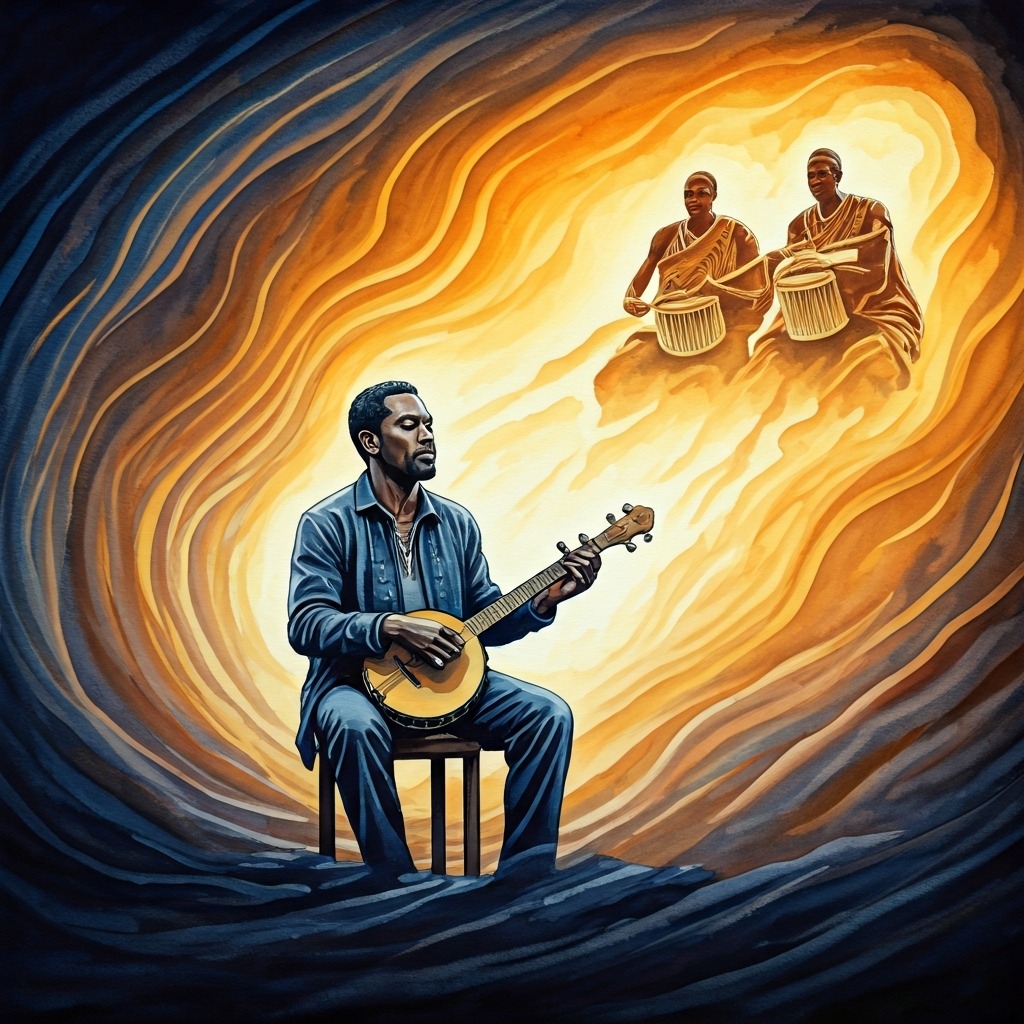
Picture a banjo player. Chances are, you’re imagining a man in overalls, sitting on a weathered Appalachian porch, picking a rapid-fire bluegrass tune. It is the quintessential image of rural, white Americana.
But what if that image is the result of one of the most successful cultural cover-ups in history?
The true story of the banjo is not a tale of mountain folk. It is a story of survival, stolen genius, and a centuries-old musical heist.
The Ghost in the Gourd
Long before it became the twangy heartbeat of country music, the banjo was an instrument of absolute defiance. When millions of Africans were forced into the brutal nightmare of the Transatlantic Slave Trade, they were stripped of everything—their homes, their families, their possessions. But their captors could not strip them of their memories. Hidden within the minds of the enslaved was the technological blueprint for their music.
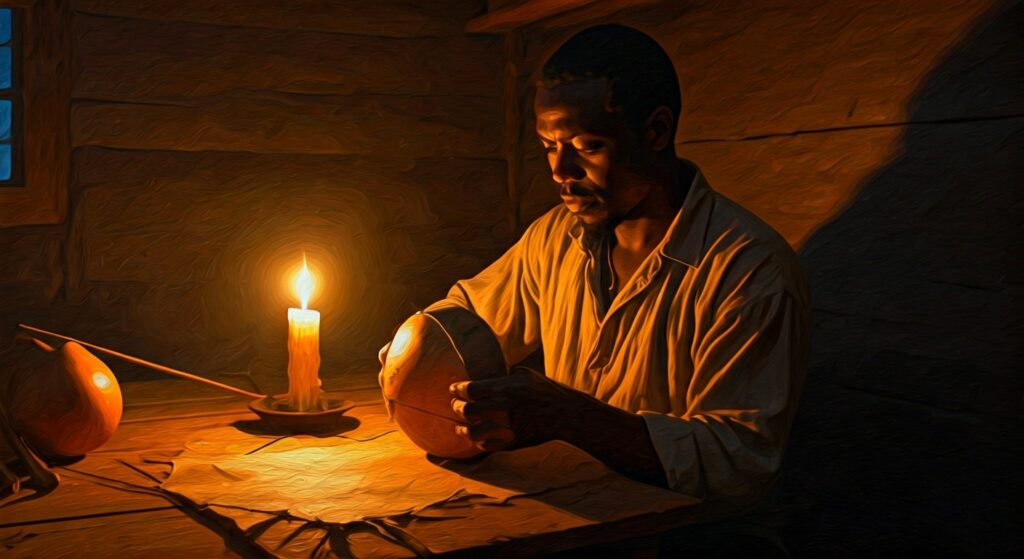
By the 17th century, enslaved Africans on Caribbean and North American plantations began resurrecting the sounds of their homeland. Scavenging whatever they could find, they hollowed out gourds, stretched animal skins taut across the openings, and attached wooden necks. They called these creations the banza, the banju, or the bangoe.
These instruments were direct descendants of traditional West African spike lutes, most notably the Akonting, played by the Jola people of Senegambia. The smoking gun linking them? A distinctive, short drone string meant to be plucked with the thumb. It is the signature, driving sound of the banjo—and it is undeniably, one hundred percent West African.
A Stolen String and a Hijacked Legacy
How did an instrument forged by enslaved Black people become the poster child for white rural America? The plot thickens in the 1830s.
Enter Joel Walker Sweeney, a white performer who learned to play the gourd lute directly from enslaved people. But instead of honoring his teachers, Sweeney took the instrument to the minstrel stage, performing in blackface. These wildly popular, deeply racist shows catapulted the banjo into the mainstream, initiating the sinister process of severing the instrument from its true creators.
For over a century, history books credited Sweeney with “inventing” the banjo’s fifth string. It was a lie hidden in plain sight. Modern ethnomusicologists have definitively proven that Sweeney invented nothing. That short thumb string was a fundamental characteristic of the banjo’s West African ancestors all along.
The Great Whitewashing
As the 19th century drew to a close, the music industry recognized a massive cash cow. To market the banjo to wealthy, white middle-class audiences, manufacturers gave the instrument a complete, sanitized makeover.
They ditched the traditional African gourd, replacing it with a wooden rim and metal tone rings. They mass-produced it, slapped new marketing on it, and effectively whitewashed its rich, resilient African roots. It was an identity theft so successful that, for generations, the banjo’s true origins were buried under a mountain of commercialized Americana.
The Truth Strikes a Chord
But history, no matter how deeply buried, always has a way of rising to the surface.
In recent decades, a powerful reclamation movement has taken hold. Brilliant historians, ethnomusicologists, and musicians like Rhiannon Giddens and Béla Fleck have traveled the globe, studying instruments like the Akonting and restoring the true narrative of the banjo.
When they play, they aren’t just making music; they are resurrecting ghosts. They have proven that the banjo isn’t merely a prop of Appalachian folk—it is a profound testament to Black survival, genius, and the enduring power of African culture in the Americas. The banjo is the pulse of a people who survived against all odds, hiding their brilliance in plain sight.