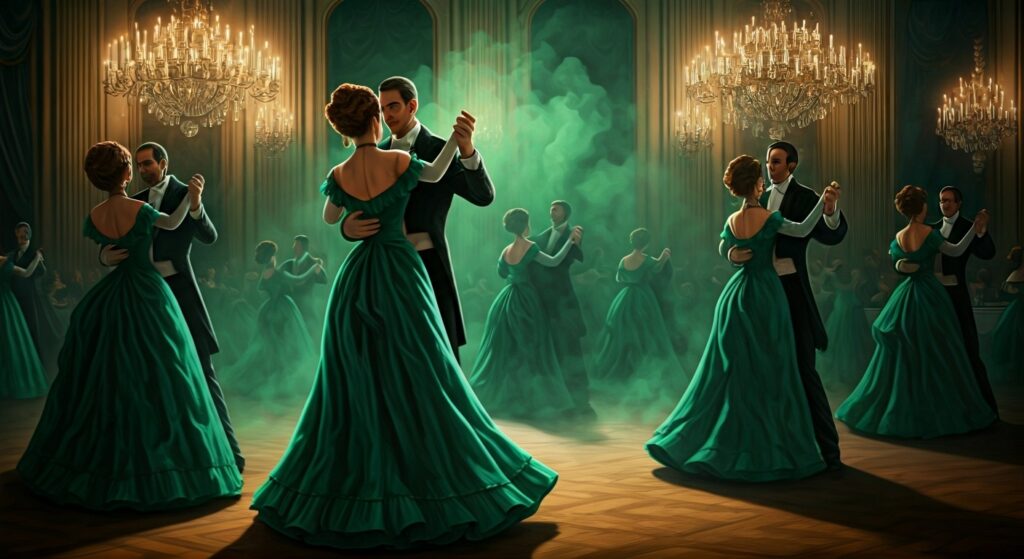
Imagine a glittering Victorian ball. The music swells, the chandeliers gleam, and women waltz across the floor in spectacular, emerald-hued gowns. It is a scene of unparalleled elegance. But as the dancers twirl, an invisible killer is shed into the air—a fine, toxic dust settling into the lungs of everyone in the room. Sometimes, the most terrifying monsters don’t lurk in the shadows. Sometimes, they are woven into the fabric of everyday life, disguised as the most beautiful thing you’ve ever seen.
A Desperate Thirst for Nature
To understand this particular nightmare, you have to understand the smog-choked, soot-stained reality of the 19th century. The Industrial Revolution had turned cities into gray, dreary landscapes. The Victorians, desperate for a reprieve, became obsessed with bringing the outside world indoors. They craved lush, vibrant colors—specifically, green.
Before this era, green dyes were a massive headache. They were notoriously unstable, fading quickly into sad, muddy hues, or they required dull, complicated mixtures of blue and yellow.
But in 1775, a Swedish chemist named Carl Wilhelm Scheele changed everything. He invented a synthetic green pigment that was incredibly vibrant, brilliantly luminous, and—crucially—resistant to fading. It was dubbed “Scheele’s Green,” and it took the world by storm. Later derivatives, like Paris Green and Emerald Green, only fueled the craze.
There was just one tiny, rather fatal problem. The secret ingredient that gave Scheele’s Green its breathtaking brilliance was copper arsenite.
Yes. Arsenic.
Dressed to Kill
Looking back at the historical record, it is terrifying to see how quickly this pigment infiltrated everyday life. By the 19th century, Scheele’s Green was literally everywhere.
It wasn’t just used in paint. It was used to dye the luxurious silk ballgowns of London’s elite. It was painted onto wooden children’s toys. It tinted the covers of books and colored the artificial floral arrangements that adorned women’s hair. Horrifyingly, it was even used to dye candies and cake frostings.
Women waltzing across the floor in spectacular dresses didn’t know that the friction of their movement caused their gowns to shed a fine, toxic dust. They were actively sickening themselves, their dance partners, and anyone who breathed the air around them.
The Girl With the Green Hands
The human cost of this relentless fashion trend was staggering, and the burden fell heaviest on the working class. Factory workers—particularly young women whose job was to dust artificial leaves with the green powder to make them look realistic—suffered unimaginable health consequences.
The turning point in public awareness came in 1861 with the death of Matilda Scheurer. Matilda was just 19 years old, an artificial flower maker whose daily exposure to the deadly powder finally broke her body. Her death was not peaceful. She suffered from violent convulsions, and in a detail that absolutely horrified the Victorian public, she expelled green-tinted vomit before she died.
Matilda was the canary in the coal mine. But for consumers, the danger wasn’t just in their wardrobes. It was baked into the very architecture of their homes.
The Invisible Assassin in the Bedroom
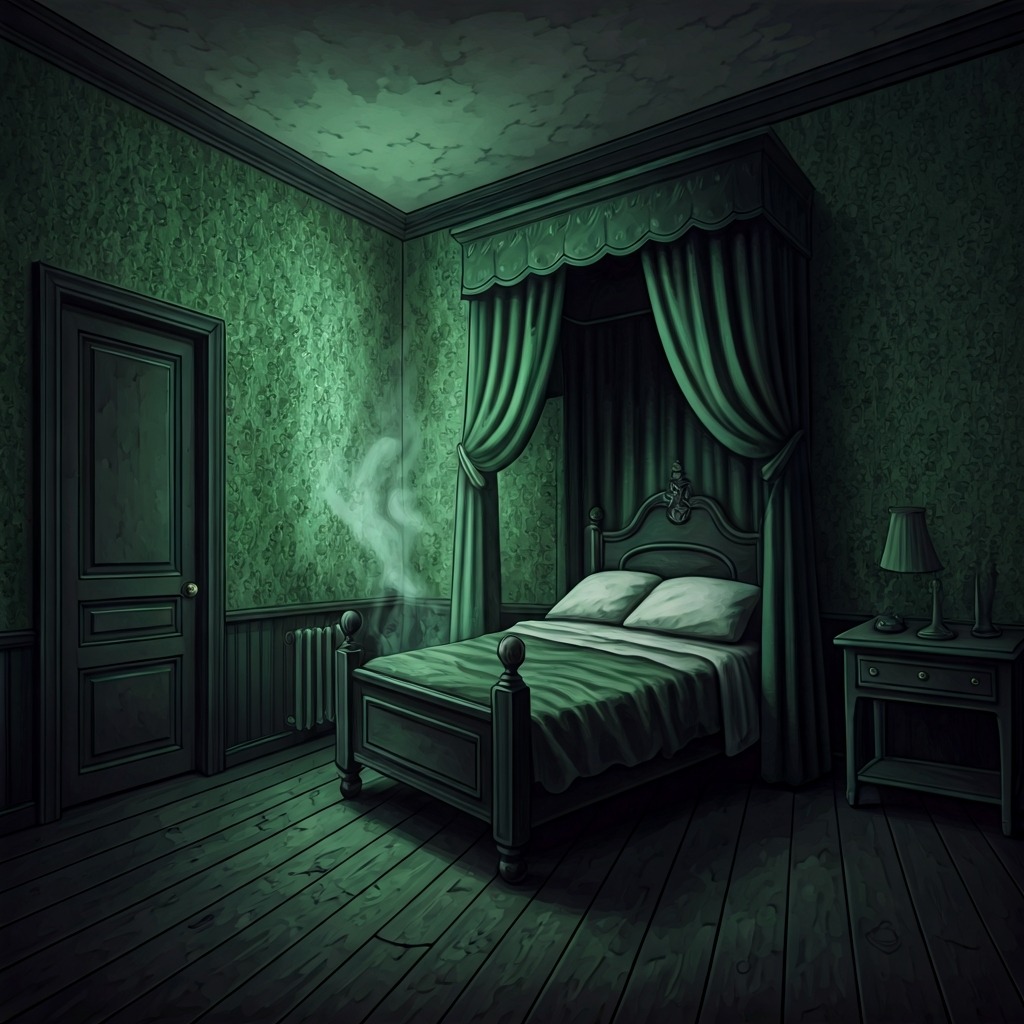
If you were a wealthy Victorian family, you likely had your bedrooms and dining rooms plastered with stunning, nature-inspired green wallpaper. But Victorian homes were notoriously damp.
When the dampness seeped into the wallpaper paste, it encouraged the growth of fungi. As these fungi interacted with the copper arsenite in the pigment, a chemical reaction occurred, releasing trimethylarsine gas—also known as Gosio gas.
Families would go to sleep in their stunning, vibrant bedrooms, completely unaware that they were inhaling poison with every breath. The symptoms were insidious and slow-moving: chronic headaches, terrifying skin lesions, severe respiratory issues, and endless bouts of vomiting. Eventually, the exposure led to organ failure and death. Doctors were baffled, often misdiagnosing the mysterious wasting disease, never suspecting that the walls themselves were the killer.
The Fall of the Emerald Empire
You would think that once the connection was made, the pigment would be banned immediately. But history is rarely that simple.
Despite mounting medical evidence, prominent figures fiercely defended the pigment. The most famous of these was wallpaper magnate William Morris, a man whose beautiful, intricate floral designs are still celebrated today. Morris initially dismissed the medical claims entirely, arguing that the illnesses were simply the result of poor hygiene among the lower classes, not his luxurious products.
Fortunately, the medical community refused to back down. Toxicologist Dr. Alfred Swaine Taylor led the charge, relentlessly pressuring the industry and stoking growing public outrage.
Interestingly, the British government never actually passed an official ban on arsenic in consumer goods. They didn’t have to. The public horror over deaths like Matilda Scheurer’s, combined with the terrifying realization that their homes were gassing them, caused consumer demand for the toxic color to plummet overnight.
Manufacturers, desperate to save their businesses, suddenly began advertising their goods in bold letters: Arsenic-Free.
The deadly reign of Scheele’s Green slowly faded into history. It leaves behind a chilling legacy, a reminder of how an everyday desire for beauty can mask extraordinary danger.