Imagine waking up one morning to a horrifying revelation: your flesh has hardened, your veins have turned translucent, and your entire body is now forged of delicate, paper-thin glass. One misstep, one accidental brush against a stone corridor, and you will shatter into a thousand jagged pieces.
This is not the plot of a surrealist horror film. It was a highly documented, terrifying psychiatric phenomenon known as the Glass Delusion. For centuries, a bizarre psychological epidemic swept through the highest echelons of European nobility, transforming the continent’s most powerful rulers into prisoners of their own perceived fragility.
The King Who Could Shatter
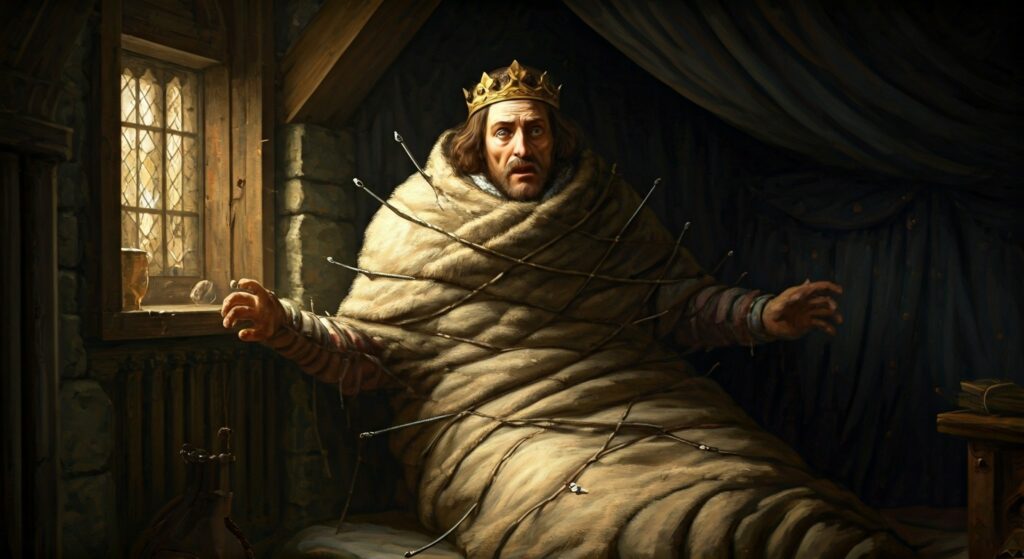
The most famous victim of this agonizing affliction was King Charles VI of France, a monarch remembered by history as “Charles the Mad.” In the late 14th century, a dark cloud of paranoia descended over the French ruler, culminating in a delusion that defies belief.
During his most severe bouts of mental illness, Charles was consumed by the absolute certainty that he was made entirely of glass. To protect his fragile frame from breaking, he went to extreme, suspenseful lengths. He ordered his tailors to sew rigid iron rods into the lining of his clothing, creating a makeshift suit of armor to prevent his torso from snapping. He wrapped himself in thick, suffocating blankets and issued a terrifying royal decree: absolutely no one was allowed to touch him.
The most powerful man in France was suddenly its most fragile, living in a constant state of agonizing suspense, waiting for a fatal blow that would reduce him to dust.
An Epidemic of the Elite
Charles wasn’t an isolated case. As the centuries ticked by, this peculiar delusion spread—but it didn’t strike just anyone. The Glass Delusion was incredibly class-bound, almost exclusively haunting the wealthy, the highly educated, and the royal.
Why would a psychological terror discriminate by tax bracket? The answer lies in the material culture of the era.
Today, we toss glass bottles into the recycling bin without a second thought. But in late medieval and early modern Europe, clear glass was a jaw-dropping technological marvel. It was astronomically expensive, novel, and highly prized. Glass symbolized extreme wealth, intellectual refinement, and delicate purity. To believe you were made of glass wasn’t just a manifestation of madness; it was a subconscious projection of elite status.
The Ultimate “Do Not Disturb”
Modern psychologists and historians have peeled back the layers of this mystery, revealing a truth that is heartbreakingly relatable. The Glass Delusion wasn’t merely random psychosis—it was a physical manifestation of severe anxiety and melancholy.
Consider the immense, crushing pressures of courtly or scholarly life during the Renaissance. Monarchs and nobles faced constant assassination plots, impossible political expectations, and absolutely zero privacy. By claiming a glass body, the sufferer was essentially erecting an impenetrable, untouchable barrier between themselves and a dangerous world. It was the ultimate, desperate cry for space. If you are made of glass, people must keep their distance. They must handle you with extreme care.
It was a brilliant, albeit tragic, coping mechanism for minds pushed to the absolute brink.
Swallowed Pianos and Medical Marvels
The phenomenon became so widespread among the elite that it bled into the pop culture and science of the day. It was thoroughly documented in serious medical texts, like Robert Burton’s 1621 masterpiece, The Anatomy of Melancholy. It even inspired hit literature, most notably Miguel de Cervantes’ 1613 short story The Glass Graduate (El licenciado Vidriera), proving that the fear of shattering was the talk of the 17th century.
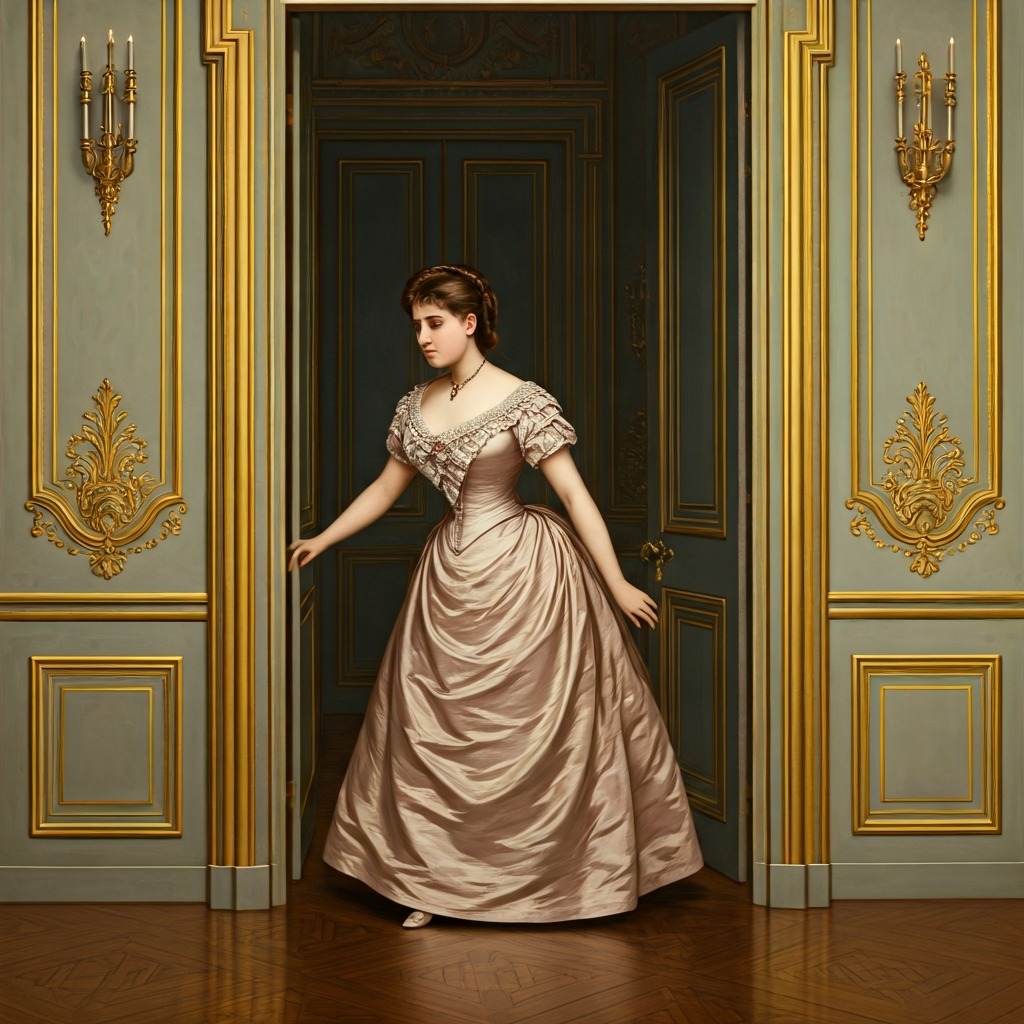
Even as time marched on, the delusion occasionally mutated into new, incredibly specific forms. Take the fascinating 19th-century case of Princess Alexandra of Bavaria. The royal didn’t believe her entire body was glass; instead, she lived in terror because she was convinced she had swallowed a full-sized glass piano. She walked sideways through doorways, terrified that a sudden movement would shatter the imaginary instrument inside her.
The Cure of the Commonplace
So, why aren’t we worried about shattering today?
As the Industrial Revolution roared to life, glass manufacturing advanced. The material became cheap, commonplace, and completely stripped of its mystical, luxurious aura. Once glass was no longer a symbol of delicate, expensive purity, the Glass Delusion largely vanished from psychiatric records.
It was replaced by new, culturally relevant anxieties—proving a haunting truth about human nature. Our minds are deeply intertwined with the technology and societal values of our time. We don’t just fear the unknown; we map our deepest, most desperate anxieties onto the world around us.
Knowing that even kings had to invent imaginary glass armor just to get a little personal space makes the chaotic, terrifying history of humanity feel a whole lot more human.