Before the guns of World War I tore Europe apart, the deadliest conflict in human history was ignited not by a clash of nations, but by a single, catastrophic betrayal.
In the early 8th century, the Tang Dynasty was the undisputed apex of human civilization. Its capital, Chang’an, was a glittering, cosmopolitan metropolis where silk flowed like water, poetry was the currency of the elite, and the empire’s wealth seemed inexhaustible. But history has a ruthless way of punishing empires that grow too comfortable. What followed this golden age was a sudden, violent collapse that shattered a dynasty and triggered a societal catastrophe so profound it erased tens of millions of people from the earth.
This is not just the story of a fallen empire. It is a masterclass in political paranoia, catastrophic mismanagement, and a treason that drowned an entire era in blood.
The Rot Beneath the Silk
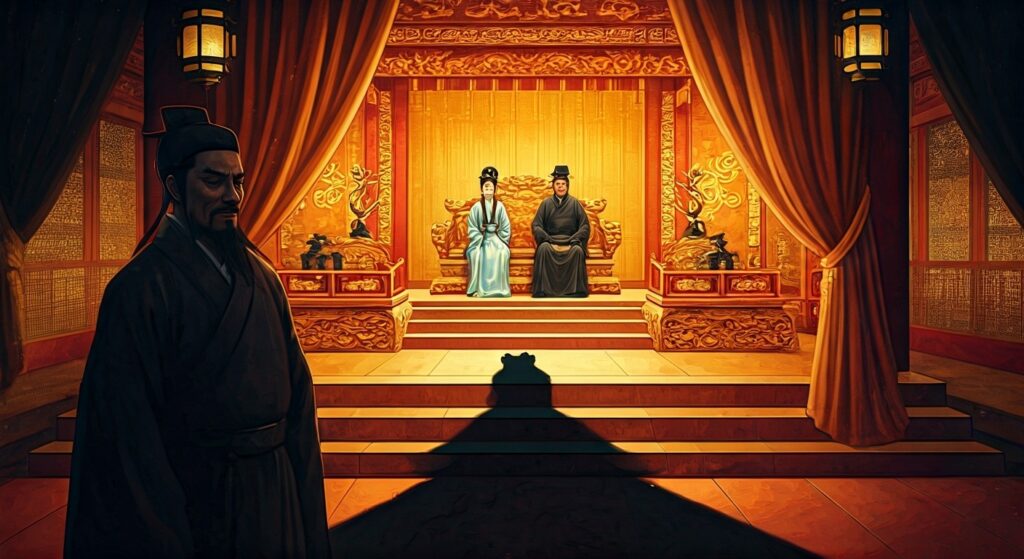
The crisis took root in the twilight years of Emperor Xuanzong’s reign. For decades, Xuanzong had been a brilliant sovereign, expanding the empire’s borders and overseeing unprecedented prosperity. But as he aged, the grueling day-to-day management of the state lost its appeal. He became deeply, obsessively infatuated with his concubine, Yang Guifei.
While romanticized history casts Yang Guifei as a manipulative femme fatale, the reality was far more bureaucratic and far more dangerous. Xuanzong simply stopped ruling. He delegated immense, unchecked power to Yang Guifei’s cousin, the notoriously corrupt Chancellor Yang Guozhong.
Simultaneously, the Tang military was undergoing a massive, fatal structural shift. The traditional militia system was scrapped in favor of a professional mercenary army. Command of these lethal new forces was handed over to regional military governors known as jiedushi. The central government was essentially handing the keys to its military-industrial complex to regional warlords, blindly hoping they would remain loyal.
They did not.
The Smiling Warlord
Among these regional commanders was An Lushan, a formidable general of Sogdian and Turkic descent. A man of massive physical stature, An Lushan possessed a terrifying political cunning that he expertly disguised beneath a jovial, subservient exterior. He ingratiated himself so deeply with Emperor Xuanzong and Yang Guifei that he was bizarrely adopted as Yang Guifei’s son—a calculated maneuver that granted him unprecedented access to the royal inner circle.
Quietly and obsessively, An Lushan amassed power. Soon, he was granted control over three massive garrisons in the northeast, commanding over 150,000 elite, battle-hardened border troops.
But back in the capital, a venomous rivalry was brewing. Chancellor Yang Guozhong, recognizing the threat, whispered in the Emperor’s ear that An Lushan was planning treason. An Lushan, in turn, realized that as long as the Chancellor held the reins in Chang’an, his own execution was only a matter of time. The empire was holding its breath, waiting to see who would strike first.
The Trap Springs
In 755 AD, the suspense finally broke. Under the pretext of receiving a secret edict to march to the capital and remove the corrupt Chancellor, An Lushan mobilized his forces.
The ensuing blitzkrieg was terrifying. An Lushan’s frontier troops moved with a ruthless, logistical precision that absolutely dismantled the inexperienced central armies. Within months, the rebels captured the eastern capital of Luoyang, where An Lushan audaciously declared himself Emperor of the new Great Yan dynasty. By 756, his forces breached the supposedly impregnable defenses of Chang’an.
Emperor Xuanzong, the man who had overseen the greatest era in Chinese history, was forced to flee into the mountains of Sichuan under the cover of darkness.
Blood in the Dust
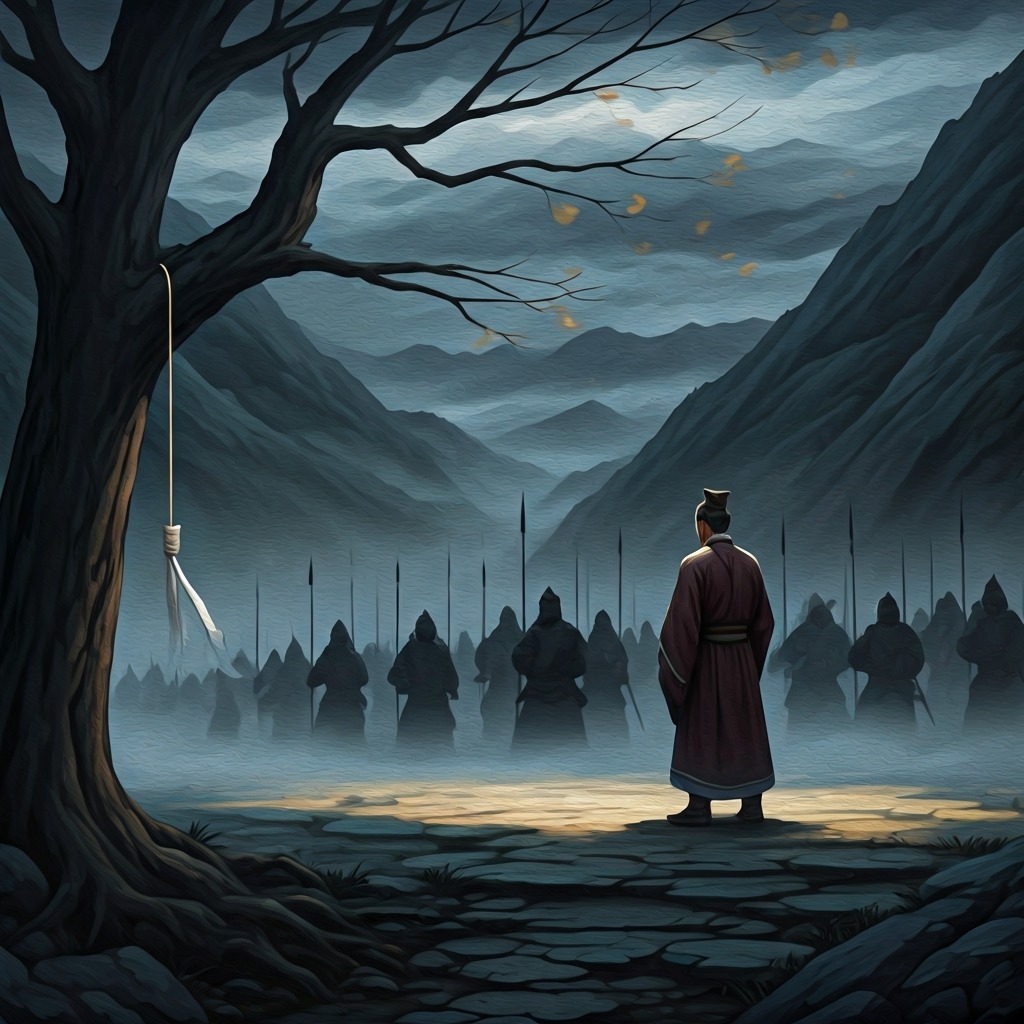
The Emperor’s desperate flight from the capital is where this political thriller descends into a devastating psychological drama. During the grueling retreat, the imperial guards—exhausted, terrified, and boiling with rage—mutinied at the Mawei Courier Station.
Blaming the corrupt Yang family for the empire’s sudden ruin, the soldiers brutally executed Chancellor Yang Guozhong. But their bloodlust was not sated. They turned their weapons toward the Emperor’s pavilion and demanded the death of Yang Guifei.
Surrounded by armed, mutinous men and watching his absolute authority evaporate into the mountain mist, the heartbroken Emperor was forced to make an impossible choice. To appease the troops and save his own life, he ordered his beloved concubine to hang herself. It was a moment of agonizing betrayal that would echo through centuries of Chinese poetry and theater.
An Empire of Ghosts
While the Tang court was on the run, An Lushan’s new Yan Dynasty was rotting from the inside. The rebel leader began suffering from extreme paranoia, massive weight gain, and blindness. His rule became so tyrannical and erratic that in 757, he was assassinated in his bed by his own son, An Qingxu.
This patricide kicked off a messy, bloody chain of betrayals. An Qingxu was later murdered by another rebel general, who was—in a twist of dark irony—killed by his own son.
Meanwhile, the Tang court rallied. Aided by brilliant loyalist generals and backed by crucial military support from Uyghur mercenaries, the Tang forces slowly, agonizingly clawed back their territory. Finally, in 763 AD, the last of the rebels were crushed. But the victory was entirely hollow.
The most shocking legacy of the An Lushan Rebellion is not the betrayal; it is the math. Tang census figures recorded a population of nearly 53 million before the war. When the dust settled and a new census was taken, that number had plummeted to just 17 million.
For centuries, historians looked at that 36-million drop and declared it the deadliest war in human history. Modern scholars offer a more chilling, nuanced reality: while millions undoubtedly perished from slaughter, mass starvation, and disease, the dramatic drop primarily reflects the total collapse of the Tang administrative system. Millions of displaced peasants fled south or were absorbed by independent warlords who simply stopped reporting to the central government.
Regardless of the exact death toll, the rebellion permanently crippled the Tang Dynasty. The central government never fully regained its authority, setting the stage for centuries of warlordism. An Lushan did not just break an empire; he broke the illusion of its invincibility, proving that even the most golden of ages can be drowned in blood.