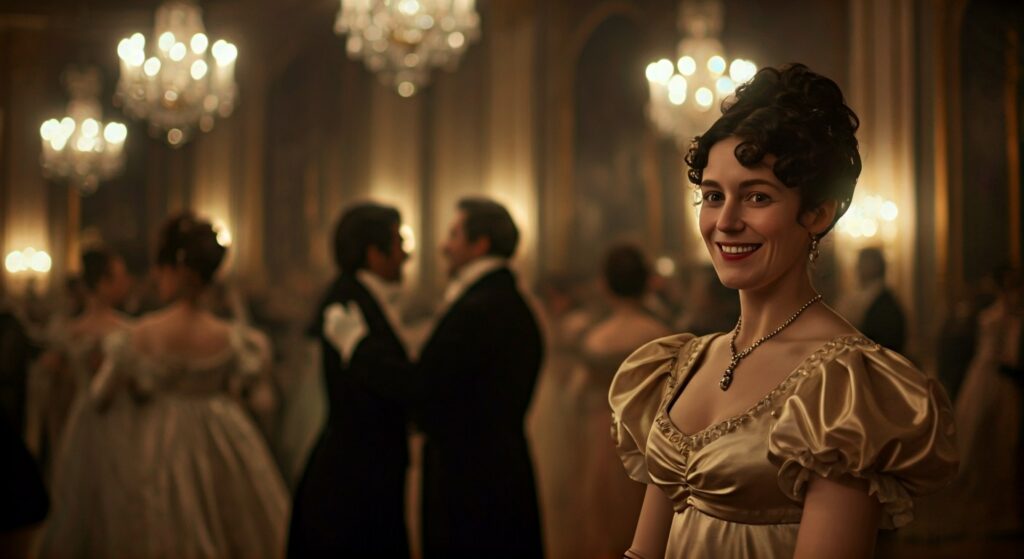
Imagine a glittering Mayfair ballroom in the early 19th century. The air is thick with the scent of expensive perfume, the swirl of silk empire-waist gowns, and the intoxicating melodies of a string quartet. But lean in close to whisper to the most radiant aristocrat in the room, and you might be hit by a scent that violently shatters the illusion of opulence: the unmistakable, stomach-churning stench of a decomposing walrus.
We often romanticize the Regency and Georgian eras, but beneath the velvet and lace hid a deeply gruesome reality. It is a story of vanity, desperation, and a luxury accessory born from the blood-soaked mud of Europe’s deadliest battlefield.
The Stench Behind the Silk
In the late 18th and early 19th centuries, Europe was in the grips of a massive sugar craze. For the wealthy, sugar was the ultimate status symbol, poured generously into tea and baked into towering, elaborate confections. But there was a glaring, painful catch: dental hygiene was practically nonexistent.
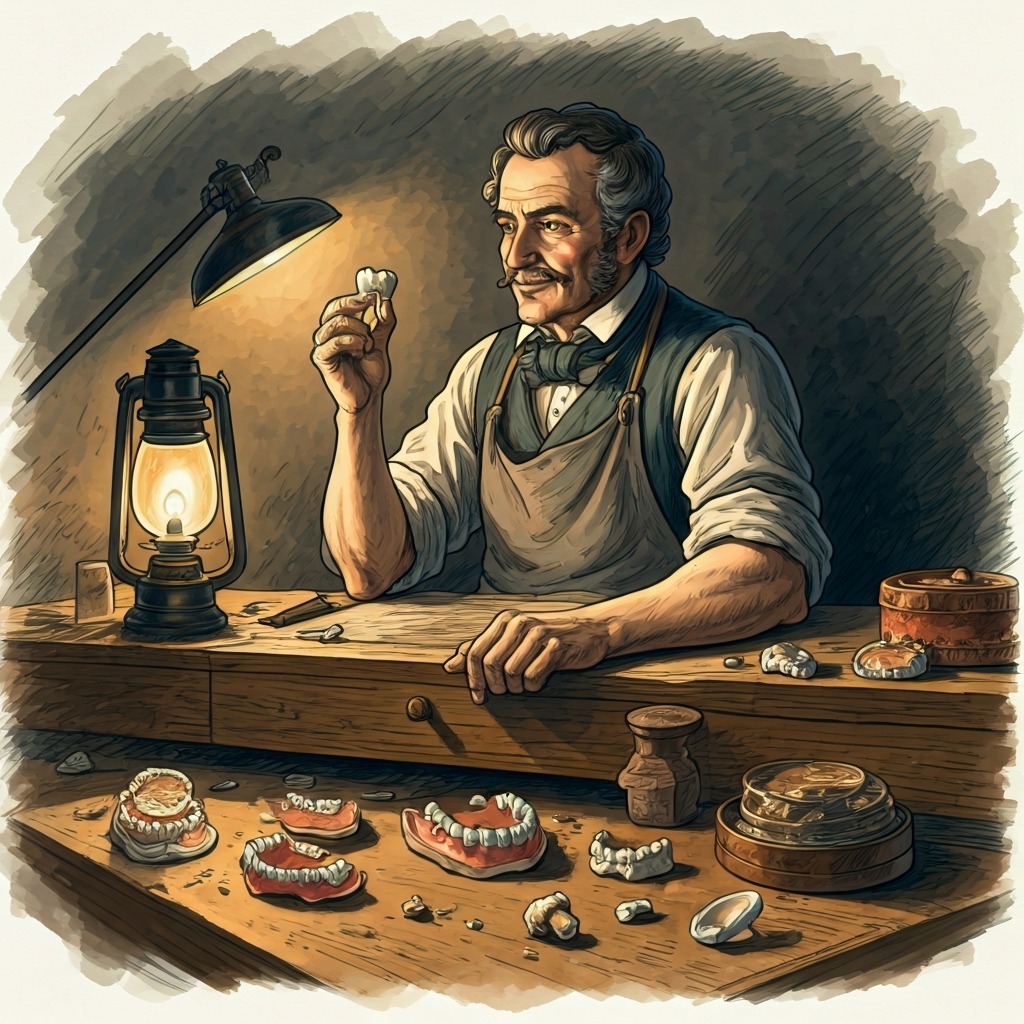
This dietary shift led to an absolute epidemic of tooth decay among the upper classes. If you wanted to maintain your place in high society, you couldn’t be seen with a rotting, empty smile. The demand for false teeth skyrocketed, birthing a booming—and frankly disgusting—dental industry. Dentists carved replacement teeth from hippopotamus, walrus, or elephant ivory.
Visually, these dentures looked passable for a few weeks. But animal ivory is highly porous. It quickly deteriorated in the human mouth, turning a sickly brown and emitting a foul, rotting stench.
The only viable, natural-looking alternative was real human teeth. But acquiring them was a dark, dangerous business. Before 1815, human teeth were rare and incredibly expensive. They were usually sourced by “resurrectionists”—grave robbers who plundered fresh burials in the dead of night—or purchased from executioners who pulled them from the jaws of the hanged. Sometimes, the desperately poor would sell their own teeth for a few shillings. But this supply was erratic, and the teeth were often diseased.
The elite were desperate for a better option. And on a rainy summer evening in Belgium, they got one.
A Gruesome Harvest in the Mud
On June 18, 1815, the Battle of Waterloo changed the course of European history. Napoleon was finally defeated, and the political maps of the world were redrawn. But the true horror of the battle lay not in the political treaties, but in the carnage left behind.
The clash left an estimated 50,000 men dead or wounded on the field. As night fell and the thick black smoke cleared, a different kind of army descended upon the bodies. Locals, camp followers, scavengers, and even surviving soldiers roamed the blood-soaked mud, armed with pliers.
To them, this wasn’t just a tragedy; it was an unprecedented bounty. Here lay tens of thousands of young, healthy men with pristine, sugar-free teeth. The scavengers systematically moved from body to body, violently ripping the incisors and canines from the mouths of the fallen troops.
The Aristocracy’s Macabre Smile
These looted, bloody teeth were shipped by the barrel to England, the undisputed hub of the era’s dental industry. Dentists would boil the teeth, chop off their roots, and meticulously shape them to be riveted onto ivory base plates.
You might assume the elite would want to keep the grim origins of their new smiles a closely guarded secret. But that underestimates the absolute audacity of 19th-century high society.
Dentists actively marketed these dentures as “Waterloo Teeth.” It became a prestigious luxury brand. For a wealthy aristocrat, wearing Waterloo Teeth offered a bizarre peace of mind: it guaranteed that the teeth in their mouth came from young, healthy, heroic soldiers rather than plague victims, executed criminals, or rotting corpses.
The cultural acceptance of this practice is a chilling reminder of the era’s stark class divides. The bodies of lower-class soldiers were literally commodified, chopped up, and sold to restore the radiant smiles of the aristocracy. The branding was so wildly successful that it persisted for decades. Long after the original supply from 1815 ran out, teeth looted from the dead in the Crimean War and the American Civil War were still colloquially sold under the prestigious “Waterloo” name.
The Porcelain Savior
So, how did this macabre fashion trend finally end? Not through moral outrage, but through technological innovation.
In the 1830s, a London silversmith named Claudius Ash found himself utterly disgusted by the handling of dead men’s teeth. Channeling his revulsion into invention, he perfected the commercial production of high-quality porcelain teeth. They were pristine, durable, and completely devoid of human suffering.
By the 1850s, the invention of vulcanite—a hard, moldable rubber—provided a cheap and sanitary base for dentures. Together, porcelain and vulcanite made artificial dentures vastly superior and infinitely more affordable. The need to scavenge the mouths of the dead finally vanished into the shadows of history.
The next time you admire a perfectly white smile in a period drama, take a moment to look past the romance. Because centuries ago, that perfect smile was likely a grisly souvenir ripped from the mud of Waterloo.