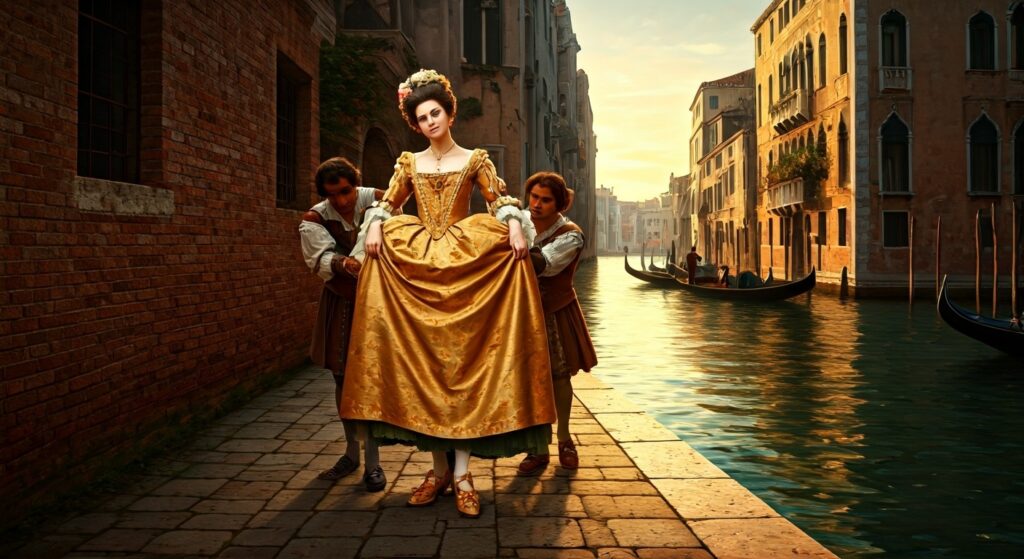
The golden light of the Venetian lagoon catches the shimmer of a silk brocade gown. The fabric is so voluminous it seems to swallow the narrow walkway. But the true spectacle isn’t the dress—it’s what lies beneath it. The woman wearing it is teetering on platforms so staggeringly high she is literally eye-level with men on horseback. One wrong step on the uneven cobblestones could mean a broken neck. Yet, she walks on.
Welcome to the dramatic, towering, and fiercely debated world of the Venetian chopine—a shoe that transformed Renaissance women into towering monoliths of wealth, and left behind a historical mystery we are still trying to unravel.
Rising Above the Muck
To understand the madness of the chopine, you must first look down. The streets of 15th-century Venice were a far cry from the pristine, romantic walkways of modern tourism campaigns. They were unpaved, uneven, and slick with a foul mixture of mud, animal waste, and rotting debris.
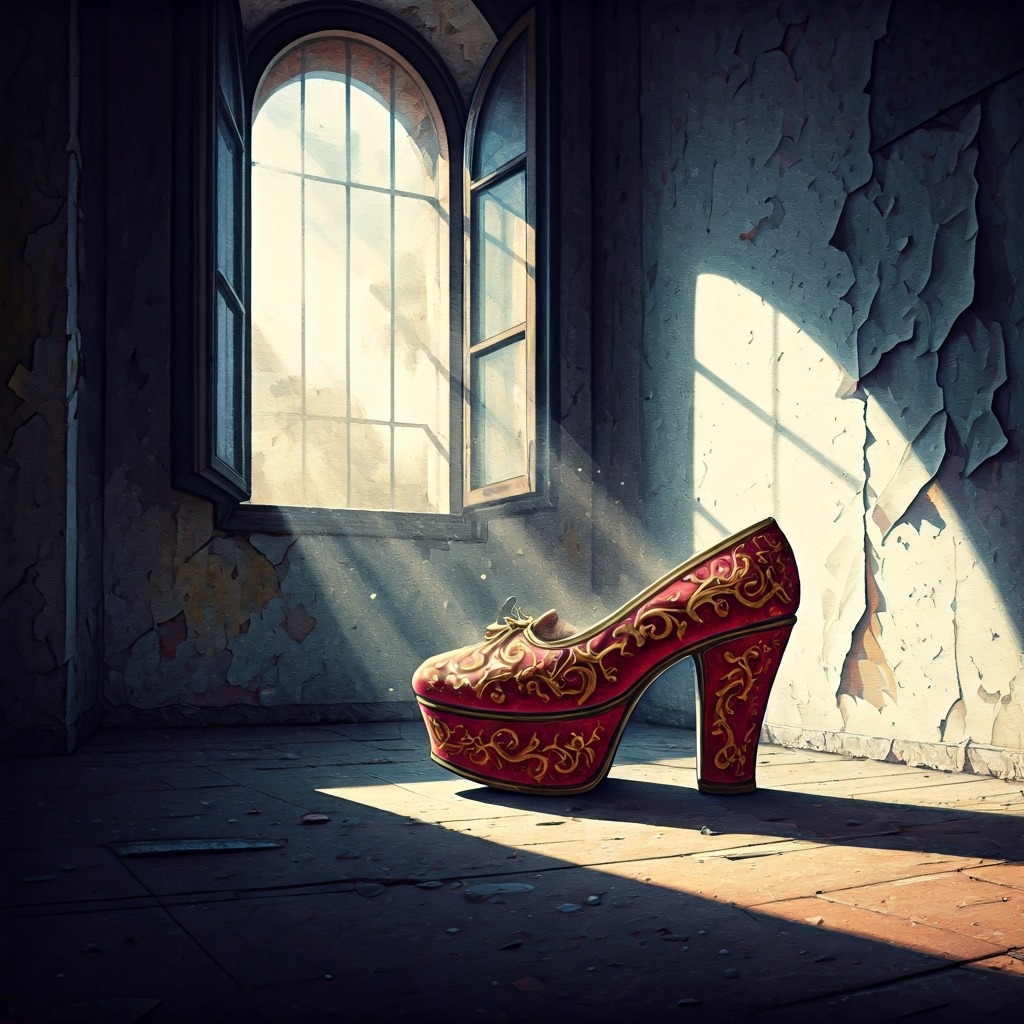
Originally, the chopine was born of pure necessity. Crafted from lightweight wood or cork, these overshoes were strapped over delicate leather slippers to keep expensive hemlines out of the literal gutter. But this was Venice—a city that never met a practical object it couldn’t transform into a chaotic display of excess. Almost overnight, the chopine mutated from a functional shield against street sludge into an extreme, weaponized symbol of social supremacy.
The Architecture of Arrogance
The mathematics of Renaissance fashion were beautifully, brutally simple: the taller the shoe, the richer the woman.
While standard chopines hovered at a modest few inches, the extreme variants favored by patrician women and elite courtesans soared to over 20 inches (50 centimeters) in height. These were not mere blocks of wood; they were architectural masterpieces wrapped in velvet, silk, and metallic lace.
But the flex didn’t stop at the footwear. A 20-inch platform required the wearer’s dress to be significantly longer to drape elegantly over the shoe and trail along the ground. In an era where textiles were astronomically expensive, this was conspicuous consumption at its most aggressive. It was a wearable billboard that screamed a single, undeniable message: I am so unimaginably wealthy that I am entirely exempt from physical labor.
A Lethal Luxury
This extreme altitude came at a terrifying physical cost. Navigating the uneven, bridge-filled labyrinth of Venice in half-meter platforms was practically impossible to do alone.
Women required the physical support of one or two attendants—often servants or enslaved people—just to maintain their balance. Resting their hands on their attendants’ shoulders, they moved in a slow, deliberate waddle. Some contemporary poets likened this movement to a graceful, ethereal glide. Others thought it looked utterly absurd.
But the chopine was more than just foolish; it was genuinely lethal. A misstep could be fatal. Dark whispers and documented reports circulated through the city of pregnant noblewomen suffering horrific miscarriages after toppling over in their towering shoes.
Gilded Cage or Pedestal of Power?
This brings us to the ultimate historical mystery: Why subject yourself to such peril?
Historically, the chopine has been viewed through two wildly different lenses. Foreign visitors, like the notoriously judgmental 17th-century English traveler Thomas Coryat, believed the shoes were an instrument of patriarchal control. Coryat and subsequent historians theorized that jealous Venetian husbands actively encouraged this crippling footwear to restrict their wives’ mobility. If a woman couldn’t walk down the street without a team of servants, she certainly couldn’t sneak off for an illicit affair. In this light, the chopine was a gilded cage.
Modern fashion historians, however, are flipping the script. Rather than being subjugated by their shoes, many argue that women used chopines to command attention and claim physical space. In a deeply patriarchal society, the chopine gave women an imposing physical presence that literally elevated them above the common crowds and the men around them. It wasn’t a prison—it was a pedestal.
The Inevitable Fall
The Venetian government was absolutely panicked by the trend. Magistrates despised the sheer waste of money on extra fabric and were terrified by the mounting physical dangers.
As early as 1430, the government passed strict sumptuary laws attempting to cap the height of chopines at a mere three inches. But the laws were a spectacular failure. The elite simply ignored the decrees, paid the fines, and continued to push the boundaries of extreme fashion.
Ultimately, it wasn’t the law that killed the chopine; it was the fickle nature of fashion itself. By the 17th century, the cultural center of Europe shifted from Venice to France. The towering, clunky platforms were suddenly deemed passé, replaced by the sleek, modern heeled shoe favored by the French court.
The chopine vanished into the closets of history, leaving behind a legacy of danger, drama, and the eternal truth that in the name of fashion, humanity will endure absolutely anything.