History is usually written by the victors, but occasionally, it is violently derailed by the broken. When a 19th-century scholar named Hong Xiuquan failed his civil service exams, he didn’t just walk away in quiet disgrace. He suffered a psychotic break, declared himself a divine entity, and sparked a holy war so catastrophic it permanently altered the DNA of a superpower.
This is not merely a story of a peasant rebellion. It is the chilling chronicle of how one man’s fever dream escalated into the deadliest civil war in human history.
The Weight of a Shattered Dream
In the early 1800s, the Qing Dynasty’s imperial civil service examination was the ultimate, unforgiving bottleneck to success. Pass it, and you were guaranteed a life of prestige, wealth, and government power. Fail it, and you were condemned to the grueling anonymity of the peasant fields.
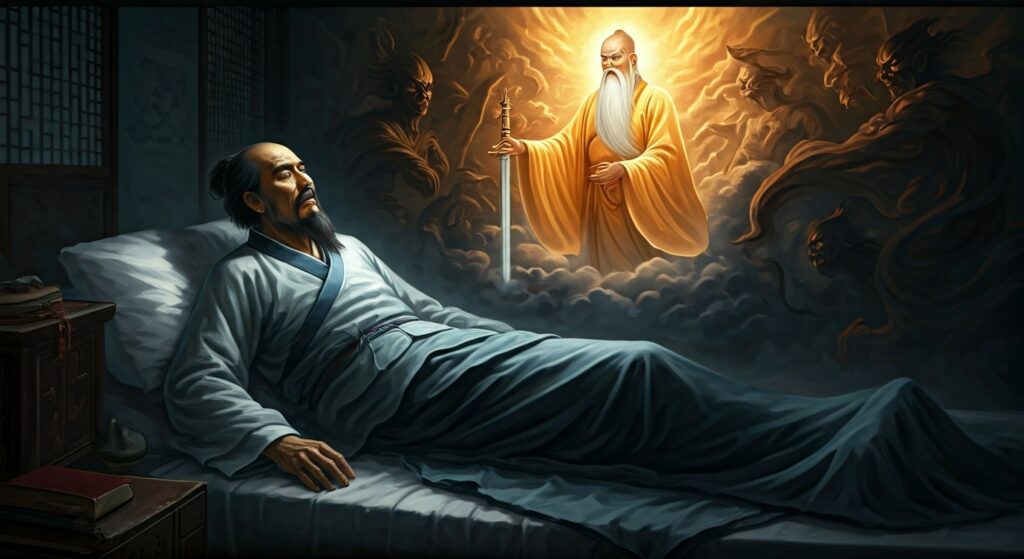
Hong Xiuquan was born in 1814 to a humble Hakka farming family in Guangdong, China. Brilliant and driven, he was his family’s prodigy—their one desperate shot at escaping poverty. But the exams were notoriously brutal. In 1837, after years of agonizing preparation, Hong failed for the third time. The sheer weight of the disappointment shattered his psyche. He suffered a severe nervous breakdown, lying bedridden for days, tormented by profound and terrifying fever dreams.
In his delirium, Hong was transported to a celestial realm. A mysterious, golden-bearded man handed him a sword and commanded him to slay the demons infesting the earth. Beside this patriarch stood a middle-aged man who guided Hong through the holy war. When Hong finally awoke, he was physically recovered but psychologically transformed. For six years, he carried the vivid memory of the golden-bearded man, haunted by a cosmic purpose he could not yet understand.
The Pamphlet That Ignited an Empire
In 1843, Hong took the imperial exam for a fourth time. Once again, he failed.
Searching for meaning in his ruined life, he dusted off a Protestant Christian pamphlet he had been handed years earlier, titled Good Words to Admonish the Age. As he read the translated scriptures, the puzzle pieces of his decade-old fever dream snapped into place with terrifying clarity.
Through the lens of this foreign text, Hong decoded his visions: The golden-bearded man wasn’t just a celestial warlord; he was God the Father. The middle-aged guide was Jesus Christ. And Hong? He believed he was the younger brother of Jesus, divinely appointed to rid China of idolatry and overthrow the “demonic” Qing Dynasty.
Hong immediately began smashing Buddhist and Confucian idols. He formed the God Worshipping Society, and his radical, apocalyptic message spread like wildfire. To the marginalized Hakka minority, and to the impoverished peasants suffering under crushing famine, economic despair, and Qing oppression, Hong wasn’t a heretic. He was a savior.
Forging the Army of Heaven
What Hong pulled off next was nothing short of a dark miracle. He didn’t just gather a mob of angry, starving farmers; he built a highly disciplined, militarized society from scratch.
In 1851, Hong crossed the Rubicon, proclaiming the establishment of the Taiping Heavenly Kingdom and crowning himself the Heavenly King. The Taiping forces swept through southern China with astonishing, ruthless speed. Their supply chains and organizational structure were a masterclass in military efficiency, allowing them to capture the major city of Nanjing in 1853, which they promptly renamed Tianjing—the Heavenly Capital.
Once in power, the Taiping Kingdom instituted radical, proto-communist reforms that were centuries ahead of their time. They abolished private property, mandated the communal sharing of wealth, banned foot-binding, and outlawed both opium and gambling. But this utopian vision came with a draconian catch: they enforced a strict, absolute separation of the sexes, tearing apart even legally married couples under threat of death.
Rot in the Heavenly Capital
It was here that the utopian dream morphed into a paranoid nightmare. While ordinary followers were subjected to these incredibly strict moral codes, Hong and his top commanders lived in extreme luxury, maintaining massive private harems behind palace walls.
This glaring hypocrisy bred deep resentment, and the leadership began to rot from the inside out. The internal paranoia culminated in the bloody Tianjing Incident of 1856. The top Taiping commanders turned on each other in a series of brutal purges and assassinations, permanently crippling their military command and fracturing the movement’s soul.
Sensing blood in the water, the Qing Dynasty reorganized. Abandoning their traditional, failing military structures, they relied on fierce regional militias, most notably Zeng Guofan’s Xiang Army. Furthermore, Western powers—who had initially been intrigued by Hong’s pseudo-Christianity—realized the Taiping Kingdom’s aggressive expansion was a massive threat to their lucrative trade routes. They threw their crucial military and technological support behind the Qing.
The Apocalypse of the Younger Brother
The conflict devolved into a total war of attrition. Massive sieges, scorched-earth tactics, and widespread famine decimated the Chinese countryside, turning rivers red and cities to ash.
By June 1864, the Heavenly Capital of Nanjing was completely surrounded by Qing forces. The Taiping Kingdom was starving. In a grim twist of fate, Hong Xiuquan died—likely from eating poisonous weeds he had scavenged during the siege, though historical whispers suggest illness or suicide.
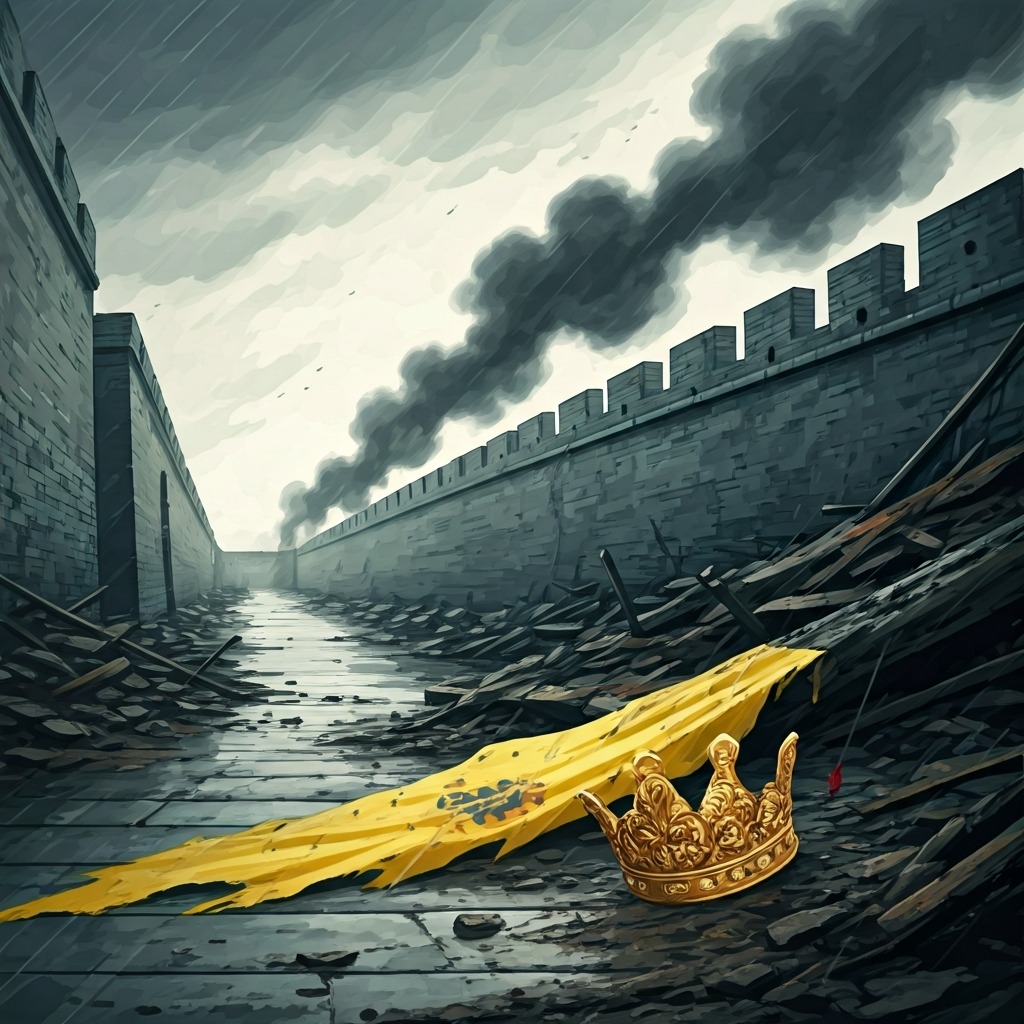
Weeks later, the city walls were breached. What followed was a horrific massacre of the remaining Taiping followers, effectively erasing the Heavenly Kingdom from the map.
When the smoke finally cleared, the Taiping Rebellion stood as one of the darkest chapters in human history, resulting in an estimated 20 to 30 million deaths.
History’s verdict on Hong Xiuquan remains as fractured as the empire he tried to conquer. Traditionalists viewed him as a culturally destructive monster. Western powers saw him as a dangerously destabilizing fanatic. Yet, decades later, Chinese Communists would celebrate Hong as a heroic proto-revolutionary who dared to lead a righteous peasant uprising against a corrupt feudal system.
Regardless of the lens through which he is viewed, Hong Xiuquan proved a terrifying truth: a single idea, planted in the mind of a desperate man, possesses enough explosive power to shake the world to its very core.