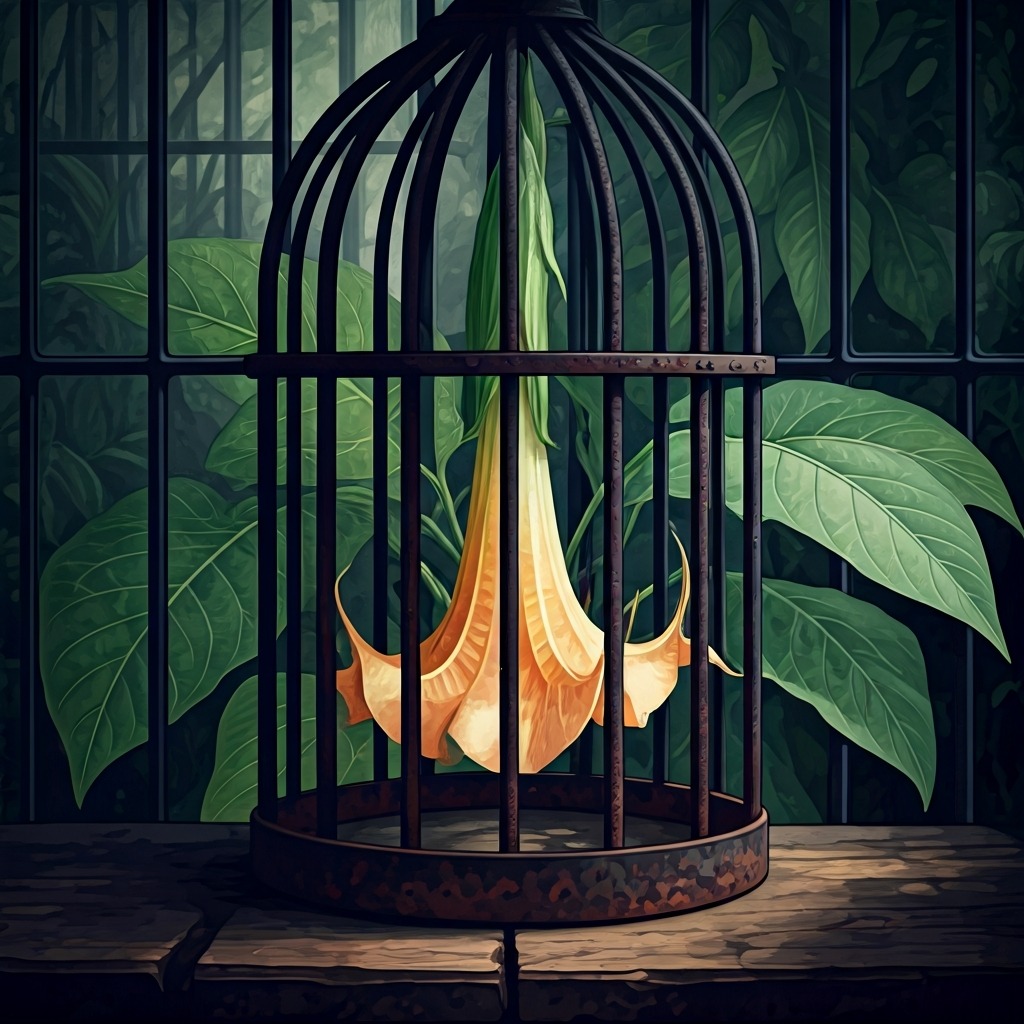
Tucked away in the idyllic, rolling hills of Northumberland, England, lies a plot of land that looks like it was ripped straight from a Renaissance assassin’s diary. Here, there are no fragrant roses to sniff or manicured lawns to lounge upon. Instead, visitors are greeted by imposing black iron gates, a skull and crossbones, and a stark, unblinking warning: These plants can kill.\n\nWelcome to the Alnwick Poison Garden, where a casual stroll could be your last.\n\n## The Duchess Who Chose Arsenic Over Azaleas\n\nThe story begins in 1995 with a plot twist worthy of a primetime thriller. When Jane Percy’s husband unexpectedly inherited a dukedom, she suddenly became the Duchess of Northumberland. Along with the title came a monumental, albeit tedious, task: revitalizing the estate’s sprawling, neglected commercial gardens.\n\nMost newly minted aristocrats would have opted for a benign apothecary garden—perhaps some soothing lavender, a little chamomile, and a picturesque water feature. But the Duchess craved something far more provocative.\n\nChanneling the dark, brilliant energy of the Italian Renaissance, she drew inspiration from the legendary Medici poison garden in Padua, Italy. A traditional herb garden, she reasoned, would bore visitors to tears. But a garden brimming with flora capable of stopping a human heart? That is how you command attention. By 2005, her macabre vision had taken root.\n\n## Enter If You Dare\n\nThe atmosphere of the Poison Garden is deliberately foreboding. Access is strictly controlled, and you are only permitted entry under the watchful eye of specially trained guides. The rules are absolute: no touching, no tasting, and absolutely no smelling the plants.\n\nYet, even strict obedience isn’t always enough to protect you. This garden doesn’t need you to touch it to take you down. It is a regular occurrence for visitors to collapse, fainting from inhaling toxic fumes. On warm summer days, the laurel hedges release heavy, intoxicating gases into the air, turning the garden paths into a dizzying hazard. To prevent accidental poisonings—or intentional theft—the most exceptionally dangerous specimens are kept securely locked inside black iron cages.\n\n## A Botanical Rogues’ Gallery\n\nInside those gates lies a deadly inventory of over 100 varieties of toxic, intoxicating, and narcotic plants. It is a living, breathing rogues’ gallery of nature’s most efficient killers.\n\nTake Atropa belladonna (deadly nightshade), whose sweet-tasting berries are a deceptive trap that triggers severe delirium and death. Nearby lurks Strychnos nux-vomica, the source of the infamous strychnine, and Ricinus communis, the castor bean plant. The latter produces ricin, a toxin so devastatingly potent that chewing a single seed can be fatal.\n\nThe garden also serves as a living museum of historical assassinations. You will find Conium maculatum (hemlock), the very poison used to execute the philosopher Socrates in ancient Greece. If that isn’t enough to make your skin crawl, there is Brugmansia (angel’s trumpet), a beautiful but terrifying hallucinogen and paralyzing agent. And beware the Giant Hogweed—a phototoxic nightmare. Merely brushing against its sap before stepping into the sunlight will cause severe, flesh-melting burns and blisters.\n\n## The Government-Sanctioned Stash\n\nBeyond its collection of historical poisons, the Alnwick Poison Garden harbors a secret that makes it entirely unique. Tucked away in caged beds is a highly guarded collection of illicit drugs.\n\nOperating under a special, heavily monitored license from the UK Home Office, the garden is legally permitted to cultivate controlled substances like Cannabis sativa, Papaver somniferum (opium poppies), and Erythroxylum coca (the source of cocaine).\n\nWhy would the government sanction a cartel’s harvest in an English garden? The answer is education. Guides use this restricted section to strip away the pop-culture glamour of recreational drugs. They walk young visitors through the harsh realities, the dark historical contexts, and the lethal potential of these botanical derivatives. It is the ultimate “scared straight” program, delivered via horticulture.\n\nUltimately, the Alnwick Poison Garden is a masterpiece of dark tourism. It proves a chilling truth: humanity has an insatiable fascination with the macabre. The Duchess of Northumberland managed to transform a traditional English garden into a thrilling walk on the wild side of nature—a place where beauty and lethality are perfectly, inextricably intertwined.