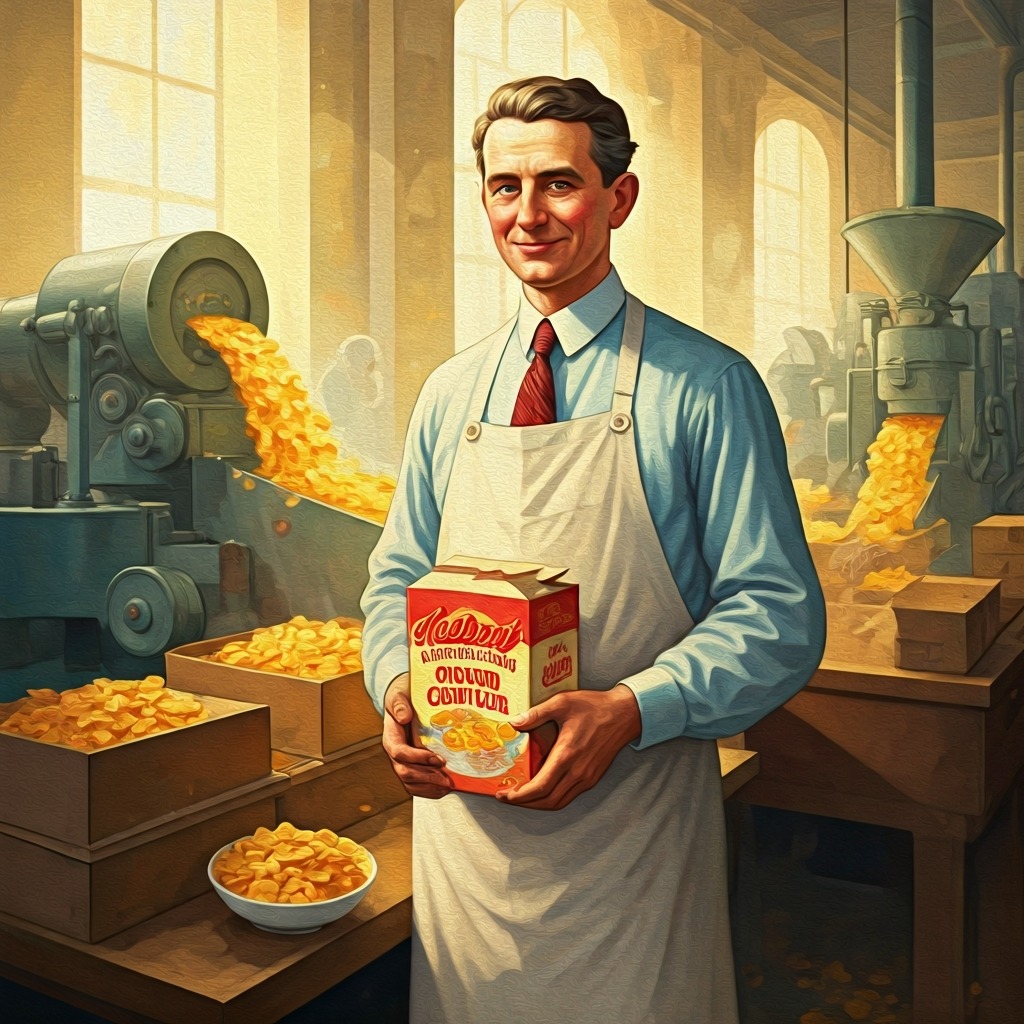
The next time you pour a bowl of morning cereal, listening to that familiar snap, crackle, and pop, consider the bizarre origins floating in your milk. The true story of cornflakes isn’t a tale of agricultural innovation or a quest for the perfect breakfast.
It is a story of puritanical morality, a bitter sibling rivalry, and a fanatical crusade to stop you from sinning.
The War on Morning Morality
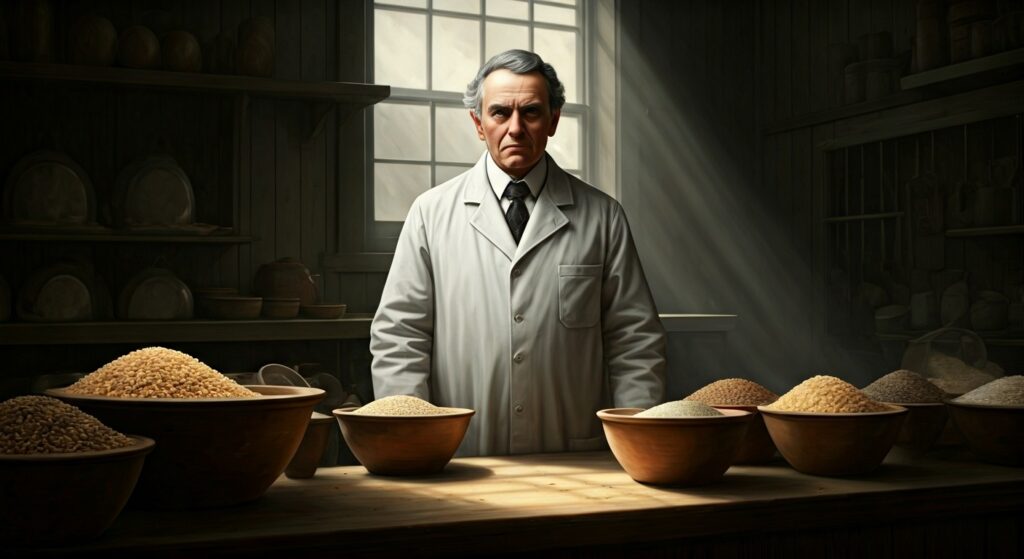
In the late 19th century, the Battle Creek Sanitarium in Michigan wasn’t just a hospital; it was a world-renowned health resort rooted in the strict principles of the Seventh-day Adventist Church. At its helm was Dr. John Harvey Kellogg, a brilliant physician with eccentricities that bordered on the fanatical.
Dr. Kellogg was the ultimate champion of “biologic living,” but his medical philosophy was inextricably tied to a rigid moral compass. He believed, with every fiber of his being, that the root of all physical decay and moral ruin was sexual deviance—specifically, masturbation.
In his intense manifesto, Plain Facts for Old and Young, Kellogg outlined a startling theory: the typical American diet, rich in heavy meats, fats, and spices, was directly responsible for inflaming the passions. To Kellogg, flavor was the enemy. A tasty, spiced meal was a one-way ticket to sinful urges.
To combat this, he engineered a strict, intentionally bland vegetarian diet for his patients. The goal was simple: cleanse the bowels and violently suppress the libido.
A Stale Mistake That Changed History
It was within this joyless, puritanical kitchen that a breakfast revolution was accidentally born.
In 1894, Dr. Kellogg and his younger brother, Will Keith (W.K.) Kellogg—the sanitarium’s overworked bookkeeper—were desperately trying to invent digestible bread substitutes for their patients. Rushing off to attend to a medical emergency, the brothers accidentally left a batch of cooked wheat sitting out.
When they finally returned, the wheat had gone completely stale. But Dr. Kellogg, ever the frugal manager, refused to throw it away. The brothers forced the hardened wheat through heavy rollers, fully expecting it to form long, cohesive sheets of dough.
Instead, the wheat fractured, emerging as individual, flat flakes.
Curious, they tossed the flakes into the oven. When baked, they transformed into something crisp, light, and surprisingly palatable. They called this accidental invention “Granose,” and to their absolute shock, the sanitarium’s patients devoured it.
The Great Sugar Schism
The brothers quickly realized they had struck gold. They soon applied their flaking process to corn, creating the very first true cornflakes. But this is where the harmony ended, sparking a lifelong, bitter feud.
Dr. Kellogg viewed the new cornflakes strictly as a medicinal, anti-aphrodisiac health food. To him, it was a holy tool to purify the body and soul. He insisted, with iron-fisted authority, that the recipe remain entirely plain.
W.K. Kellogg, however, possessed a terrifyingly accurate intuition for business. He saw beyond the sanitarium’s walls, knowing the general public would buy this cereal by the truckload—but only if it actually tasted good. W.K. proposed a simple, logical addition: sugar.
Dr. Kellogg was horrified. Adding sugar would re-introduce the exact worldly passions the food was engineered to suppress. It was a betrayal of everything “biologic living” stood for.
A Sweet, Ironic Revenge
The ideological war over a single ingredient fractured their relationship forever. Tired of playing second fiddle to his domineering older brother, W.K. finally made his move.
In 1906, W.K. Kellogg bought the commercial rights to the flaked cereal. He deliberately added malt, sugar, and salt to the recipe, and founded the Battle Creek Toasted Corn Flake Company—known today as the Kellogg Company.
W.K. proved to be a marketing genius. Through aggressive and innovative advertising campaigns, he took his brother’s bland, libido-suppressing medical prescription and transformed it into a sweet, globally ubiquitous breakfast staple.
Today, as you walk down the brightly colored, sugar-laden cereal aisle at your local grocery store, you are looking at the ultimate historical irony. The massive industry W.K. built stands in profound, mocking contrast to Dr. John Harvey Kellogg’s original crusade for moral purity. So, the next time you pour yourself a bowl of frosted flakes, take a moment to appreciate the wild, rebellious history floating in your spoon.