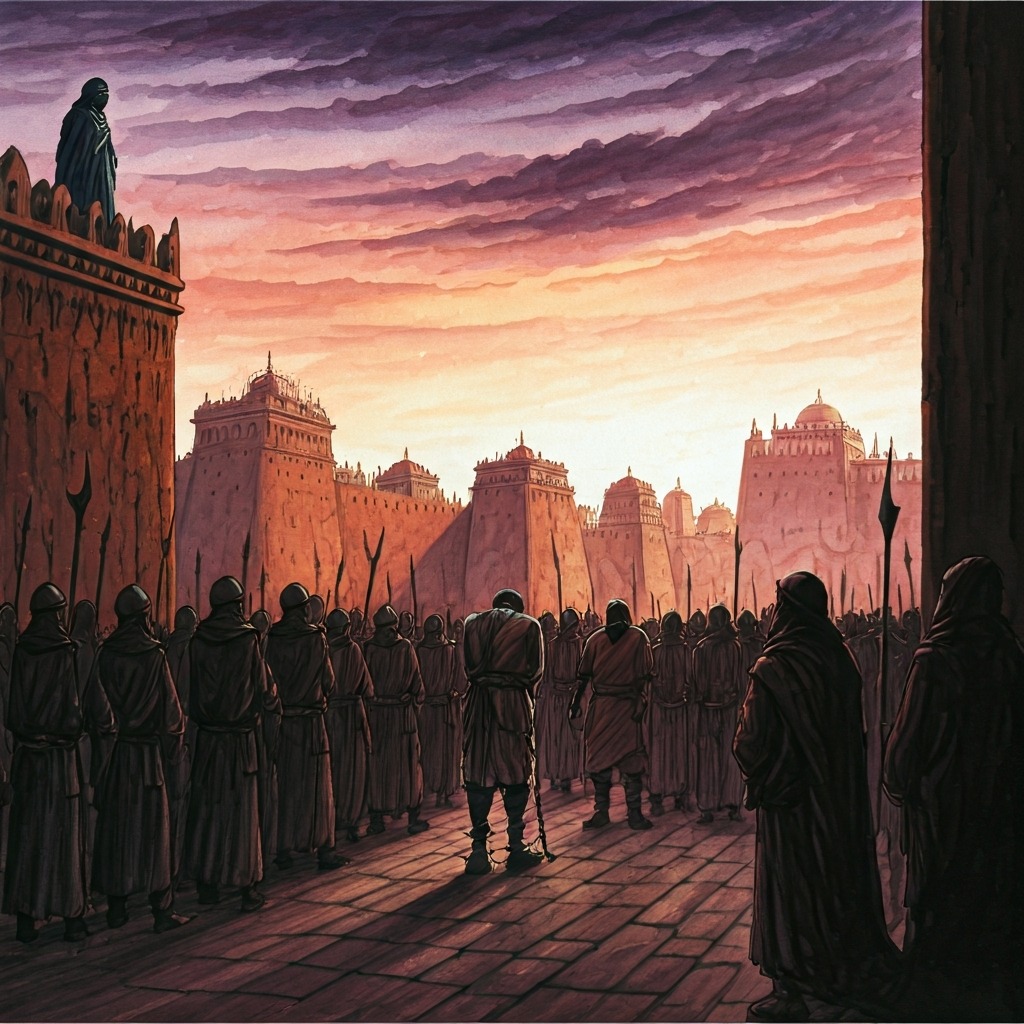
Imagine surviving a brutal siege, your city conquered by an unstoppable army. As a defeated warrior, you are summoned to the chambers of the conquering sovereign. You spend the night with the most powerful ruler in the known world. You think you have secured your survival, perhaps even a place at her side. But as the first light of dawn breaks, the guards arrive. You aren’t being escorted to the dining hall; you are being marched to the executioner’s block.
This wasn’t a plotline from a dark fantasy novel. This was the terrifying, legendary reality of Queen Amina of Zazzau, a 16th-century sovereign whose thirst for conquest was matched only by her ruthless grip on absolute power.
The Princess Who Traded Silk for Steel
Born in the mid-1500s in the Hausa city-state of Zazzau (modern-day Zaria, Nigeria), Amina was the daughter of Queen Bakwa Turunku. In a world where royal daughters were expected to master courtly pleasantries and secure strategic marriages, Amina had a different curriculum in mind. She bypassed the throne room and marched straight into the barracks.
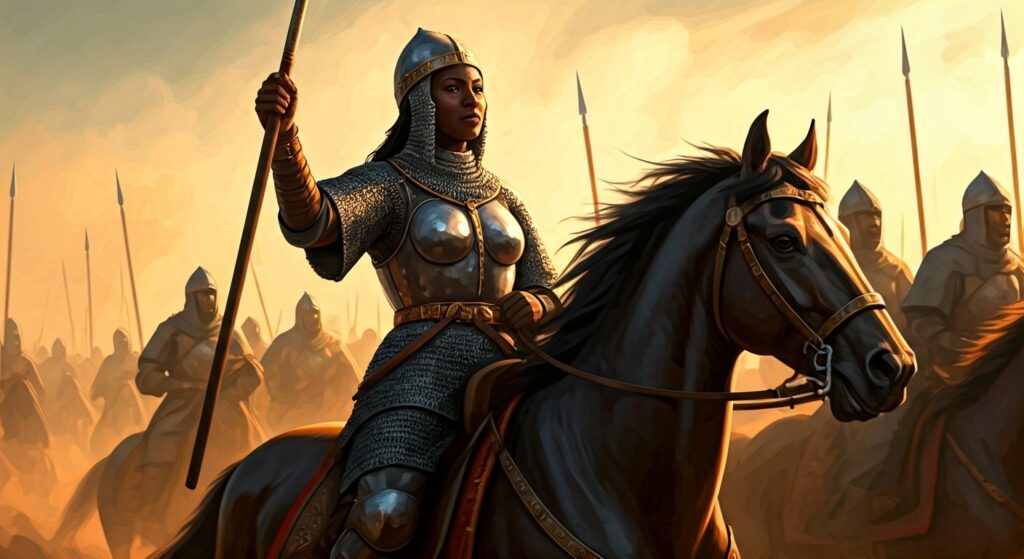
While her peers learned the delicate dance of diplomacy, Amina mastered the brutal art of war alongside Zazzau’s elite cavalry. When her mother died, the throne passed to Amina’s brother, Karama. But Amina did not fade into the shadows of the court. Instead, she emerged as the state’s preeminent military commander, earning the fierce, unshakeable loyalty of a highly trained army by bleeding in the dirt beside them.
When Karama died around 1576, Amina didn’t just inherit a crown—she unleashed a military machine she had spent her life building.
An Empire Forged in Iron
The moment Amina ascended the throne, she launched a relentless wave of military campaigns that would not cease for 34 years. She was a brilliant, terrifying tactician. Credited with introducing metal armor—including iron helmets and chain mail—to the Hausa military, Amina transformed her soldiers into an unstoppable, iron-clad force.
Under her command, Zazzau expanded to its greatest historical extent, swallowing lands as far as Nupe and Kwarafa. She dominated the lucrative trans-Saharan trade routes, demanding heavy tributes that flooded her empire with unimaginable wealth, from fortunes of kola nuts to enslaved eunuchs. She didn’t just conquer; she consumed.
The Architect of Impenetrable Earth
Amina’s genius extended far beyond the battlefield; she was a visionary of subjugation. To protect her military camps and lock down her newly conquered territories, she ordered the construction of massive, fortified earthen walls.
These colossal fortifications, which became known as ganuwar Amina (Amina’s walls), revolutionized Hausa defense. She didn’t just defeat her enemies—she walled them in, transforming their cities into impenetrable fortresses for her own empire. Remnants of these incredible structures still scar the landscape of northern Nigeria today, a physical testament to a woman who reshaped the very earth to suit her will.
The Black Widow’s Dawn
But it is the dark, suspenseful mythos surrounding her personal life that cements Amina as one of history’s most intimidating figures.
Amina flat-out refused to marry. To take a husband meant sharing her absolute, iron-fisted grip on power, a concession she was unwilling to make. Yet, oral traditions whisper of a deadly romantic routine that followed her trail of conquest. In every vanquished city, the Queen would select a temporary lover from the ranks of the defeated men. They would spend a single night together in her chambers.
When morning came, she had him executed.
The reasoning was as cold as it was calculated: no man would ever draw breath to boast that he had been intimate with the great Queen of Zazzau. It was the ultimate, chilling power move. I conquered your city, I conquered you, and now, your silence is eternal.
A Legacy Etched in Dust and Blood
While modern historians may debate the exact dates of her reign and the literal truth of her black-widow legend, Queen Amina’s impact is undeniable. She transformed Zazzau into the preeminent military and commercial powerhouse of the Hausa Bakwai.
Immortalized in Hausa folklore as “Amina, daughter of Nikatau, a woman as capable as a man,” she remains a towering figure of historical dominance. She didn’t ask for power. She forged it in iron, surrounded it in earth, and defended it with a ruthlessness that still echoes through the centuries.