For centuries, a colossal secret lay buried beneath the scorching sands of the Sahara. It was a tale of fractured empires, an unstoppable war machine, and a dynasty of conquerors who saved one of the greatest civilizations in human history. Yet, if you opened a history book fifty years ago, you wouldn’t find a single word about them. This wasn’t a case of lost records or forgotten ruins. It was a deliberate, calculated erasure.
Welcome to the saga of Egypt’s 25th Dynasty—the Black Pharaohs who ruled an empire, only to be written out of their own story.
The Shadow in the South
By 744 BCE, the glorious New Kingdom of Egypt was a rotting carcass. The once-mighty empire had fractured into squabbling factions, plunging the region into the chaotic Third Intermediate Period. Northern princes bled each other dry in petty civil wars, blind to the superpower quietly brewing to their south.
In modern-day northern Sudan, the Kingdom of Kush was watching. Operating from their capital of Napata, near the Fourth Cataract of the Nile, the Kushite kings saw an Egypt in desperate need of salvation. King Kashta began testing the waters, pushing his influence northward. But it was his successor, Piye, who unleashed a storm the northern princes never saw coming.
Around 730 BCE, Piye launched a massive, unstoppable military campaign down the Nile. But Piye didn’t view himself as a foreign conqueror. According to his legendary Victory Stele, he was on a holy crusade. He was the righteous champion of the supreme god Amun, sent to restore Ma’at—divine order—to a broken land. He swept through Egypt, crushing the northern resistance and unifying the fractured realm.
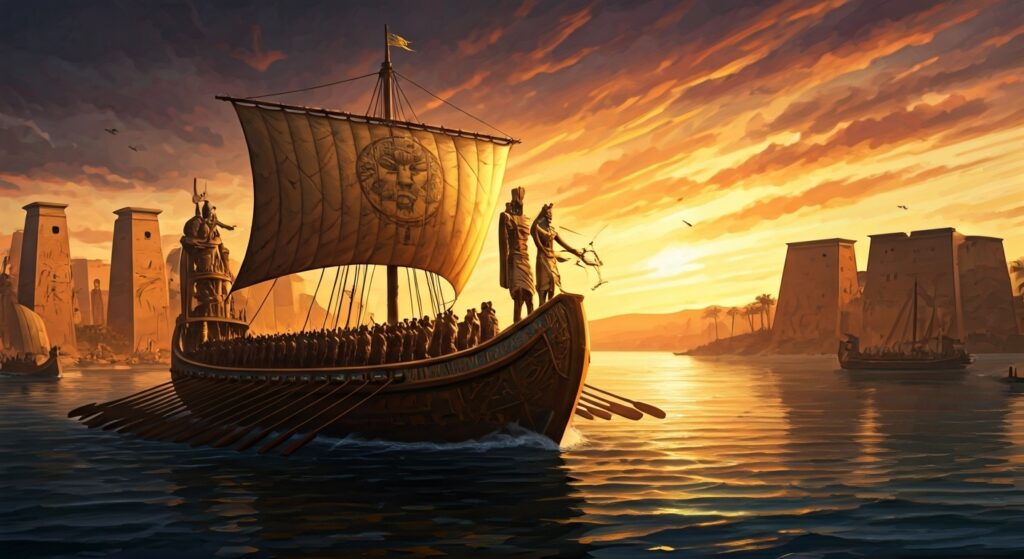
Then, he executed one of the most astonishing flexes in military history. After being crowned the legitimate Pharaoh of a unified Egypt, Piye didn’t even stay. He packed his armies, sailed back down the Nile to Napata, and ruled his vast new empire from the comfort of his own home.
The Architects of Resurrection
The Kushite Pharaohs who followed—Shabaka, Shebitku, and the legendary Taharqa—didn’t want to conquer Egyptian culture; they wanted to resurrect it. Under their rule, the empire experienced a breathtaking renaissance.
These rulers were ardent traditionalists with a visionary edge. Shabaka moved the royal capital back to Memphis, commissioning the famed Shabaka Stone to preserve ancient theology before it was lost to time. Taharqa, arguably the most famous of the 25th Dynasty, initiated colossal building projects across the empire, particularly at the great temple complex of Karnak. He masterfully blended the classic styles of the Old and Middle Kingdoms with Kushite traditions, creating a stunning Afro-Egyptian synthesis.
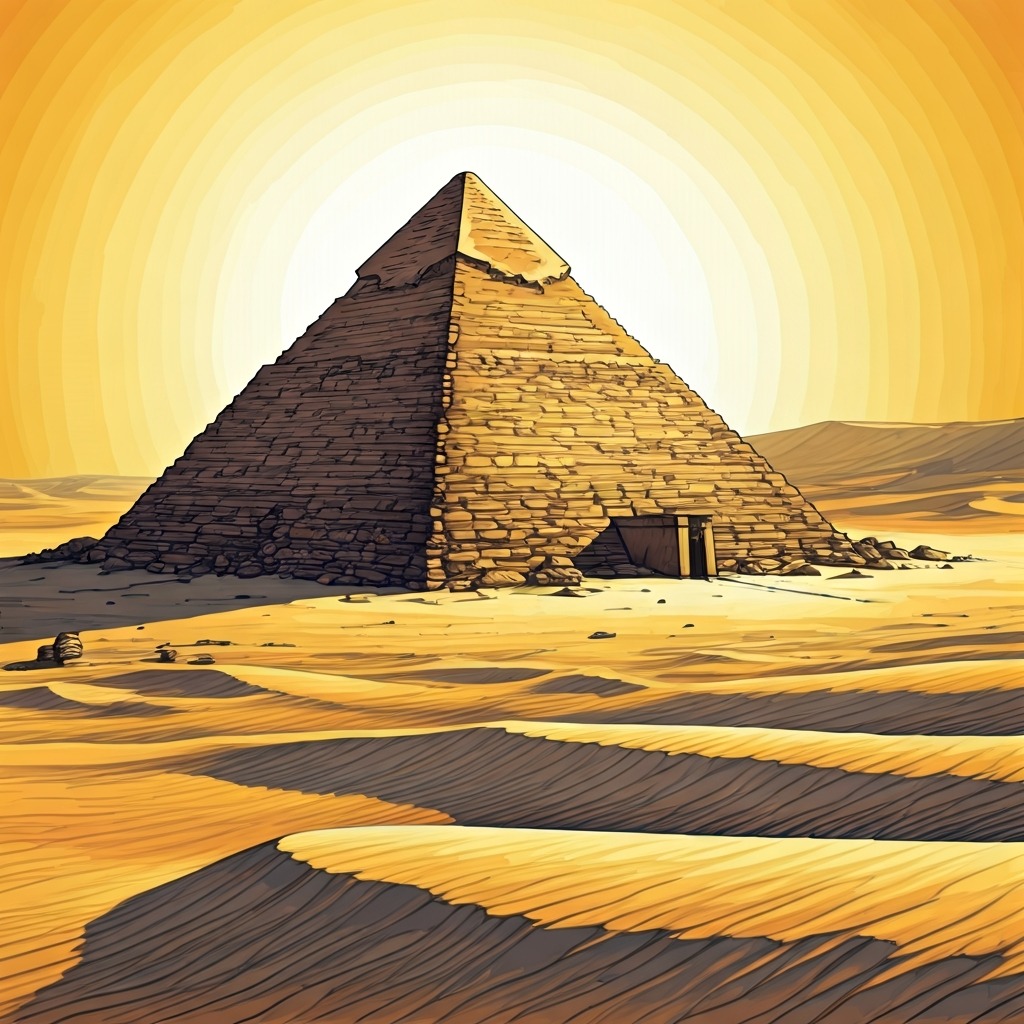
But their most visible legacy was the resurrection of the ultimate symbol of pharaonic power: the pyramid. By the time the Kushites took control, Egyptians had abandoned pyramid building for centuries. The 25th Dynasty brought it back with a vengeance. They constructed towering tombs in the royal cemeteries of El-Kurru and Nuri. Even after their reign in Egypt ended, the Kushites kept the tradition alive. Today, the deserts of Sudan boast over 250 pyramids—more than double the number found in Egypt.
Clash of the Ancient Titans
No golden age lasts forever. The downfall of the 25th Dynasty didn’t come from internal decay, but from the ancient world’s most terrifying apex predator: the Neo-Assyrian Empire.
Taharqa was a brilliant military strategist, successfully repelling the initial Assyrian invasion. But the Assyrians were a relentless, iron-wielding war machine. Under the command of King Esarhaddon, and later Ashurbanipal, they battered Egypt’s borders with brutal, overwhelming force. Bronze weapons shattered against Assyrian iron. Taharqa was forced into a tactical retreat south.
His successor, Tantamani, made one final, desperate, blood-soaked bid to reclaim Egypt. It wasn’t enough. By 656 BCE, the Kushites were pushed out of Egypt for good, retreating to their Sudanese heartland where their kingdom would stubbornly thrive for another thousand years.
The Century-Long Conspiracy
If these Kushite kings saved Egypt from collapse, reunified the empire, and built hundreds of pyramids, why were they relegated to the footnotes of history?
Enter the villains of modern historiography. For decades, the legacy of the 25th Dynasty was deliberately buried by early 20th-century Egyptologists. Blinded by the racial prejudices of their era, men like George Reisner looked at the magnificent ruins and simply refused to accept the truth. They could not fathom that Black African rulers from the south had orchestrated such a sophisticated cultural revival. Instead, they twisted the facts. They mischaracterized the Kushites as mere imitators and bent over backward to invent lighter-skinned ancestors to explain away their genius.
It was a historical cover-up of epic proportions. But the truth is patient. It was hiding in plain sight the entire time, carved into the towering pillars of Karnak and the steep, sun-baked angles of the Sudanese pyramids.
Today, modern archaeology has finally dismantled those prejudiced lies. The Pharaohs of the 25th Dynasty are taking their rightful place in the pantheon of history’s greatest rulers. They were not just conquerors; they were the saviors of a dying Egypt, the bridge between the African interior and the Mediterranean world, and the architects of a legacy that neither an Assyrian invasion nor a century of racist historians could erase.