It is the ultimate visual shorthand for cartoon villainy, unapologetic wealth, and ruthless authority. A single, fragile piece of glass that evolved from a simple optical aid into a potent symbol of elitism. Today, we associate it with sinister masterminds and robber barons, but the true history of the monocle is far more complex—a tale of calculated condescension, physical endurance, and a brilliant sartorial rebellion.
A Weapon Forged in Glass
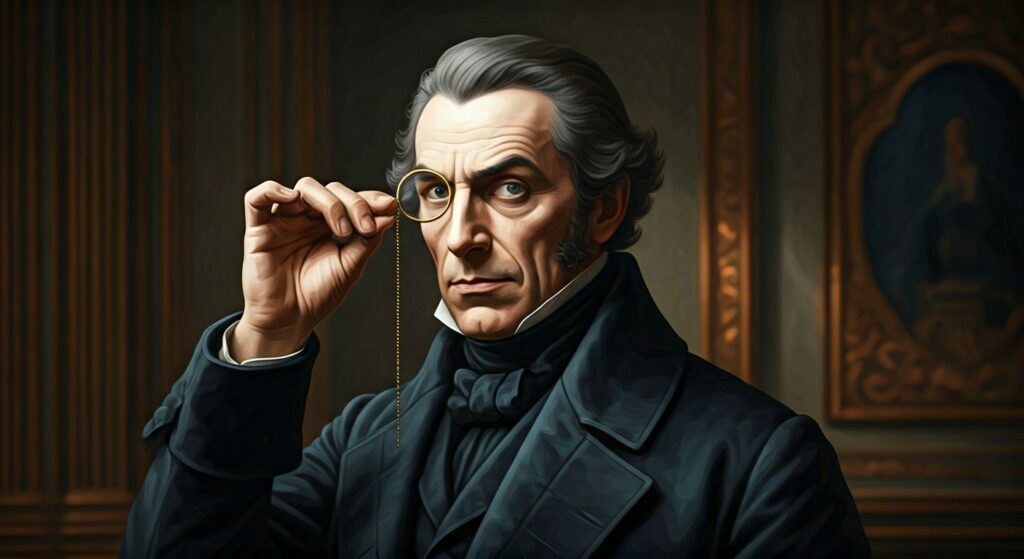
The story of the monocle begins not in a corporate boardroom, but on the glittering, gossip-filled streets of late 18th-century Europe. Before it was wedged firmly into the eye socket, it was known as the “quizzing glass”—a single lens attached to an ornate handle.
The quizzing glass was the weapon of choice for European dandies. These hyper-fashionable men didn’t just use the glass to see; they used it to perceive. Raising a quizzing glass to one’s eye to inspect another person was a deliberate, highly calculated gesture of condescension. It was the 18th-century equivalent of looking someone up and down and silently declaring them entirely inadequate.
The Anatomy of a Sneer
By the 1830s, the sartorial drama escalated. The handle was dropped, and the modern monocle was born. But wearing one required a bizarre physical commitment that inadvertently cemented its cultural reputation.
To keep a piece of glass wedged securely in your eye socket, you must constantly tense your orbicularis oculi, the muscles surrounding the eye. The physical result is immediate: your brow raises, your face stiffens, and your expression transforms into a naturally haughty, supercilious sneer. It was physically impossible to wear a monocle without looking as though you were judging the peasantry.
Furthermore, a monocle is inherently fragile. If you bend over, run, or engage in any strenuous physical activity, it pops out. Therefore, it became an immediate visual shorthand for a man who did not have to perform manual labor. It was the ultimate flex of the leisure class. This physical precarity also birthed a legendary dramatic trope: the theatrical “monocle drop,” used by aristocrats to signify profound shock or outrage.
Capitalists, Commanders, and a Phantom Mascot
As the world moved into the late 19th and early 20th centuries, the monocle reached its peak of power, splitting its influence between two distinct, terrifying groups: British capitalists and Prussian military officers.
In Germany, the monocle was the defining accessory of the Junker class and high-ranking military officials. It projected a cold, calculating, and ruthless authority. This is exactly why vintage Hollywood films from World War I and II almost always feature a sinister German villain sporting the signature single lens.
Meanwhile, in America and Britain, the monocle became inextricably linked to immense wealth. It was the accessory of the robber baron, an association immortalized in 1916 by Mr. Peanut, who sported a top hat, cane, and monocle to project the image of a sophisticated, affluent gentleman.
The monocle’s association with capitalism is so deeply embedded in our collective psyche that it has caused a massive cultural hallucination. Think of the Monopoly mascot, Rich Uncle Pennybags. You are likely picturing him with a monocle right now. But in reality, due to a widespread Mandela Effect, he has never worn one. We simply assume he does because our brains cannot separate the concept of a billionaire from that little circle of glass.
A Sartorial Plot Twist
Just when the monocle seemed destined to remain the exclusive domain of patriarchal tycoons and warmongers, history delivered a brilliant curveball.
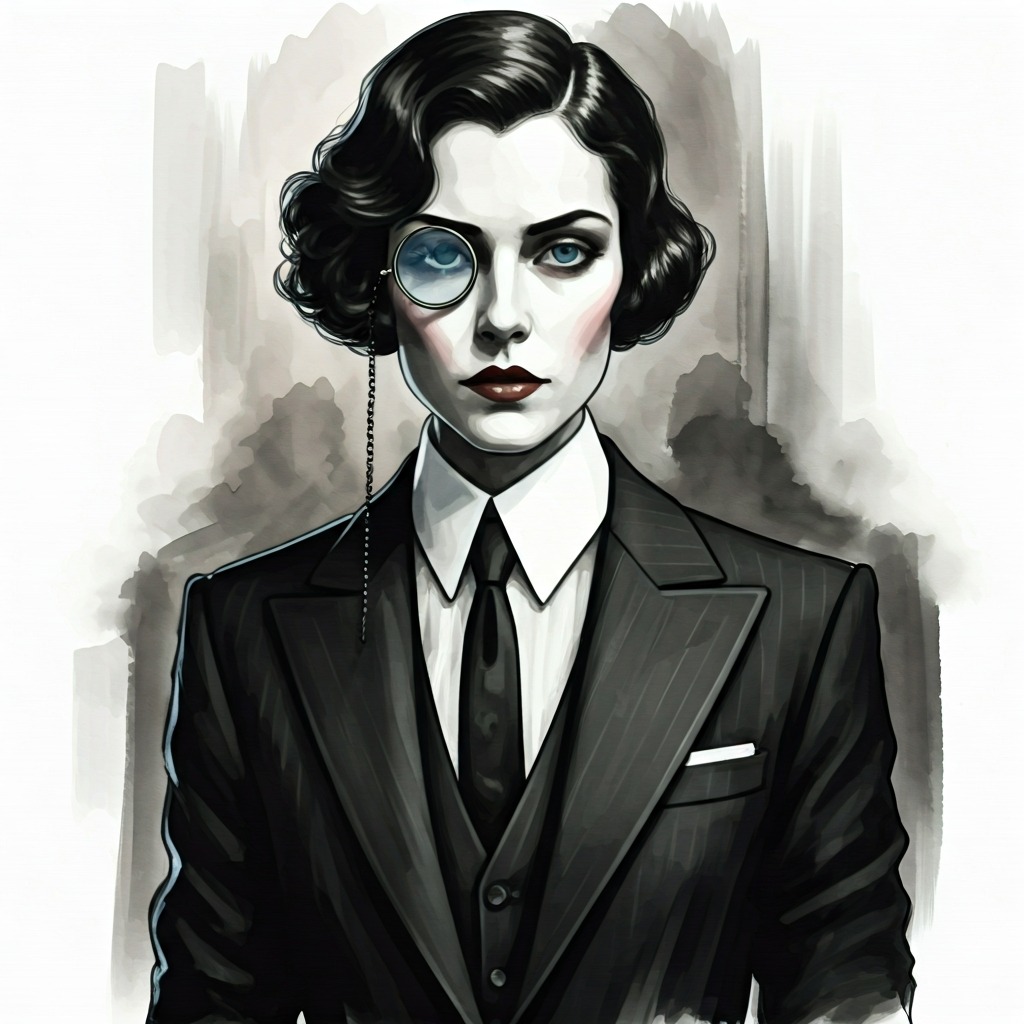
In the early 20th century, the monocle was co-opted by the lesbian subcultures of Paris, London, and Weimar Berlin. Pioneering women like author Radclyffe Hall and artist Una Troubridge began wearing monocles paired with sharply tailored men’s suits.
This was a masterclass in fashion as rebellion. By taking the ultimate symbol of elite, male-dominated aristocratic power and placing it over their own eyes, these women subverted gender norms entirely. They turned an accessory of the patriarchy into a bold, undeniable statement of queer identity. Stealing the oppressor’s favorite accessory and making it look chicer than they ever did remains one of history’s ultimate power moves.
The Shattering of an Era
The monocle’s reign, however, could not last forever. After World War I, its heavy association with the German military made it highly unpopular—and frankly, dangerous to wear—in Allied nations.
Simultaneously, advancements in optometry made standard spectacles much more effective, comfortable, and stylish. Why walk around with a permanently cramped face when you could wear a gorgeous pair of tortoiseshell frames? As the 20th century progressed and society leaned toward egalitarianism, the monocle stopped looking sophisticated and started looking like an obnoxious display of class superiority.
Today, the monocle survives almost exclusively as a theatrical prop. It is a ghost of fashion past, waiting in the wings to instantly transform an actor into a wealthy tycoon, a snooty butler, or a diabolical mastermind. It may have vanished from our streets, but its legacy remains—a crystal-clear lens through which we can view the absolute drama of human history.