A Blinding Flash in the Dark
In the early summer of 1708, the Spanish galleon San José was a floating fortress. Armed with 62 guns, it carried a staggering cargo of gold, silver, and emeralds—the financial lifeblood of King Philip V, desperately needed to fund the War of the Spanish Succession. But as the behemoth cut through the dark waters of the Caribbean, a predator lay in wait.
On June 8, 1708, near the Rosario Islands off the coast of Cartagena, Colombia, a British squadron led by Commodore Charles Wager sprang its trap. Wager didn’t want to sink the San José; he wanted to capture the empire-saving wealth hidden in its hold.
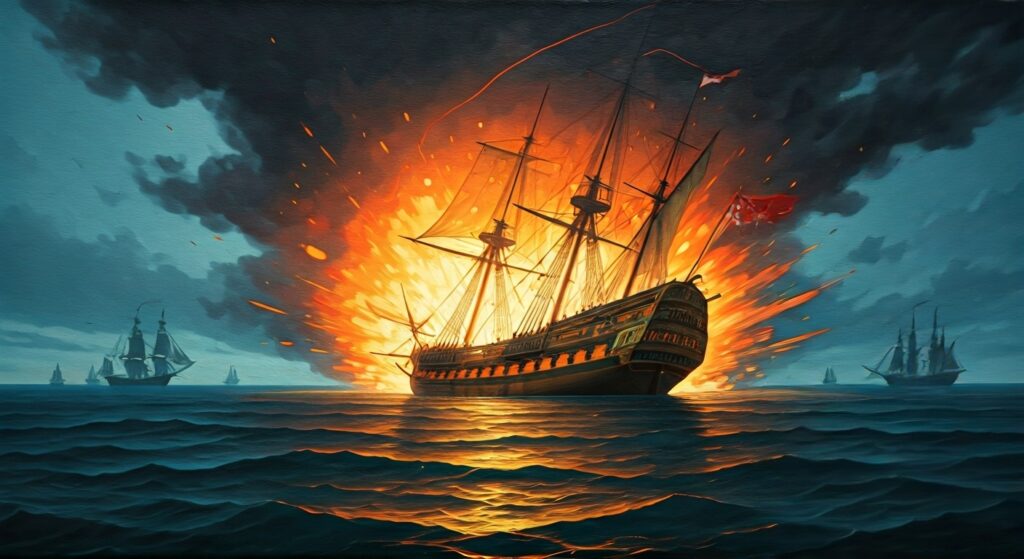
Cannons roared, tearing the night apart in what would become known as the Battle of Baru. The British maneuvered close, preparing to board and take the treasure by force.
Then, the unthinkable happened.
Whether triggered by a lucky British cannonball or a catastrophic internal accident, the San José’s powder magazines ignited. The explosion was so violent it obliterated the galleon. In a matter of minutes, the ship, nearly 600 crew members, and an unimaginable fortune were swallowed by the crushing depths of the ocean.
The Holy Grail of Shipwrecks
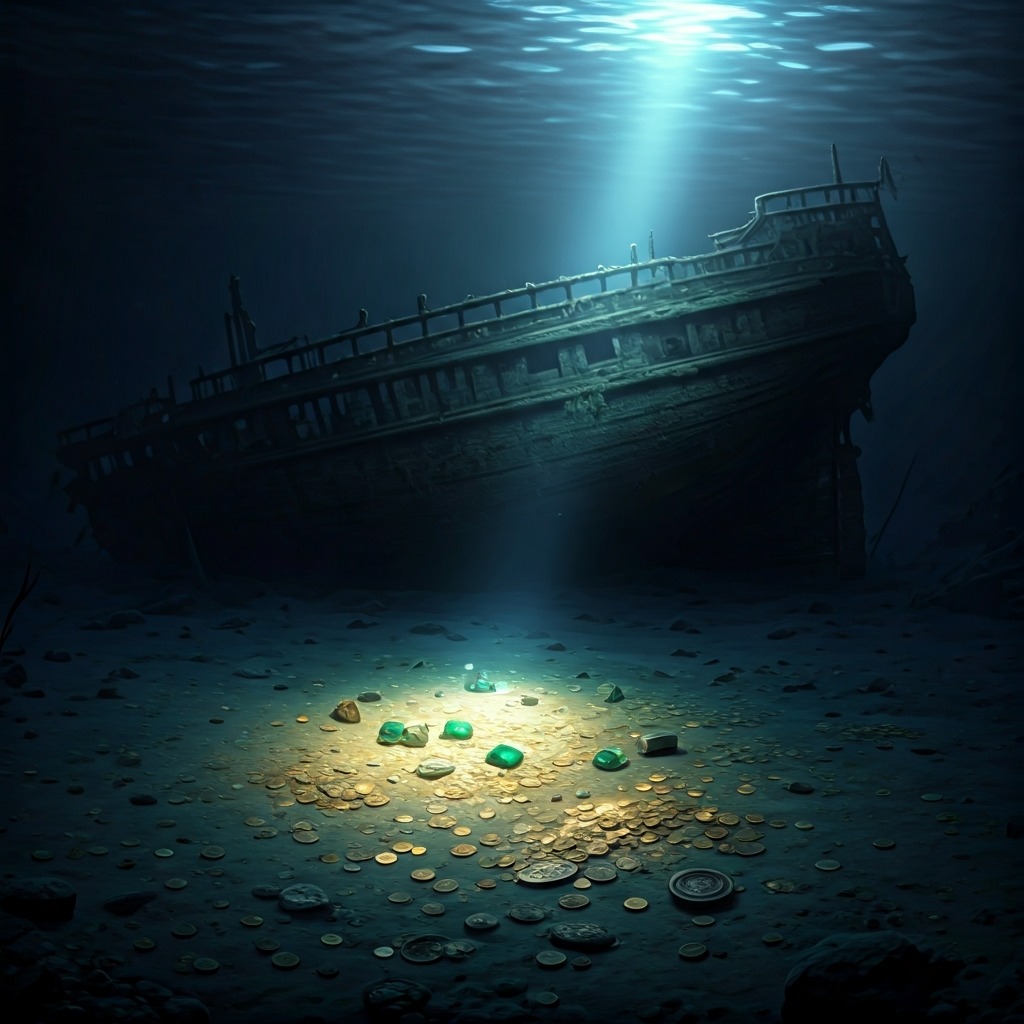
For three centuries, the San José sat in the pitch-black abyss. The wooden hull rotted away, but the gold, silver, and emeralds remained untouched. Modern estimates place the value of the sunken hoard between $17 billion and $20 billion, earning it a mythical moniker: the “Holy Grail of Shipwrecks.”
The lure of a $20 billion payday is a siren song that treasure hunters simply cannot ignore. In 1981, a US-based salvage company, Sea Search Armada (SSA), claimed they had found the debris field. They immediately demanded a 50 percent cut from the Colombian government, sparking a bitter legal standoff that paralyzed any physical recovery efforts.
The ocean kept its true secret for another three decades. Then, in 2015, the narrative took a highly technical turn. Operating in deep secrecy, the Colombian government and the Woods Hole Oceanographic Institution deployed an autonomous underwater vehicle. Gliding silently just above the seafloor, the robotic sub independently discovered the wreck at a completely different location than SSA had claimed.
The Holy Grail had officially been found. But as is so often the case in maritime history, the discovery was only the beginning of a new storm.
A $20 Billion Powder Keg
Finding the ship didn’t end the mystery; it ignited a multi-national legal war.
Colombia immediately claimed the wreck as submerged cultural patrimony, insisting it belonged entirely to the state. Spain aggressively pushed back, asserting ownership under the international principle of sovereign immunity, arguing the San José was a state-owned military vessel when it sank.
Meanwhile, Sea Search Armada refused to back down. Furious over being cut out of the 2015 discovery, the American salvage company launched a staggering $10 billion arbitration lawsuit against Colombia, claiming a massive breach of contract.
The Blood on the Gold
Beneath the squabbling of nations and corporations lies a much darker, deeply human claim to the wealth.
The Qhara Qhara indigenous nation of Bolivia recently stepped into the legal fray with a profound argument. The gold and silver sitting at the bottom of the ocean didn’t magically appear in the Spanish galleon’s hold. It was extracted from the infamous Potosi mines by their ancestors under brutal, lethal forced labor conditions during Spanish colonial rule.
For the Qhara Qhara, the San José isn’t a jackpot—it’s a crime scene. The wealth, they argue, rightfully belongs to the descendants of those who bled for it.
Today, the fate of the San José hangs in limbo. Colombia is moving forward with controversial plans to robotically recover artifacts for a national museum, while lawyers across the globe sharpen their knives over the ethical and legal disputes. Three hundred years after it vanished in a blinding flash of fire, the San José is still causing chaos, a stark reminder that out on the terrifying, endless ocean, the ghosts of the past rarely stay buried.