A Profane Echo in a Sacred Space
Picture this: It is the dead of winter in the Middle Ages. You step into the cavernous, freezing sanctuary of a grand French cathedral in Beauvais or Rouen. The air is thick with the sharp scent of frankincense. Stained glass windows cast long, solemn shadows across the stone floor. You brace yourself for the haunting, melodic tones of a Gregorian chant to echo from the high altar.
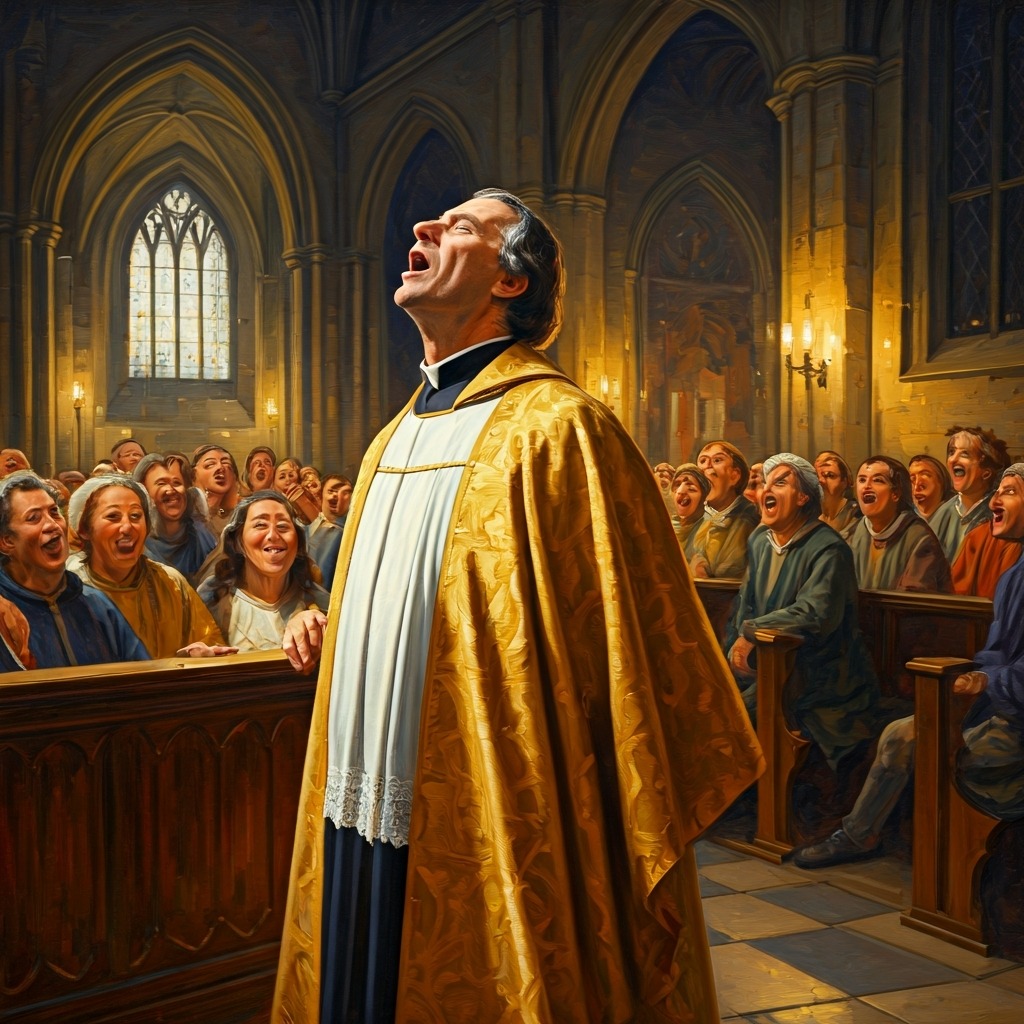
Instead, a profound silence falls over the congregation. The presiding priest steps forward in his ornate vestments. He raises his hands, takes a deep breath, and… brays like a donkey.
Without missing a beat, the entire congregation throws their heads back and lustily brays right back at him.
Welcome to January 14th. Welcome to the Festum Asinorum—the Feast of the Ass.
The Guest of Honor Wears Hooves
To understand how the highly rigid, deeply sacred medieval Catholic Church suddenly transformed into a barnyard, you have to look at the post-Christmas winter cycle. This was a dark, brutal time of year that desperately demanded a little levity, giving rise to the infamous Feast of Fools. But the Feast of the Ass was its own special brand of unhinged chaos.
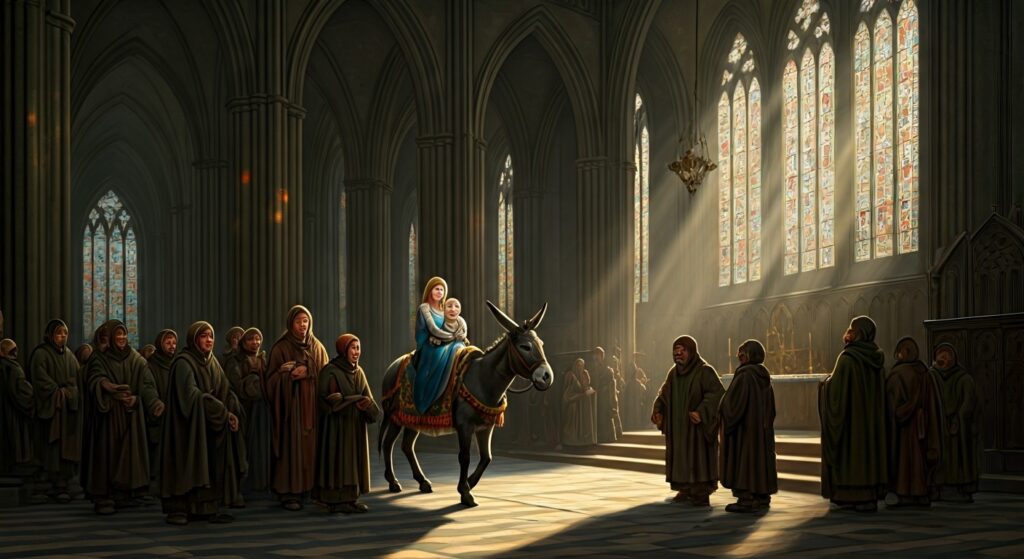
Ostensibly, the festival was a pious commemoration of the Flight into Egypt. It was designed to honor the humble donkey that carried the Virgin Mary and the infant Jesus to safety, drawing a little extra inspiration from Balaam’s talking ass in the Old Testament. But in practice? It was a sanctioned, spectacular descent into madness.
The ritual began in the winding, muddy streets. A young, exceptionally beautiful girl holding a child would be seated upon a donkey draped in rich, extravagant fabrics. The crowd would parade this donkey through the town, right up to the massive wooden doors of the cathedral. But they didn’t leave the animal tied up outside. They marched the beast straight down the central aisle, leading it into the sanctuary and positioning it right next to the high altar.
The Liturgical Fever Dream
Once the donkey was in place, the true spectacle began. What followed was a carnivalesque parody of the sacred Latin Mass that would make a modern churchgoer spontaneously combust.
The lower clergy and the common folk would launch into the Orientis partibus, also known as the “Song of the Ass.” This wasn’t a crude tavern shanty; it was a solemn, beautifully composed hymn dedicated entirely to praising the strength, speed, and undeniable virtues of the donkey. The catch? The chorus required the entire congregation to mimic the braying of an ass.
But the climax of this liturgical fever dream—the moment of ultimate suspense—came at the very end of the service.
In a traditional Latin Mass, the priest dismisses the congregation with a solemn “Ite, missa est” (Go, the Mass is ended), to which the people reply, “Deo gratias” (Thanks be to God).
Not on January 14th. During the Feast of the Ass, the presiding priest was required to look out at his flock and bray “hinhan” three times. The congregation, seizing their moment, would bray their “Amens” in return.
A Calculated Descent into Chaos
Why on earth did the strict, hierarchical medieval Church allow their most sacred spaces to be mocked?
Historians call it a “world upside down” ritual, and it was psychologically brilliant. The medieval world was incredibly rigid. You were born into your class, you died in your class, and you spent your life obeying the strict, unyielding rules of the nobility and the higher clergy. The Feast of the Ass acted as a vital social safety valve.
For one day a year, the subdeacons and the common peasants were allowed to mock the very institutions that ruled them. They could parody the solemnity of the Church, drink to excess, and act like fools in a controlled, sanctioned environment. By letting the pressure out once a year, the Church ensured that the peasants wouldn’t actually revolt the other 364 days. It was chaotic, yes, but ultimately a mechanism of control.
Silencing the Bray
Of course, all deeply weird things must come to an end.
As the Middle Ages dragged on, the higher-ups in the Church hierarchy grew increasingly uncomfortable with the rowdiness. The drinking escalated. The parody felt a little too real, and the perceived sacrilege started to outweigh the benefits of the social safety valve. Reformist bishops began demanding an end to the braying.
The fun was officially banned by the Council of Basel in 1435. While the common folk stubbornly clung to their beloved donkey party for a while longer, the festival was eventually suppressed entirely by the sweeping, austere reforms of the Counter-Reformation in the 16th and 17th centuries.
The cathedrals went quiet again. The Latin Mass returned to its solemn, bray-free glory. But the next time you step into a hushed, centuries-old church, listen closely to the silence. If you strain your ears, you just might catch the faint, phantom echo of a priest braying at the altar.