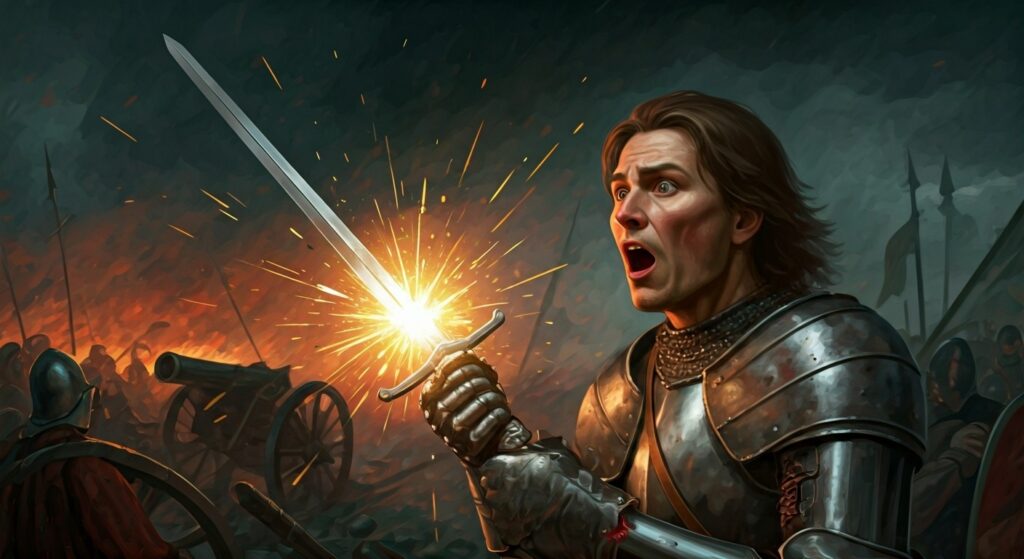
The year was 1504, and the Siege of Landshut was a theater of blood and thunder. Amidst the chaos of the War of the Landshut Succession, a 24-year-old German Imperial Knight named Gottfried “Götz” von Berlichingen charged into the fray, hungry for glory. But destiny had a brutal detour planned. A deafening crack echoed across the battlefield as an enemy cannonball tore through the air, smashing directly into Götz’s sword. The sheer force drove the shattered blade through his right arm, cleanly severing his dominant hand.
In the 16th century, losing your sword hand was a death knell for a warrior. It meant a quiet, humiliating retirement in the countryside. But Götz von Berlichingen was not a man who accepted defeat. He didn’t want a quiet life. He wanted his hand back—and he was willing to defy the limits of Renaissance medicine to get it.
Forging the Iron Knight
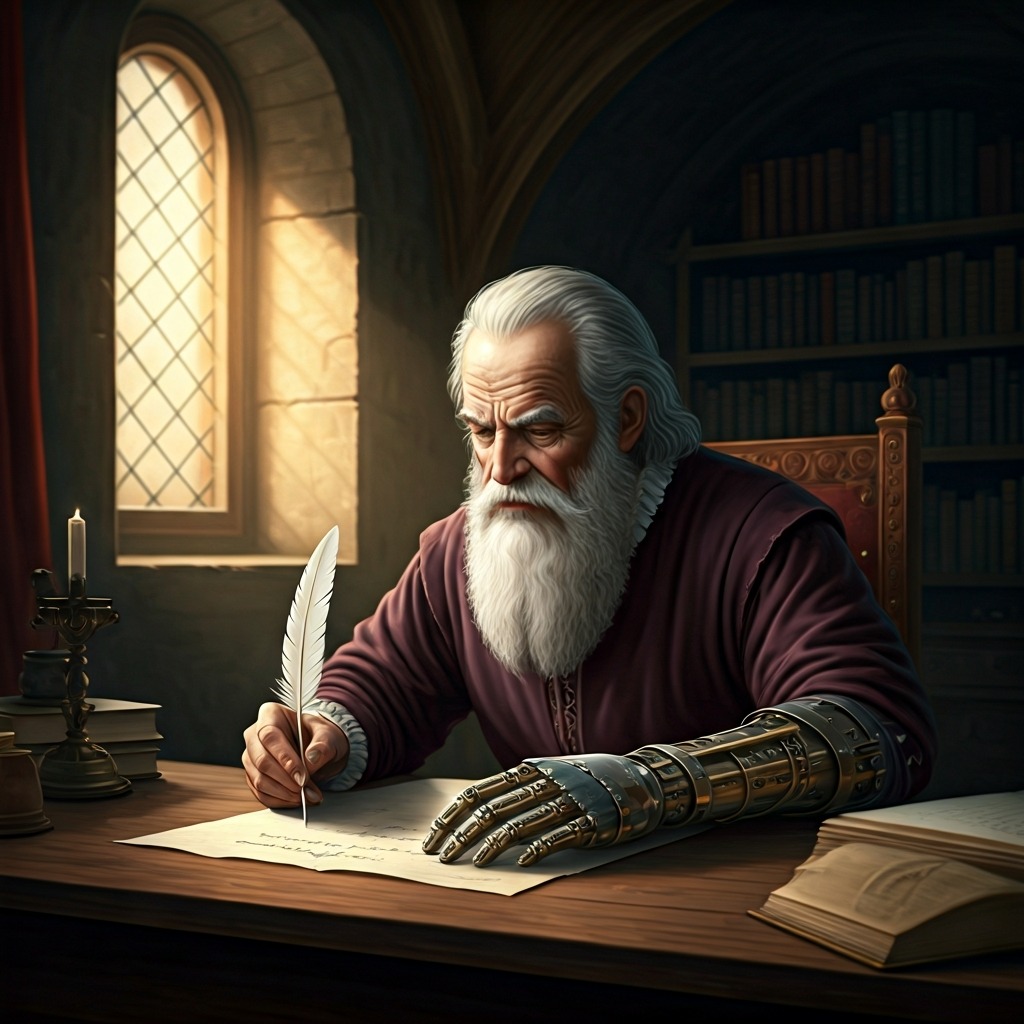
Rather than fade into obscurity, Götz sought out a local blacksmith with a seemingly impossible commission: build a hand that could hold a broadsword. He didn’t settle for a crude pirate’s hook. By 1530, Götz had acquired a masterpiece of early modern engineering—a prosthetic iron hand equipped with spring-loaded, gear-operated fingers.
By using his left hand to press a series of hidden buttons, Götz could lock the metallic digits into various precise positions. The grip was astonishingly strong. With his new iron fist, he could seamlessly control the reins of his warhorse, hoist a heavy wooden shield, wield a lethal blade, and even hold a delicate quill to write letters. He returned to the battlefield not as a crippled veteran, but as “Götz of the Iron Hand”—a terrifying, metal-clad juggernaut who looked like a time-traveling cyborg.
The Feud Lord of the Holy Roman Empire
Armed with his mechanical appendage, Götz unleashed four decades of absolute chaos. He became a heavily armored Robin Hood—or a ruthless warlord, depending on who you asked. He engaged in relentless Fehden (private feuds), specifically targeting wealthy merchants and corrupt clergy. He raided caravans, kidnapped nobles for ransom, and disrupted the local economy so severely that the Holy Roman Emperor placed him under the Imperial Ban (Reichsacht) twice.
This decree stripped Götz of all legal rights, making it perfectly legal for anyone to hunt him down and kill him. Yet, no one could. Götz and his iron hand were simply too formidable to be stopped by mere mortals.
The Accidental Rebel
The legend of the Iron Knight took a bizarre turn in 1525 during the German Peasants’ War. A massive uprising of commoners was sweeping across the empire, burning castles and demanding basic rights. Through a twist of fate, Götz was cornered by the massive Odenwald peasant army. Recognizing the elite military commander, they gave him a stark ultimatum: lead us, or die.
Ever the survivor, Götz agreed to command the rebellion. But the peasant uprising was ultimately crushed by the empire’s professional armies. Götz was captured and, despite his vehement claims that he was coerced into treason at sword-point, he spent years imprisoned. Eventually, he was placed under strict house arrest at his own Hornberg Castle. For a man addicted to the adrenaline of combat, being grounded in his own fortress was a fate worse than death.
The Emperor’s Desperate Call
But you cannot keep a good cyborg down. Years later, Emperor Charles V found himself drowning in a desperate two-front war. He needed commanders who were ruthless, experienced, and terrified of absolutely nothing.
Swallowing his pride, the Emperor formally pardoned the aging knight, pulling him out of his agonizing house arrest. In 1542, Götz rode out to fight the Ottoman Empire in Hungary, and in 1544, he battled the French in Champagne. He was in his sixties—an ancient, practically unheard-of age for a frontline soldier in the 16th century—yet there he was, still swinging a broadsword with a gear-locking iron fist.
The Immortal Insult
Götz von Berlichingen finally died peacefully in his bed at Hornberg Castle in 1562, at the ridiculously old age of 82. But his legacy was far from over.
Late in life, the Iron Knight penned a blood-soaked autobiography detailing his chaotic adventures. Two centuries later, the legendary German writer Johann Wolfgang von Goethe stumbled upon the manuscript and adapted it into the famous 1773 drama Götz von Berlichingen. Goethe’s play immortalized Götz’s defiant spirit, but it also popularized the knight’s favorite vulgar insult. When an enemy once demanded his surrender, Götz allegedly yelled down from his castle walls, delivering what is now known as the “Swabian salute”:
Er kann mich im Arsche lecken.
“He can lick my ass.”
Götz von Berlichingen didn’t just survive a career-ending injury; he engineered his own resurrection, terrorized an empire, and left behind a legacy of iron-willed defiance that echoes through history.