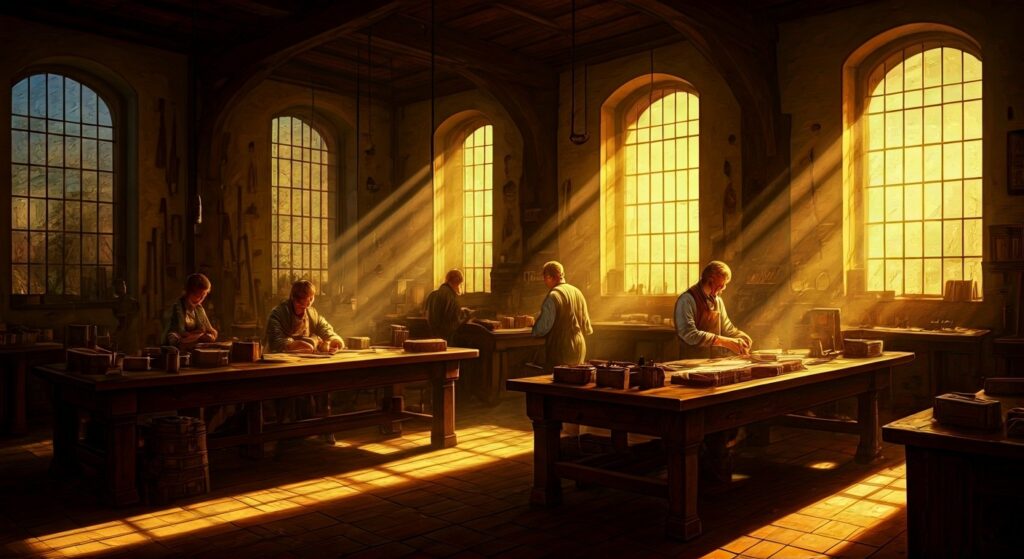
Pick up a simple, everyday matchstick. It seems entirely harmless—a tiny wooden wand tipped with a drop of red. But rewind to the 19th century, and this mundane little fire-starter was a monster hiding in plain sight. It didn’t just burn down buildings; it literally ate people alive from the inside out.
The Miracle of Instant Fire
In Victorian England, the invention of the “strike-anywhere” match was hailed as an absolute marvel of modern chemistry. You could strike these matches on a brick, a boot, or a wall, and poof—instant fire. The secret ingredient that made this chemical magic possible was white phosphorus, a highly volatile and incredibly toxic substance.
But the real horror wasn’t the fire. It was the factories.
The workforce churning out these miraculous little fire-starters consisted almost entirely of impoverished young women and children, historically known as matchgirls. To keep up with booming demand, these workers were subjected to grueling, 14-hour shifts in cramped, poorly ventilated rooms. The air was thick with the inescapable, garlic-like stench of white phosphorus vapor.
The factory owners knew the fumes were dangerous, but profits were astronomical. And for the workers breathing in that toxic fog day after day, a gruesome nightmare was just beginning.
The Bone That Glowed in the Dark
The matchgirls weren’t fighting a visible threat; they were battling a chemical reaction they couldn’t even comprehend.
The scientific mechanism of the disease, medically known as phosphorus necrosis of the jaw—or simply “phossy jaw”—was as fascinating as it was macabre. The white phosphorus vapor floating in the factory air would mix with the workers’ saliva. If a worker had a dental cavity or exposed gums, which was practically a given for the impoverished working class of the era, the toxic chemical cocktail would seep directly into their bloodstream and pool in the jawbone.
This led to severe localized toxicity. The initial symptoms were deceptive: severe toothaches, swollen gums, and a foul-smelling discharge. But as the disease advanced, the white phosphorus caused the bone tissue of the jaw to literally rot away.
Then came the detail that sounds ripped straight from a gothic horror novel. Because the dying bone tissue was completely saturated with the chemical, the affected workers’ jawbones would emit a greenish-white glow in the dark.
Imagine lying in the pitch black of a Victorian slum, in excruciating pain, only to see your own face illuminating the darkness with a sickly, chemical luminescence.
The Butcher’s Cure
If left untreated, the necrotic infection would inevitably creep to the brain or trigger systemic organ failure, resulting in an agonizing death.
Medical science at the time was far from delicate. The only effective intervention to save a worker’s life was the complete surgical removal of the affected jawbone. It was a savage, brutal procedure performed long before the advent of modern antibiotics, leaving the survivors permanently and severely disfigured.
The Spark of Rebellion
You can only push people so far before they ignite. The horrific, exploitative conditions at the Bryant & May match factory in London finally reached a boiling point.
Led by the fierce social activist Annie Besant, the workers walked out. The famous Matchgirls’ Strike of 1888 was a massive catalyst for early labor rights and occupational health movements. Suddenly, the plight of these young women—and the deadly nature of white phosphorus—was front-page news, drawing widespread public outrage.
The strike proved that science and social justice are deeply intertwined. In 1891, the Salvation Army stepped in and opened their own match factory, proving that a safer alternative was possible. They exclusively produced “safety matches” using red phosphorus, an allotrope of white phosphorus that was fundamentally different on a molecular level. Red phosphorus was non-toxic and required a specific, chemically treated striking surface to ignite. It didn’t poison the workers, and it didn’t accidentally ignite in people’s pockets.
A Monument in Red
The public outcry, combined with the proven viability of red phosphorus, eventually forced the hand of lawmakers. In 1906, the Berne Convention officially prohibited the use of white phosphorus in match manufacturing worldwide.
It was one of the first major international victories for occupational health and safety, effectively eradicating phossy jaw as an industrial disease.
So, the next time you strike a match to light a candle or start a campfire, take a second to look at that little red tip. It’s not just a piece of everyday chemistry; it’s a monument to the brave, glowing girls of Victorian England who fought a toxic monster and won.