When marine archaeologists finally cracked open the rusted hull of the H.L. Hunley in 2000, they braced themselves for a gruesome scene. The Confederate submarine had been lost at the bottom of the Atlantic for 136 years. But what they found inside wasn’t just a shipwreck—it was an eerie, chilling locked-room mystery.
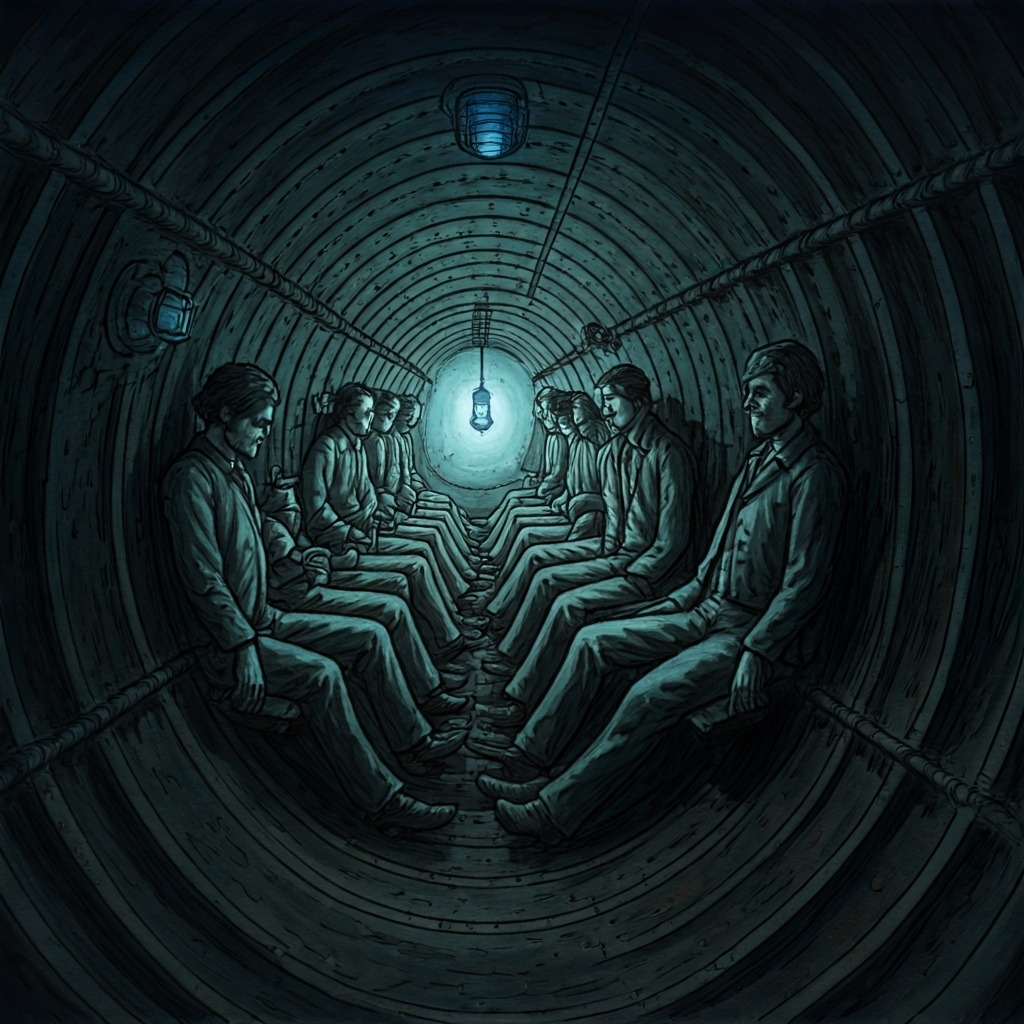
The skeletal remains of the eight-man crew were still seated perfectly at their battle stations. There were no signs of panic. No one had rushed the hatches. No one had tried to pump out the water. They had simply sat in the pitch black and died.
To understand why, you have to go back to 1863, to a vessel that was less a ship and more a steampunk nightmare.
The Iron Death Trap
During the American Civil War, the Confederate Navy was desperate to break the stranglehold of the Union blockade. Their solution was the Hunley, a 40-foot cylindrical iron steam boiler barely wide enough to fit a man’s shoulders. It was powered entirely by human exertion: seven men sat shoulder-to-shoulder, violently cranking a propeller shaft by hand, while the eighth man steered.
Its weapon was a “spar torpedo”—a copper cylinder packed with 135 pounds of black powder, bolted to the end of a long wooden pole at the bow. The plan was to ram this explosive directly into an enemy ship. What could possibly go wrong?
As it turns out, absolutely everything.
A Cursed Vessel
Shortly after the Hunley arrived in Charleston, South Carolina, it claimed its first victims. On August 29, 1863, the submarine was moored with its hatches open to give the claustrophobic crew a breath of fresh air. A passing ship sent a massive wake rolling toward the dock, swamping the Hunley and sending it plunging to the harbor floor. Five men drowned in the dark.
For any sane naval command, this would be the end of the experiment. But the Confederacy simply dragged the metal tube out of the muck, pumped out the water, and asked for more volunteers.
By October 1863, the submarine’s primary financial backer, Horace L. Hunley, demanded to take command for a routine training exercise. The submarine slipped beneath the surface… and never came back up. When salvage crews located the vessel weeks later, it was nose-deep in the harbor mud. All eight men aboard, including Hunley himself, had asphyxiated.
The submarine had now killed thirteen of its own men without ever engaging the enemy. It was a cursed iron tomb. Yet, unbelievably, the Confederate Navy raised it a second time, cleaned it out, and prepared for war.
A Blue Light in the Dark
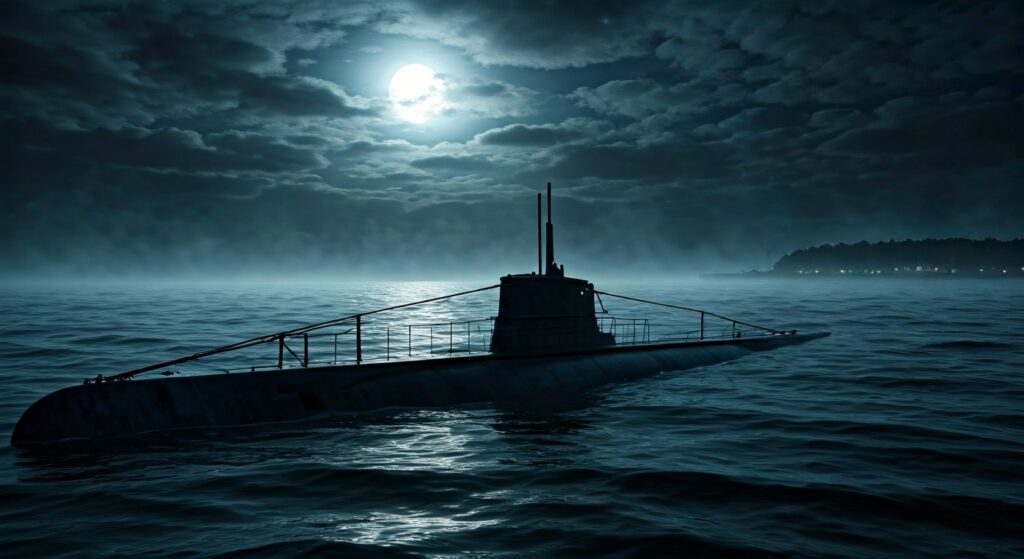
On the freezing night of February 17, 1864, commanded by Lieutenant George Dixon, the Hunley slipped into the pitch-black waters of the Atlantic. Their target was the USS Housatonic, a massive Union sloop-of-war blockading Charleston.
Under the cover of darkness, the hand-cranked crew pushed themselves to the absolute limit, successfully driving the spar torpedo directly into the Housatonic’s hull. The catastrophic blast tore through the Union ship, sinking the massive vessel in mere minutes. In that fiery instant, the Hunley made history: it was the first time a submarine had sunk an enemy vessel in combat.
From the shore, Confederate soldiers anxiously waited for a sign. Out in the dark harbor, a faint blue light flickered—the pre-arranged signal from Lt. Dixon that the mission was a success.
But they never arrived. The Hunley vanished into the black ocean, taking its eight-man crew to the bottom for the third and final time.
The Invisible Killer
For over a century, historians debated what happened. Did they suffocate? Did a rescue ship accidentally ram them? Did water slowly leak through a cracked viewport? None of it explained the absolute lack of panic discovered when the sub was finally raised in 2000.
The answer didn’t come until modern science caught up with the mystery. A comprehensive 2017 study by Duke University researchers conducted extensive forensic and blast-testing research. What they found was terrifying.
When the Hunley rammed its torpedo into the Housatonic, the explosion didn’t just destroy the Union ship. The blast wave traveled instantaneously through the water and smashed into the Hunley’s iron hull. The shockwave passed right through the metal and directly into the bodies of the crew. The massive pressure fluctuation caused severe pulmonary trauma—known as “blast lung”—and instant, traumatic brain injuries.
The crew was likely killed or instantly incapacitated the millisecond their own torpedo detonated. They didn’t drown in a panic. They didn’t slowly suffocate in the dark. The blue light seen from the shore was likely a dying reflex, or perhaps a misidentified lantern from the sinking Union ship. The men of the Hunley were dead before the water ever started pouring in.
It takes a special kind of bravery—or absolute madness—to climb into an iron tube that has already killed two crews before you. The men of the Hunley changed naval warfare forever, but the ocean always exacts a price. And for 130 years, it kept their final moments a closely guarded secret.