A Macabre Tableau in Death Valley
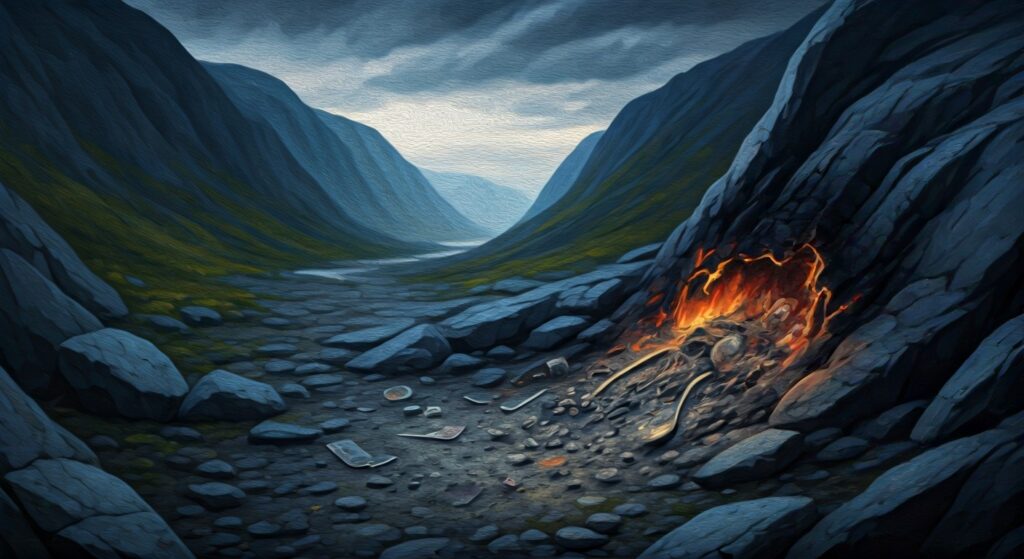
On the chilling afternoon of November 29, 1970, the rugged, unforgiving terrain of Norway’s Isdalen Valley yielded a secret it could not keep. Locals had long ago dubbed the isolated stretch “Death Valley” for its grim history of hiking accidents and suicides. But the discovery tucked away among the freezing scree that day was far more sinister than a tragic misstep.
It was the severely burned body of an unidentified woman. The fire had ravenously consumed the front of her body, leaving her hands clenched in a tight, pugilistic stance—a horrifying physiological reaction to extreme heat. Scattered around her charred remains lay a bizarre, almost theatrical tableau: sleeping pills, empty liquor bottles, a silver spoon, and the ashes of a burned passport.
The Anatomy of a Cover-Up
When the autopsy results returned, the mystery deepened into a labyrinth of contradictions. The medical examiner discovered she had consumed over fifty sleeping pills and ultimately died from a lethal combination of carbon monoxide poisoning and phenobarbital ingestion. The grim reality? She was still breathing when the fire was set. Adding to the mounting intrigue was a mysterious, unexplained bruise on her neck, strongly suggesting a violent physical struggle before her fiery end.
Despite these glaring red flags, the Norwegian police officially ruled her death a suicide. It was a conclusion that defied logic, sparking immediate whispers of a government cover-up.
The Sanitized Suitcases
The investigation took a thrilling turn when police located two suitcases belonging to the mystery woman, stashed in a locker at the Bergen railway station. If investigators were hoping for a quick identification, they were severely disappointed. Whoever packed these bags had meticulously sanitized them to erase any trace of her existence.
Every single clothing tag had been surgically removed. The prescription labels on her eczema cream had been painstakingly scraped away. Inside the luggage, police unearthed the ultimate espionage toolkit: non-prescription glasses, various wigs, a stash of different European currencies, and a cryptic black notepad filled with columns of numbers and letters.
Deciphering the Spy
When military intelligence finally cracked the codes in her black notepad, they unveiled a meticulous, chilling log of her extensive travels across Europe. She was a phantom, operating under at least eight different aliases, including “Genevieve Lancier” and “Claudia Tielt.”
The elaborate disguises, the multiple fake passports, and the coded travel logs painted a glaringly obvious picture: she was a highly trained operative. During the 1970s, Norway was a highly strategic NATO flank, crawling with Cold War paranoia. The Isdal Woman’s coded movements perfectly aligned with cities where the Norwegian military was conducting highly classified tests of the Penguin anti-ship missile. Hotel staff and witnesses later reported that she spoke broken English, smelled faintly of garlic, and frequently demanded room changes to avoid observation.
Was she a Soviet KGB agent keeping tabs on NATO weaponry? A Mossad operative hunting escaped war criminals? While theories abound, the espionage angle remains the most compelling.
A Voice from the Ashes
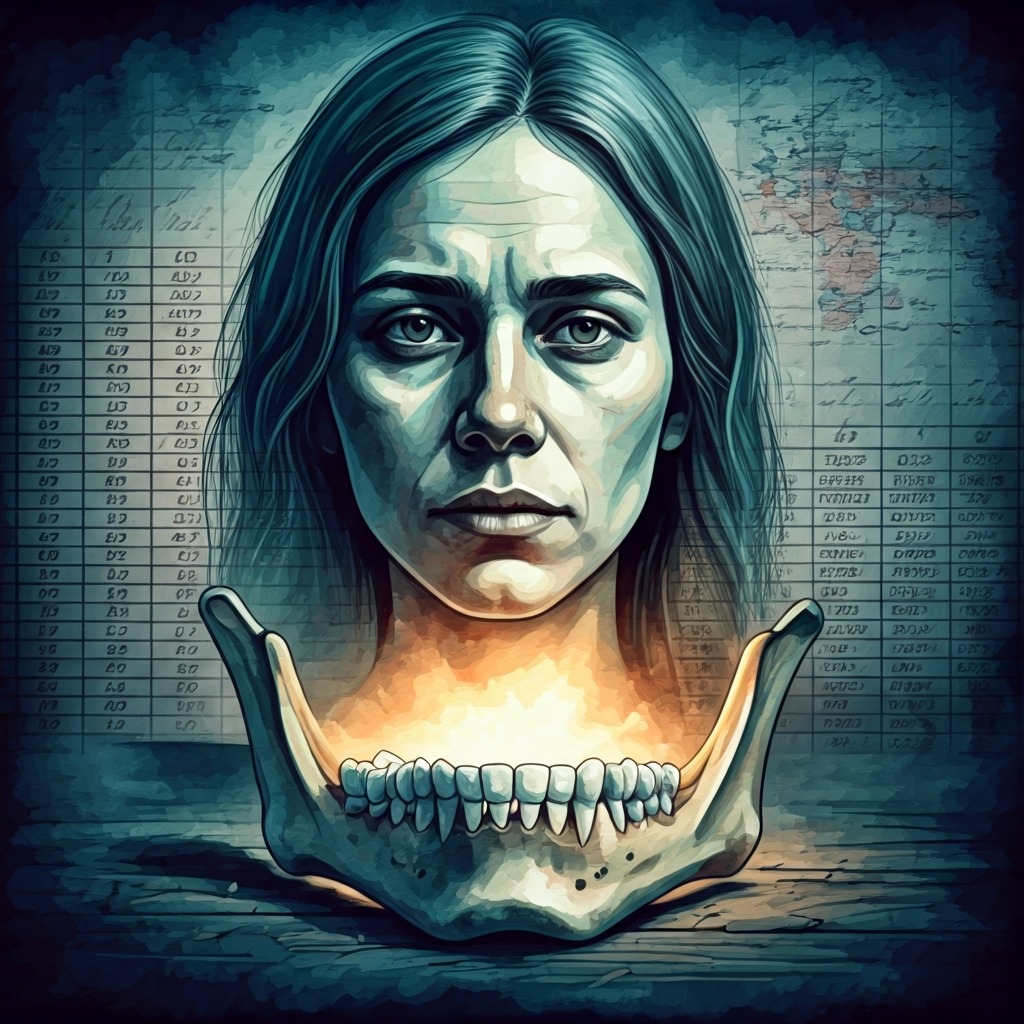
For decades, the trail went ice cold. But in 2016, the case was dramatically reopened using modern forensic techniques on her jawbone, which had been quietly preserved in the police archives.
Using cutting-edge isotope analysis on her teeth, experts unlocked the chemical signatures hidden inside her enamel. The results revealed she was likely born around 1930 near Nuremberg, Germany, before moving to a border region like France or Belgium during her childhood. Furthermore, handwriting analysis of her surviving hotel registration forms corroborated a strict Francophone education.
Despite these incredible scientific breakthroughs, the true identity of the Isdal Woman—and the exact circumstances of who set her on fire in Death Valley—remains one of the most profound enigmas of the Cold War. She was a woman who existed as a ghost, leaving behind only ashes, codes, and an enduring, page-turning mystery.