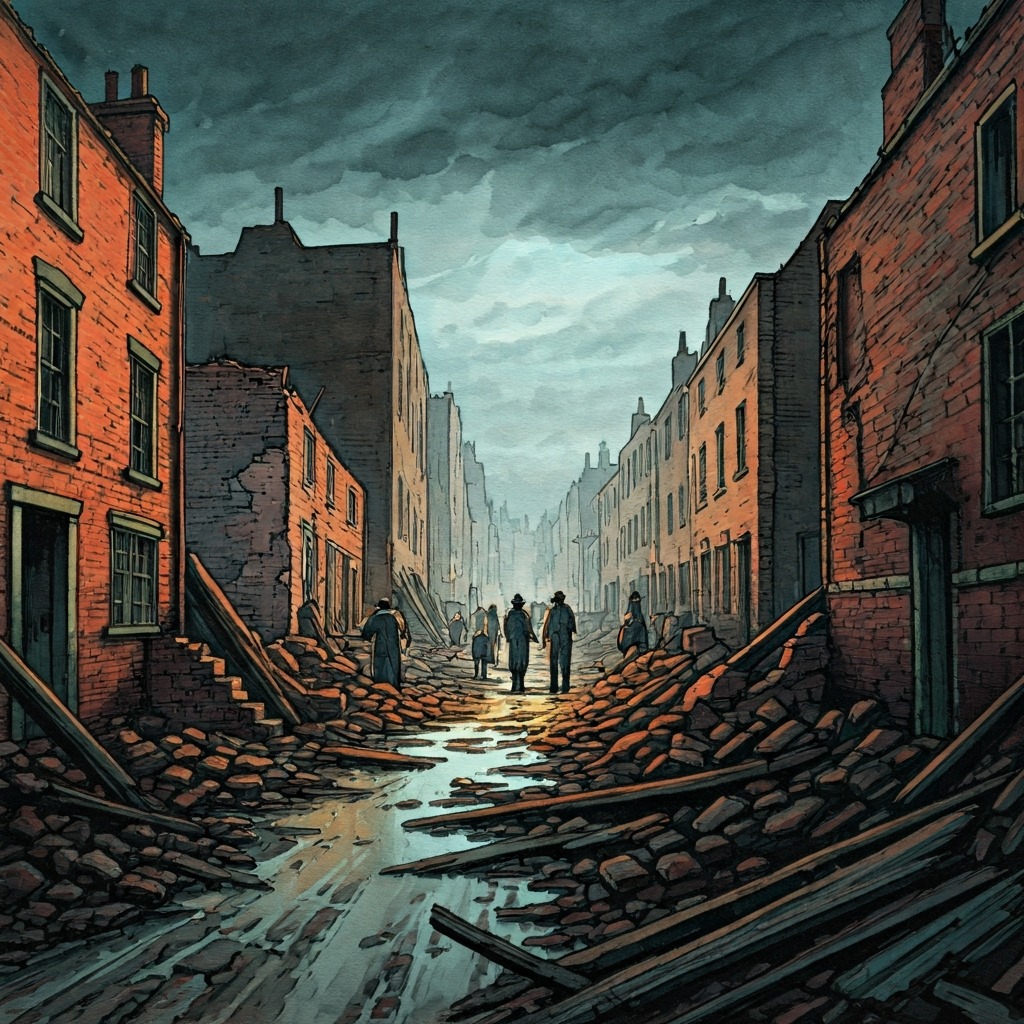
The residents of London’s impoverished St Giles rookery were no strangers to hardship. But on the afternoon of October 17, 1814, they were struck by a catastrophe so bizarre it defies belief. It wasn’t a fire that tore through their narrow streets, nor was it the murky water of the Thames crashing through their doors.
It was a 15-foot tsunami of dark, heavy beer.
The Brewing Arms Race
To understand how a city block could be swallowed by alcohol, you have to look at the cutthroat brewing culture of early 19th-century London. The city was gripped by a massive craze for porter, a rich, heavy beer. To meet the insatiable demand—and to flex their industrial muscle—rival breweries engaged in a high-stakes arms race. Their goal? To build the largest wooden aging vats in the world.
At the forefront of this dangerous competition was the Horse Shoe Brewery, owned by Meux and Company. Towering over the densely populated slums of St Giles, the brewery boasted a colossal wooden vat standing an imposing 22 feet tall. Inside this wooden behemoth churned over 135,000 gallons—roughly one million pints—of fermenting porter.
It was a marvel of industrial engineering. It was also a ticking time bomb.
The Sound of Snapping Iron
Disaster rarely strikes without warning. On that fateful October afternoon, a brewery clerk was completing his routine rounds when a sharp, terrifying crack echoed through the facility. One of the massive, 700-pound iron hoops securing the colossal vat had suddenly snapped under the immense pressure.
In any rational world, this would trigger an immediate evacuation. The clerk rushed to report the broken hoop to his supervisor. But in a fatal display of hubris, the supervisor waved him off, insisting no immediate action was necessary.
For the next hour, the colossal vat sat in the shadows, groaning under the weight of a million pints of dark beer, held together by nothing but failing wood and sheer luck.
A Tsunami of Darkness
About an hour later, the luck ran out.
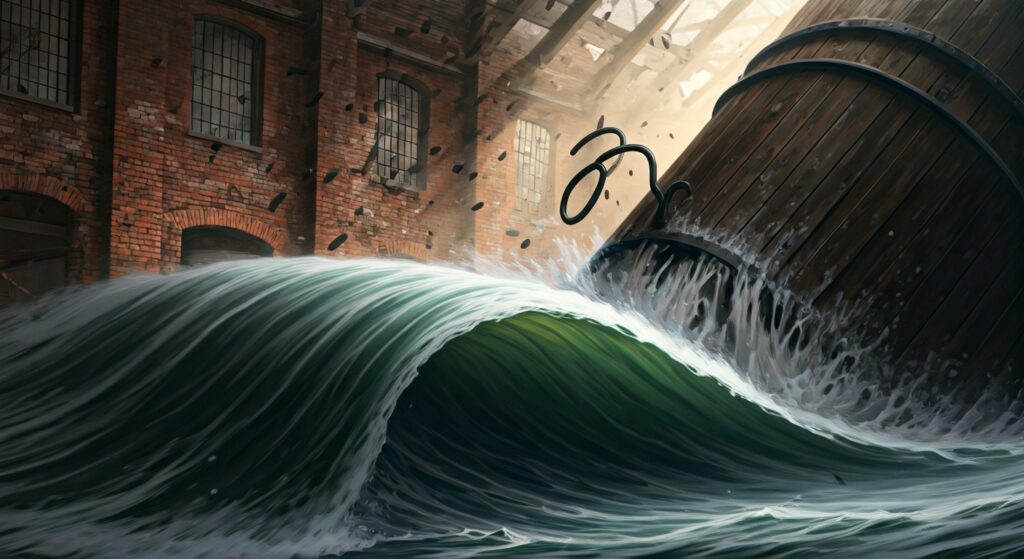
The giant vat catastrophically ruptured. The explosive force was so violent it triggered a deadly domino effect, smashing into neighboring vats and shattering them in an instant. In a matter of seconds, an estimated 320,000 gallons of beer were unleashed.
A 15-foot wave of dark porter burst through the brick walls of the brewery and surged into the crowded streets of St Giles. The sheer force of the deluge was apocalyptic. It instantly leveled two homes and crumbled the brick wall of the nearby Tavistock Arms pub, tragically trapping a teenage servant named Eleanor Cooper beneath the rubble.
The floodwaters didn’t stop there. The wave violently swept through the streets, pouring into the cramped basement dwellings where many of the neighborhood’s poorest families lived. Eight people lost their lives that day—all of them women and children. Among the dead were a mother and daughter sitting down for afternoon tea, and, in a truly heartbreaking twist of fate, a group of mourners attending a cellar wake for a two-year-old boy who had died just the day before.
Cruel Myths and a Ruthless Bailout
For decades, sensationalized gossip plagued the memory of the victims. Victorian tabloids claimed that when the beer flooded the streets, impoverished locals rioted, rushing out with pots, pans, and cupped hands to drink the free liquor from the gutters, allegedly leading to mass deaths from alcohol poisoning.
Modern historians have completely debunked this cruel slander. Contemporary accounts describe a devastated community desperately digging through the rubble with their bare hands, trying to rescue trapped neighbors and mourning their sudden, senseless dead. There were no drunken riots—only a traumatized neighborhood fighting to survive an unimaginable disaster.
Yet, the true injustice came in the aftermath. When the coroner’s inquest concluded, the jury ruled the devastating explosion an “Act of God.” Meux and Company faced zero criminal charges, and the victims’ families received absolutely no compensation.
The audacity of the brewery owners didn’t end there. Facing financial ruin from the lost product, Meux and Company successfully petitioned Parliament for a massive refund on the excise taxes they had already paid on the spilled beer. The government bailed out the wealthy brewery, leaving the grieving families of St Giles to sweep up the pieces.
The only silver lining to this horrific chapter of London’s history was the permanent shift it caused in the brewing industry. The Great Beer Flood proved that the era of massive wooden vats was far too dangerous, leading to their eventual replacement by lined concrete and metal tanks. It was a lesson paid for in blood, forever changing the way the world brews its beer.