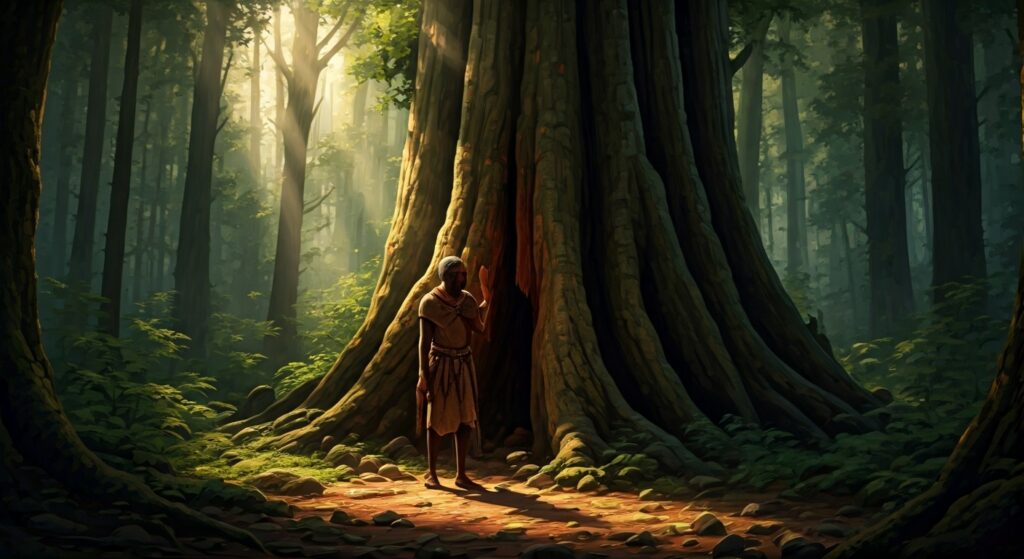
Deep in the ancient, sun-dappled forests of the 12th-century Mali Empire, a man approaches a towering Lenke tree. He carries an axe, but he does not strike. To swing blindly would invite a terrible, violent curse. Instead, he whispers. He offers a blood sacrifice. He begs the forest for permission. Only when the spirits are appeased does the blade fall.
This is not the birth of a simple wooden craft. It is the forging of a magical artifact, a covert communication device, and a vessel for trapped souls. Today, it sits in drum circles and pop studios worldwide, but the djembe was born in the shadows of sorcery.
The Sorcerers of the Savanna
The Mali Empire was a sprawling titan of the 12th century, a massive territory encompassing modern-day Guinea, Mali, Burkina Faso, Ivory Coast, Gambia, and Senegal. Within this bustling civilization, a secretive caste operated in the margins: the Numu.
Feared and revered, the Numu were blacksmiths and woodworkers believed to wield raw, volatile magic. To them, carving a djembe was not an art—it was a dangerous spiritual negotiation. They were the only ones permitted to forge the instrument, acting as the sole mediators between the physical world and the supernatural.
Engineering the Supernatural
Once the dense hardwood of the Lenke tree (Afzelia africana) was felled, the grueling work began. The Numu did not assemble the drum from planks; they painstakingly hollowed a single, massive trunk by hand.
The resulting goblet shape was no aesthetic accident. Centuries before modern acoustic engineering, the Numu designed a chamber capable of producing three distinct, thunderous voices: a deep, resonant bass, a warm mid-tone, and a sharp, cracking slap that could shatter the quiet of the savanna.
The Trinity of Trapped Spirits
According to ancient animist tradition, a completed djembe is not an object. It is a living, breathing entity. Striking the drumhead does not merely produce sound; it awakens a trinity of spirits bound within the wood.
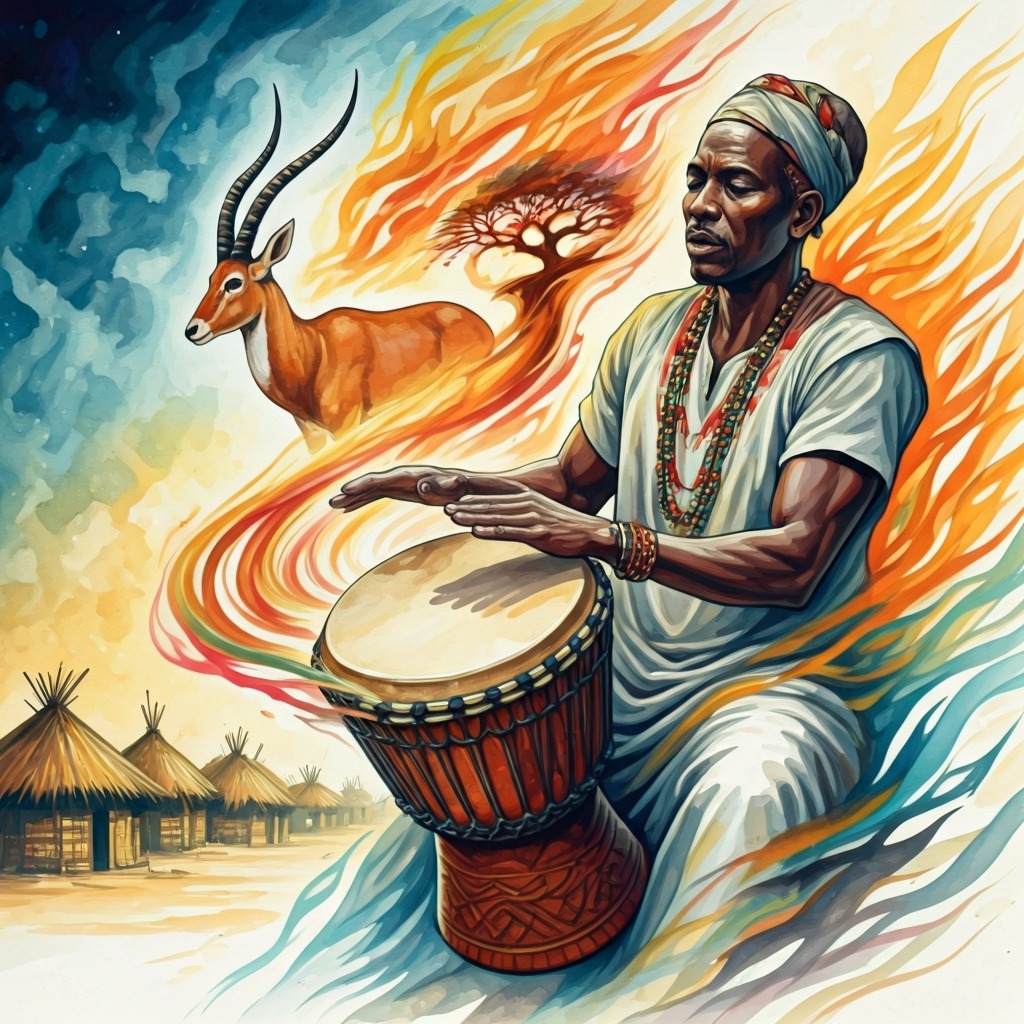
First, the spirit of the ancient Lenke tree that forms the body. Second, the spirit of the sacrificed animal—traditionally a wild antelope—whose skin is stretched taut across the rim. Finally, the spirit of the Numu artisan, who poured their very life force into the carving. When a master drummer strikes the skin, these three souls cry out in unison, giving the djembe its booming, unmistakable voice.
West Africa’s Covert Telegraph
For centuries, touching a djembe was a sacred, restricted duty. The men who mastered it, the djembefolas, spent lifetimes memorizing mind-bending polyrhythms and the oral histories of their people.
While the drum was the heartbeat of village rituals—harvests, funerals, and mysterious healing ceremonies—it harbored a secondary, covert function. It was an ancient telegraph. Because of its brilliant acoustic design, the djembe’s sharp slaps could slice through the dense air, transmitting complex, coded messages across vast distances between villages. It warned of invading forces, announced royal decrees, and called communities to arms long before the invention of the wireless radio.
The Secret Spills to the World
For hundreds of years, the djembe’s magic was locked within West Africa. The great reveal did not happen until the 1950s, when a visionary Guinean artist named Fodeba Keita founded Les Ballets Africains.
As the percussion troupe toured Europe and the Americas, international audiences were paralyzed by the explosive, thunderous resonance of an instrument they had never seen. When Guinea gained independence in 1958, the new government weaponized this cultural marvel, heavily sponsoring national ballets to broadcast African heritage globally. The secret was out. Master djembefolas like Mamady Keïta and Famoudou Konaté migrated across oceans, teaching the sacred rhythms to a mesmerized world.
The Ultimate Mandate
Today, mass-produced fiberglass replicas flood commercial markets, far removed from the blood and magic of the Numu. Yet, the soul of the instrument remains tethered to its ancient roots.
The very name “djembe” is widely believed to derive from the Bamana proverb, “Anke djé, anke bé”—meaning, “Everyone gather together in peace.”
Despite the sacrifices, the sorcery, and its history as a wartime telegraph, the drum’s ultimate mandate was always unity. It was forged in the deep woods to pull humanity out of isolation, binding us all to a single, inescapable rhythm.