A Weapon of Mass Destruction in Paradise
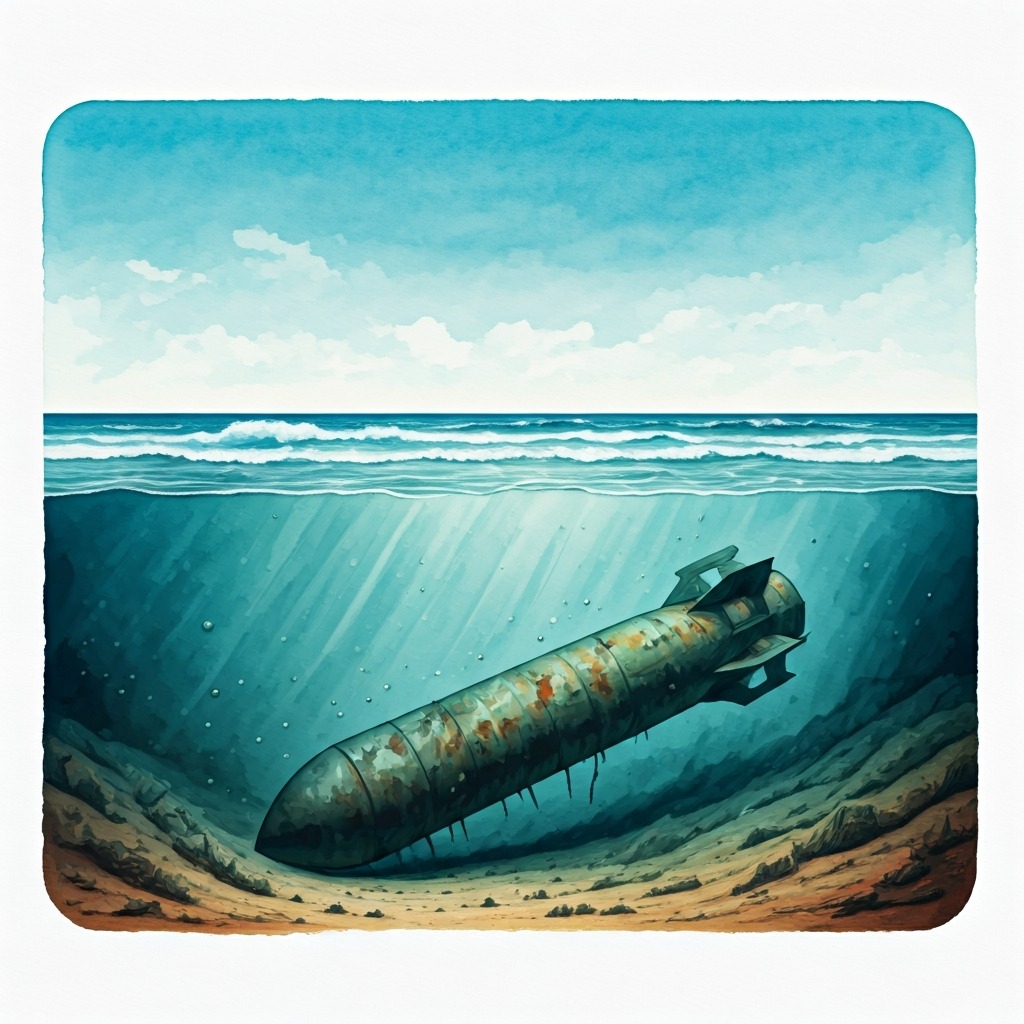
Imagine a pristine coastal island. The sun is shining, the surf is crashing, and a gentle breeze rolls off the Atlantic. Now imagine that just offshore, buried beneath a few feet of shifting sand, lies a 7,600-pound thermonuclear weapon.
Welcome to Tybee Island, Georgia.
The Cold War was an era of espionage, paranoia, and moments when reality violently outpaced fiction. But on February 5, 1958, the tension of the era culminated in one of the most infamous “Broken Arrow” incidents in United States military history. The US military didn’t just lose a weapon—they lost a weapon of mass destruction, and to this day, it has never been found.
Midnight Collision in the Cold War Sky
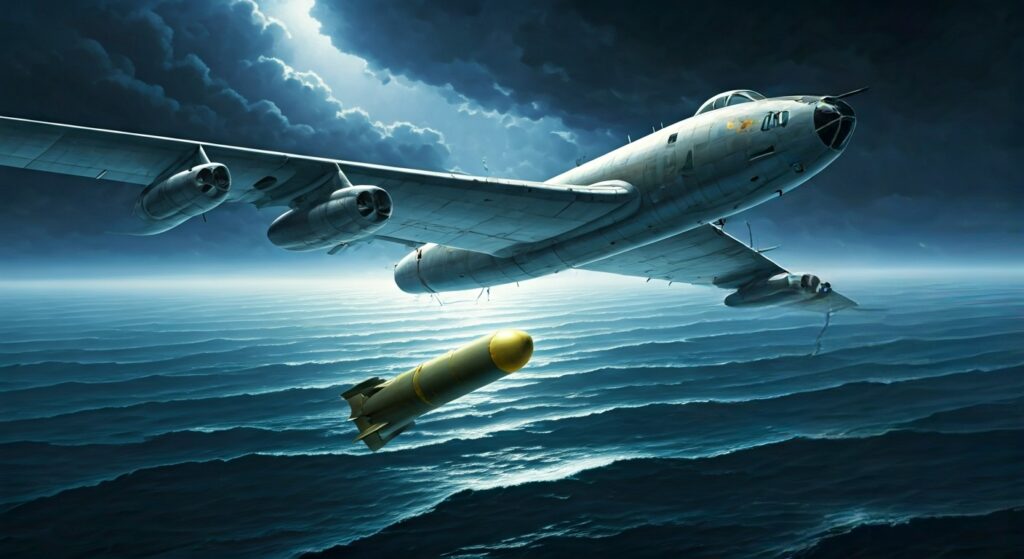
The nightmare began at 36,000 feet. Major Howard Richardson was piloting a B-47 Stratojet bomber through the pitch-black night, carrying a Mark 15 hydrogen bomb in his payload. It was a simulated combat mission known as Operation Snow Flurry, designed to keep American forces razor-sharp against a looming Soviet threat.
In the same airspace, an F-86 Sabre fighter jet piloted by Lt. Clarence Stewart was playing the role of the enemy interceptor. In a terrifying lapse of radar visibility and human error, Stewart failed to spot the massive bomber.
The two jets collided in mid-air.
Stewart’s fighter was obliterated, though he miraculously ejected and survived the ordeal. Major Richardson’s B-47, however, was critically crippled. With a destroyed outboard engine and a mangled right wing, Richardson wrestled the dying leviathan through the sky. He needed to make an emergency landing at Hunter Army Airfield in Savannah. But touching down with a highly unstable, 7,600-pound bomb in the belly of a broken plane was a recipe for a catastrophic conventional explosion.
Jettisoning the Payload
Faced with an impossible choice, Richardson requested permission to drop the bomb. The military gave him the green light.
Over the shallow, dark waters of Wassaw Sound, just off the coast of Tybee Island, the bomb doors opened. The Mark 15 plummeted toward the sea. Richardson and his crew braced for a blinding flash, but as they looked back, the waters remained pitch black. There was no explosion. The bomb had seemingly sunk intact into the seabed.
Freed of the massive weight, Richardson managed to land the battered B-47 safely, saving his entire crew. But for the US military, the nightmare was just beginning.
The Ultimate Game of Hide and Seek
You don’t just lose a nuke and walk away. The US Navy and Air Force immediately launched a desperate, massive search operation. For two and a half months, they threw everything they had at Wassaw Sound. Divers plunged into the murky, silt-heavy waters. Blimps scoured the surface from above. Mine-sweeping ships dragged the ocean floor with sonar equipment.
Despite their exhaustive efforts, they found absolutely nothing. The bomb had vanished like a ghost into the deep. On April 16, 1958, the search was officially abandoned. The military’s best guess was that the weapon had buried itself beneath 5 to 15 feet of dense sand and silt, swallowed whole by the ocean floor.
A Harmless Dud or a Ticking Time Bomb?
What exactly is sitting at the bottom of Wassaw Sound?
The Mark 15 bomb contained 400 pounds of conventional high explosives and highly enriched uranium. However, the US Air Force has sworn for decades that the bomb did not contain a plutonium core—the crucial “nuclear capsule” required to trigger a thermonuclear chain reaction. According to official records, it is a harmless dud.
But the plot thickens. In 1966, then-Assistant Secretary of Defense W.J. Howard gave a congressional testimony where he referred to the Tybee Island bomb as a “complete weapon.”
Did a high-ranking defense official accidentally admit that a fully armed nuke is chilling next to a popular vacation spot? This single piece of conflicting testimony has fueled decades of local anxiety, rumors, and conspiracy theories.
The Radiation Scare of 2001
Cold cases don’t stay cold forever. In 2001, a retired Air Force officer named Derek Duke organized a civilian search of Wassaw Sound and detected elevated radiation levels in the water.
The media went into a frenzy. Had a civilian just found the lost Cold War nuke?
The panic prompted the Air Force and the Department of Energy to launch a brand-new investigation. But after testing the area, the official government survey delivered a massive anti-climax: the radiation spikes weren’t coming from a decaying nuclear weapon. They were emanating from naturally occurring monazite sands in the area, which contain high levels of the radioactive element thorium.
Let Sleeping Dogs Lie
Today, the official stance of the US military and environmental agencies is simple: leave it alone. They argue that the bomb poses no immediate threat to the public or the environment as long as it remains undisturbed. Their biggest fear is that attempting to excavate it could trigger the 400 pounds of conventional explosives—a far greater risk than leaving it buried in the mud.
But for local residents, environmentalists, and historians, leaving a weapon of mass destruction entirely unaccounted for in a populated coastal area is deeply unsettling. Until someone manages to pull it from the silt, the Tybee Island lost nuke will remain one of the most fascinating, terrifying, and unresolved mysteries of the 20th century.