Modern street style likes to think of itself as rebellious. But if you believe neon parachute pants or sheer tops are pushing the envelope, you haven’t seen true aesthetic terrorism. To witness a genuine sartorial uprising, you have to travel back to the cobblestone streets of 1760s London.
Forget the modest, understated gentlemen you see in watered-down period dramas. The British capital was under siege by a bizarre, flamboyant, and highly controversial fashion cult.
They were called the Macaronis. And their weapon of choice was pure, unadulterated visual chaos.
The Invasion of the Continental Peacocks
To grasp the sheer panic these men provoked, you must understand the era’s ideal of British manhood. The gold standard was the “John Bull” archetype: a robust, plain-spoken, practical bloke who loved roast beef, ale, and sensible wool.
Then came the Macaronis.
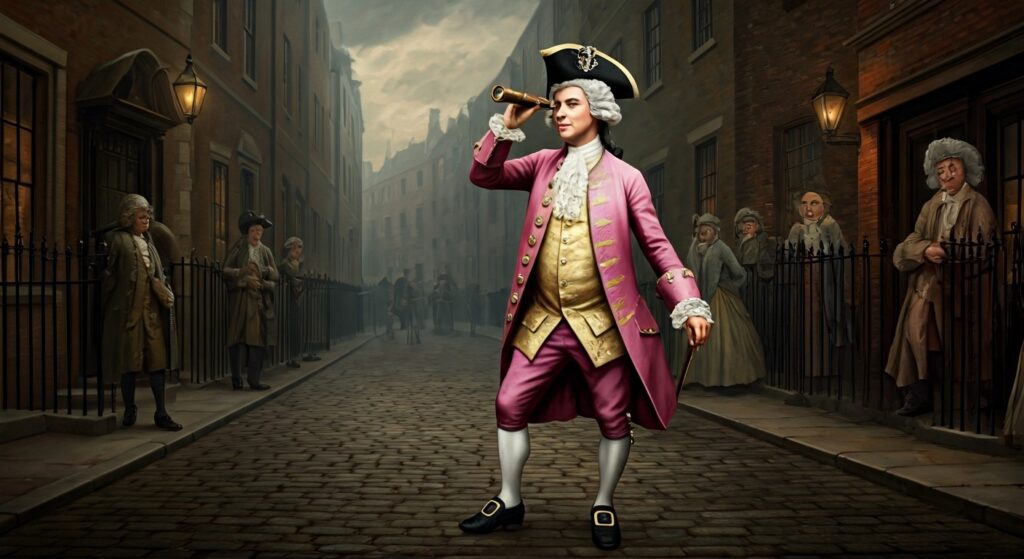
They were wealthy, young British aristocrats returning from the Grand Tour of continental Europe—a traditional upper-class rite of passage—and they brought back a ravenous appetite for extreme excess. They paraded through London in skin-tight trousers and blindingly bright silk coats dripping with lace. They plastered their faces in heavy rouge and strategically placed beauty patches.
But their crowning glory was the hair. A true Macaroni wore an absurdly tall powdered wig towering a foot or more above his head, topped with a comically tiny tricorne hat. The altitude was so extreme they literally had to use a tasseled walking stick or the tip of a sword just to doff their hats to passersby. They would languidly inspect their surroundings through tiny spyglasses, glittering from the massive buckles on their shoes to the striped stockings on their calves.
The Secret Ingredient? Pasta.
Why the bizarre moniker? The answer lies in a culinary obsession.
During their Italian travels, these young lords developed a taste for an exotic, foreign delicacy the average Brit had never heard of: macaroni pasta. To flaunt their cosmopolitan sophistication, they formed the ‘Macaroni Club’ in London. Behind closed doors, they dined on this strange Italian carb and celebrated their avant-garde sensibilities.
To them, “macaroni” wasn’t just a noodle—it was a lifestyle. It meant you were cultured, wealthy, and fundamentally superior to the roast-beef-eating traditionalists back home.
A Crisis of Masculinity and the “Third Sex”
The Macaronis didn’t just turn heads; they triggered a full-blown societal meltdown. Their effeminate mannerisms, lisping speech, and obsessive vanity blurred the rigid gender lines of the 18th century.
Traditionalists were horrified, convinced this flamboyant subculture was actively eroding British manhood. Critics were so unnerved by the gender-bending display they began referring to the Macaronis as a “third sex.”
Historians still debate the true nature of the movement. Was it a highly visual rebellion against the stuffy, conservative values of their parents’ generation? Or did the silk and rouge provide a covert safe space for early queer expression in a deeply oppressive society? Either way, the Macaronis knew exactly what they were doing—and they reveled in the outrage.
The Printmaker Who Weaponized Fashion
Every cultural phenomenon needs a catalyst, and for the Macaronis, it was Mary Darly.
A prominent London printmaker, Darly realized that mocking these fashion victims was a lucrative goldmine. She published hundreds of satirical caricatures, ruthlessly exaggerating their towering wigs and dainty poses. Her prints went 18th-century viral. Thanks to her relentless satire, the word “Macaroni” escaped the confines of the club, becoming a universal catch-all insult for anything excessively trendy or absurdly fashionable.
An Insult Heard ‘Round the Colonies
This cultural ubiquity birthed one of the most misunderstood lyrics in musical history.
During the American Revolutionary War, British soldiers wanted to mock the ragtag, unpolished colonial militia. They sang a little tune called Yankee Doodle, featuring the immortal line: “Stuck a feather in his cap and called it macaroni.”
It wasn’t a nonsense lyric about naming a bird feather after pasta. It was a razor-sharp insult. The British were implying that the American colonist was such a naive, culturally backward bumpkin that he believed simply sticking a cheap feather in his plain hat made him as sophisticated as a high-society London Macaroni.
The Collapse of the Powdered Empire
By the 1780s, the Macaroni trend collapsed under the weight of its own absurdity. After all, you can only build a wig so high before it becomes a structural hazard.
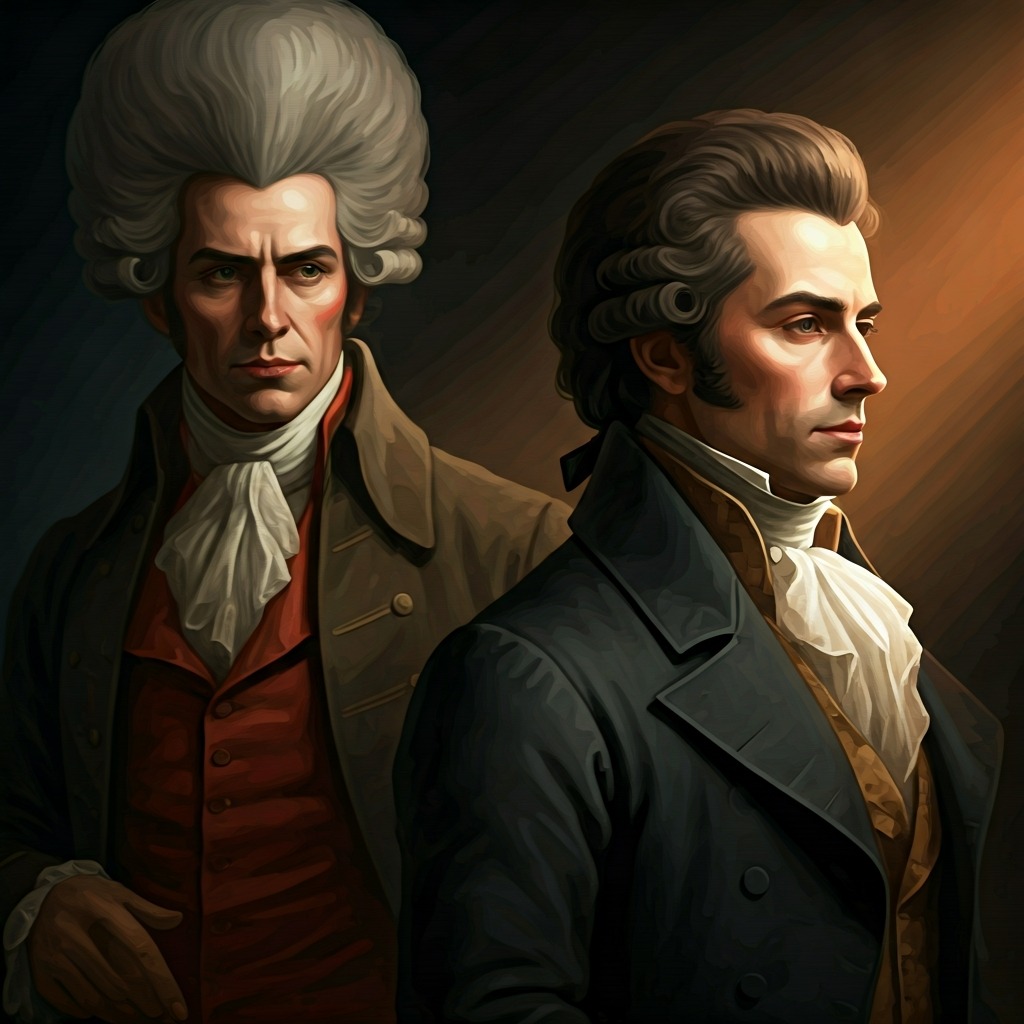
The flamboyant chaos eventually gave way to the understated, brutally minimalist elegance of the 19th-century Dandy, pioneered by figures like Beau Brummell. Trading towering wigs and rouge for immaculate tailoring and perfectly tied cravats, Brummell set the standard for modern menswear.
Yet, the Macaronis deserve their rightful place in history. They were the original disruptors, proving that sometimes, the most effective way to terrify the establishment is simply to out-dress them.