Look at the nearest window, the screen you’re reading this on, or the water glass sitting on your desk. You don’t think twice about it. But rewind the clock past the 1st century BC, and that cheap tumbler in your kitchen would have been guarded like the Hope Diamond.
Before a brilliant, forgotten paradigm shift, glass was the ultimate status symbol—a commodity so rare it was reserved exclusively for pharaohs and the ancient world’s ultra-wealthy. Early glassmaking was a grueling, fiery nightmare. Artisans relied on “core-forming”—painstakingly winding molten sludge around clay—or casting it into crude molds. It required roaring, forest-consuming fires and days of backbreaking labor just to produce a single, heavy vessel. And the worst part? It was completely opaque. You couldn’t even see what you were drinking.
The Alchemists of the Levant
Around 50 BC, in the blistering heat of the Syro-Palestinian coast, a group of unnamed artisans were wrestling with this stubborn, molten rock. They were about to stumble upon a thermodynamic secret that would alter the course of human history.
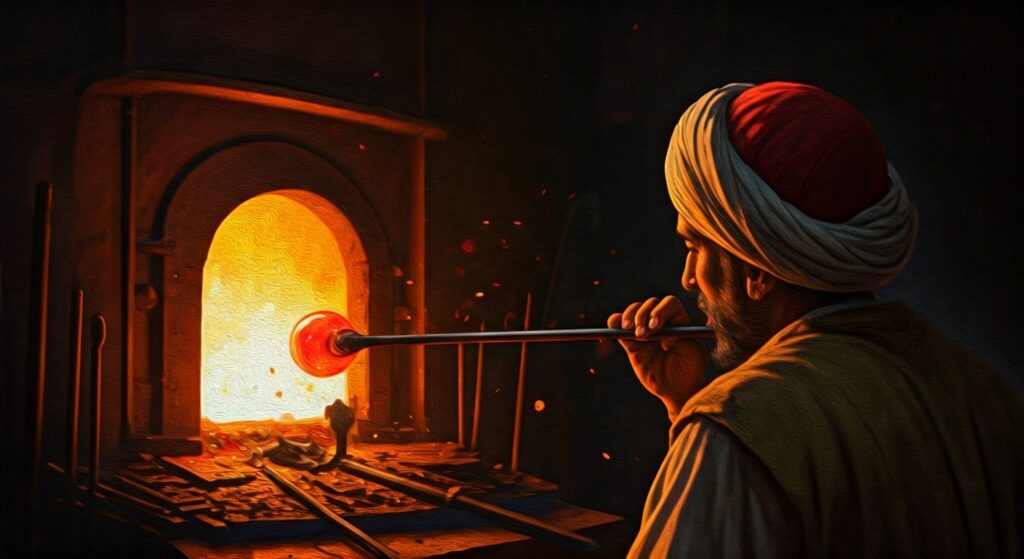
They realized that silica-based glass, when heated to a blinding 1,200 degrees Celsius, stops behaving like a solid and transforms into a highly viscous, honey-like liquid. Then, someone dared to do the unthinkable. An artisan gathered a glowing blob of this molten fire on the end of a hollow iron tube, lifted it to their lips, and blew.
A Whisper of Air
It wasn’t just a neat parlor trick; it was a sudden, violent masterclass in pneumatics. As human breath forced the molten glass to expand into a bubble, the material rapidly cooled. This sudden drop in temperature spiked the glass’s viscosity, freezing it in a delicate, balloon-like shape while rendering its walls impossibly thin.
In a single exhalation, the laws of material science were rewritten. The hollow blowpipe slashed production time from days of agonizing labor to mere minutes. A skilled glassblower could suddenly conjure dozens of elegant vessels in a single afternoon. The impossible had become effortless.
The Great Roman Hijack
But a secret this powerful couldn’t stay hidden in the Levant. Just as these artisans were perfecting their revolutionary craft, a geopolitical earthquake struck. The Roman Empire swallowed the region around 63 BC.
The Romans were brilliant engineers, but they were unparalleled opportunists. They took one look at this Levantine miracle and immediately recognized its world-shaping utility. Rome hijacked the technology, facilitating its explosive spread across the Mediterranean. They erected massive manufacturing hubs in Italy, Gaul, and the Rhineland.
Almost overnight, they triggered the first true democratization of a luxury good. Glass was no longer just for kings; it was for the baker, the soldier, and the merchant.
The Miracle of the Invisible Wall
The Syrian invention didn’t just upend ancient economics—it fundamentally changed how humanity interacted with the physical world. Roman glassmakers began tinkering with the very chemistry of the molten batch. Natural glass harbored a murky, swampy green-blue tint caused by iron impurities in the sand. By introducing specific minerals like manganese and antimony, artisans discovered they could neutralize the tint entirely.
The result was pure, transparent glass.
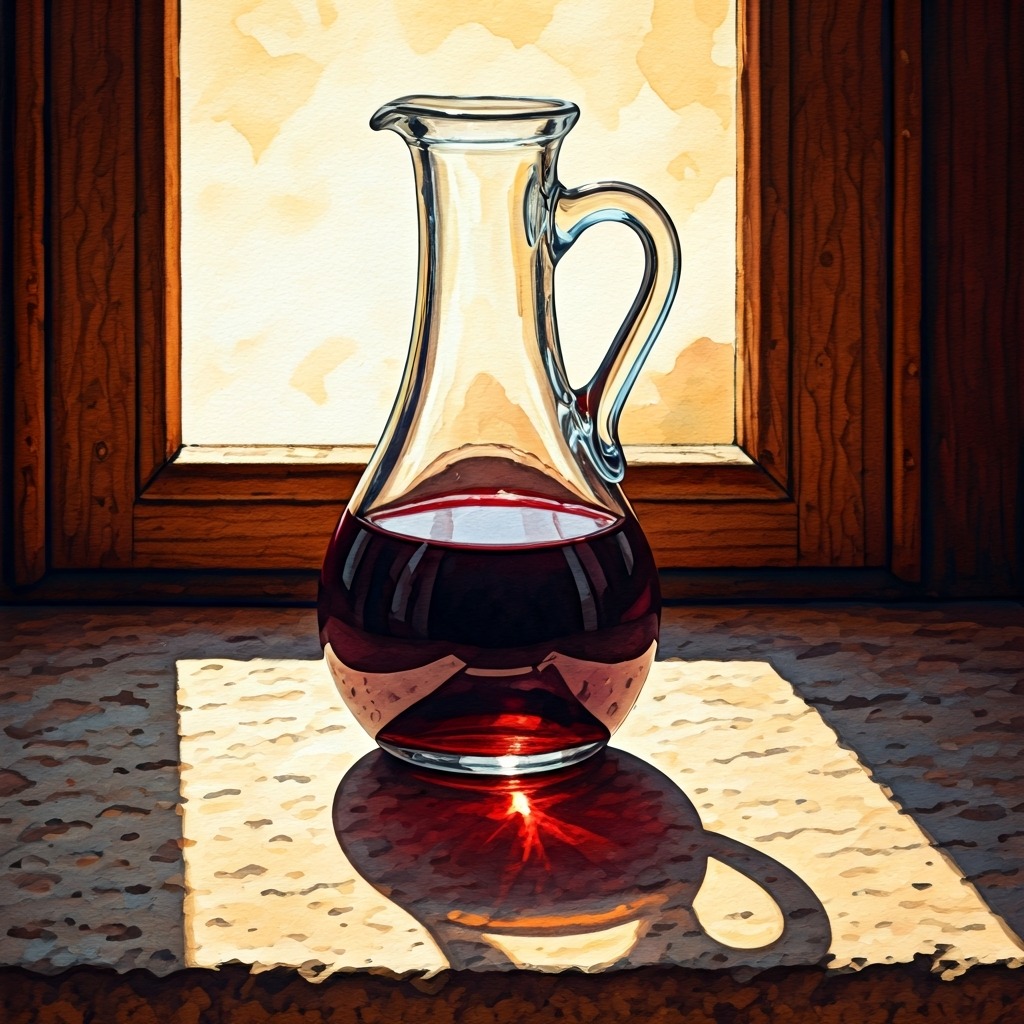
The ability to actually see the contents of a closed vessel revolutionized ancient life. Glass instantly became the undisputed king of storage for vintage wines, expensive oils, delicate perfumes, and life-saving medicines. For the first time, you could look right through a solid wall to inspect what you were about to consume.
Every time you take a sip from a clear glass, you are looking right through one of antiquity’s most profound, stolen scientific triumphs—a rare, royal luxury transformed by a single breath into an everyday miracle.