The freezing air of Paris on January 28, 1393, was kept at bay by the roaring hearths inside the opulent Hôtel de Saint-Pol. Queen Isabeau of Bavaria was throwing a lavish party to celebrate the remarriage of her lady-in-waiting. But this was no ordinary royal reception. Because the bride was a widow entering her third marriage, the celebration took the form of a charivari—a raucous, mocking festivity akin to a medieval frat party, fueled by loud music, bizarre masks, and bawdy behavior.
At the center of the night’s entertainment was King Charles VI of France. The young monarch had only recently recovered from a terrifying, violent bout of mental illness. His advisors hoped a rowdy night of dancing and drinking would lift his spirits. Instead, it set the stage for one of the most bizarre, terrifying, and geopolitically disastrous nights in European history.
A Demonic Disguise
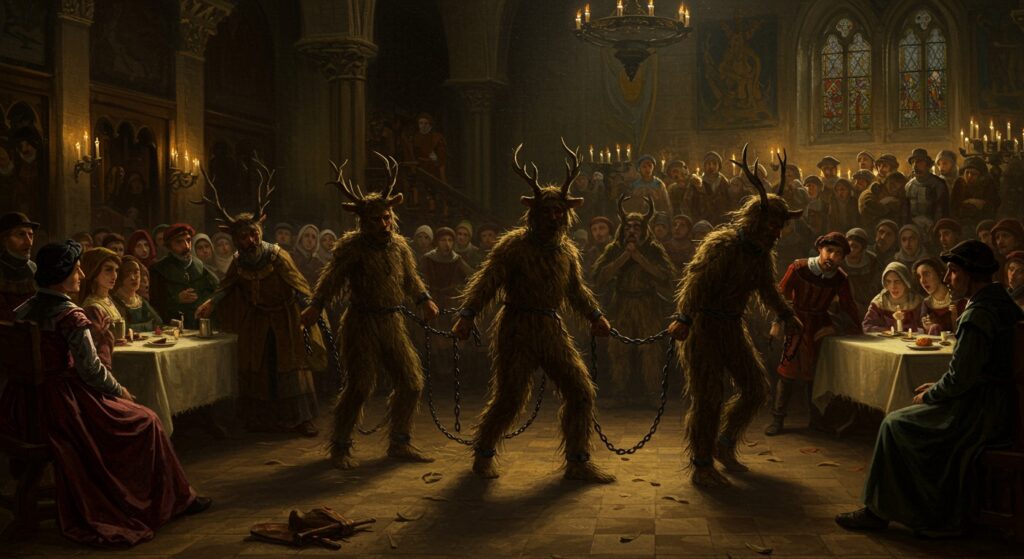
To surprise the court, the King and five of his high-ranking nobles devised a secret, choreographed dance. They chose to dress as wodewoses—the mythical, savage “wild men” of the woods. But they didn’t just throw on animal pelts. To achieve a truly feral, demonic appearance, they donned tight linen suits and coated them in highly flammable pitch and resin. They then pressed frayed flax and hemp into the sticky tar to simulate thick, matted body hair.
To complete the illusion, the six men were chained together, planning to stumble into the great hall as a chaotic, howling pack of beasts.
Given that the hall was lit entirely by open flames, someone in the royal entourage possessed at least a shred of common sense. Strict, non-negotiable orders were shouted across the room: All torches in the hall must be extinguished or kept far away from the dancers.
For a few minutes, the plan worked flawlessly. The wild men burst into the hall, howling and thrashing. The crowd gasped, delighted and terrified, straining to guess which of the masked beasts was their King.
The Fatal Spark
Every catastrophic event has a catalyst. On this night, it was the King’s brother: Louis, Duke of Orléans.
The Duke and his entourage arrived late to the festivities, and they were spectacularly intoxicated. Louis hadn’t heard the strict warnings about the torches. Squinting through the dim, smoky hall, the drunken Duke saw the chained wild men thrashing about on the dance floor. Desperate to figure out who was hiding beneath the matted masks, he grabbed a lit torch from a servant and stumbled directly into the fray.
He leaned in, holding the open flame dangerously close to the frayed, resin-soaked flax of one of the dancers. It only took a single spark.
The Human Inferno
In a fraction of a second, the costume erupted. Because the men were chained together, the fire instantly leaped from one noble to the next. The Bal des Ardents—the Ball of the Burning Men—had begun.
The scene devolved into absolute, visceral horror. The pitch and resin melted, acting like medieval napalm, adhering the burning flax directly to the nobles’ skin. They screamed, thrashing wildly, but the heavy iron chains held them together in an inescapable inferno.
The King was saved only by a sheer stroke of luck and the incredibly quick thinking of his 15-year-old aunt, Joan II, Duchess of Berry. Recognizing Charles through the flames, she sprinted forward, tackled him, and threw her heavy, voluminous skirts over his body to smother the fire.
Nearby, the Sieur de Nantouillet managed to violently break free from his chains. Roaring in agony, he sprinted across the hall and hurled himself into a massive vat of wine, extinguishing the flames and saving his own life.
The other four nobles were trapped. The horrified court could do nothing but watch as the men burned alive for nearly half an hour. Two died on the spot. Two others lingered in unimaginable agony for several days before succumbing to their injuries.
A Kingdom in Ashes
The smell of smoke and charred flesh eventually faded from the Hôtel de Saint-Pol, but the political fallout was just igniting.
To the common people and the clergy, this wasn’t just a tragic accident; it was a glaring sign of divine retribution. The country was already facing economic starvation and political turmoil. Hearing that their King was nearly burned alive while participating in a pagan-adjacent, morally bankrupt party sent the citizens of Paris over the edge.
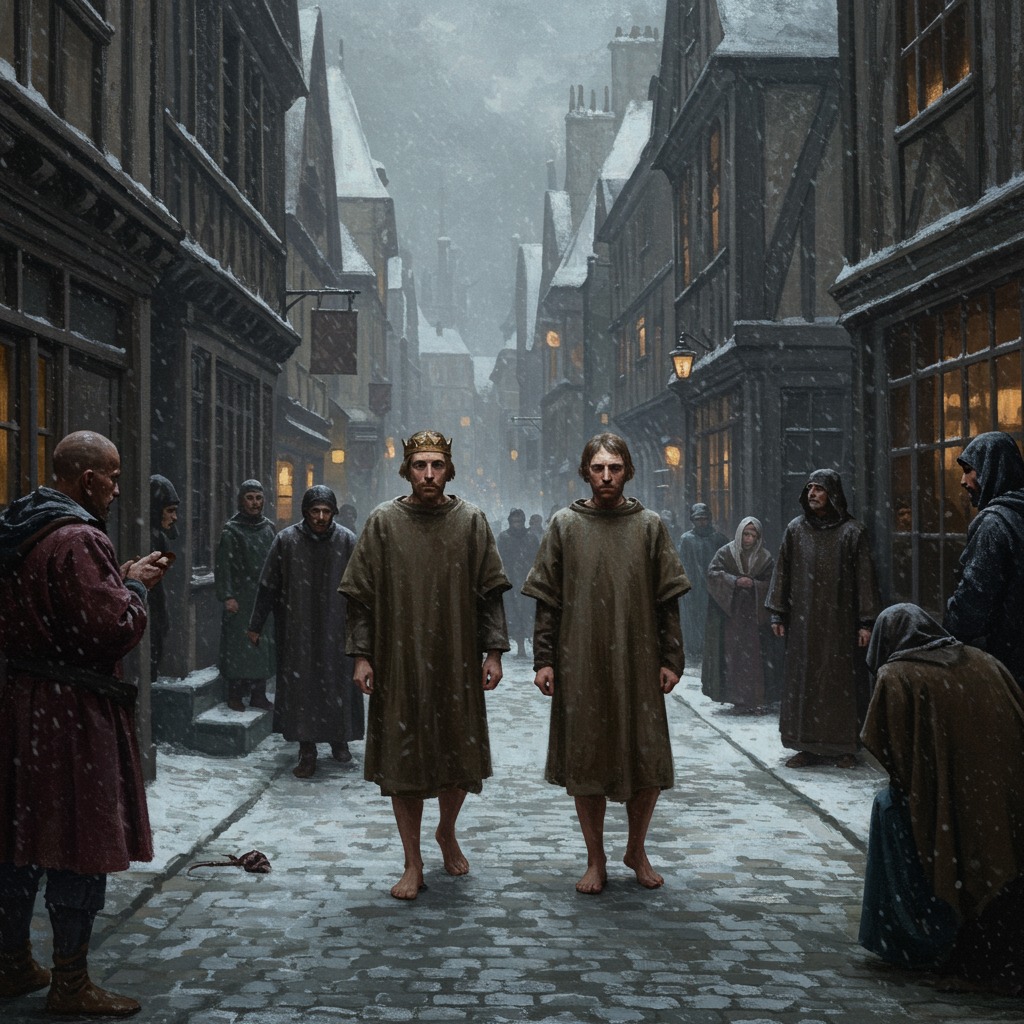
Faced with a massive, violent riot, King Charles VI and the deeply hungover Duke of Orléans were forced to perform a solemn, barefoot penance march through the freezing streets of Paris to beg for the city’s forgiveness.
But an apology couldn’t fix the damage done to the King’s mind. The sheer trauma of watching his friends burn alive shattered Charles VI’s already fragile mental state. His bouts of madness became permanent, eventually rendering him completely unfit to rule and earning him the tragic moniker “Charles the Mad.”
Even worse, the incident poured gasoline on the bitter, simmering rivalry between the Duke of Orléans and the powerful Dukes of Burgundy. The Burgundians used the disaster as proof that Orléans was a reckless, dangerous menace to the crown. This factional hatred eventually exploded into the Armagnac-Burgundian Civil War, a devastating conflict that tore France apart and paved the way for England’s invasion decades later.
All because a drunk brother brought a torch to a party.