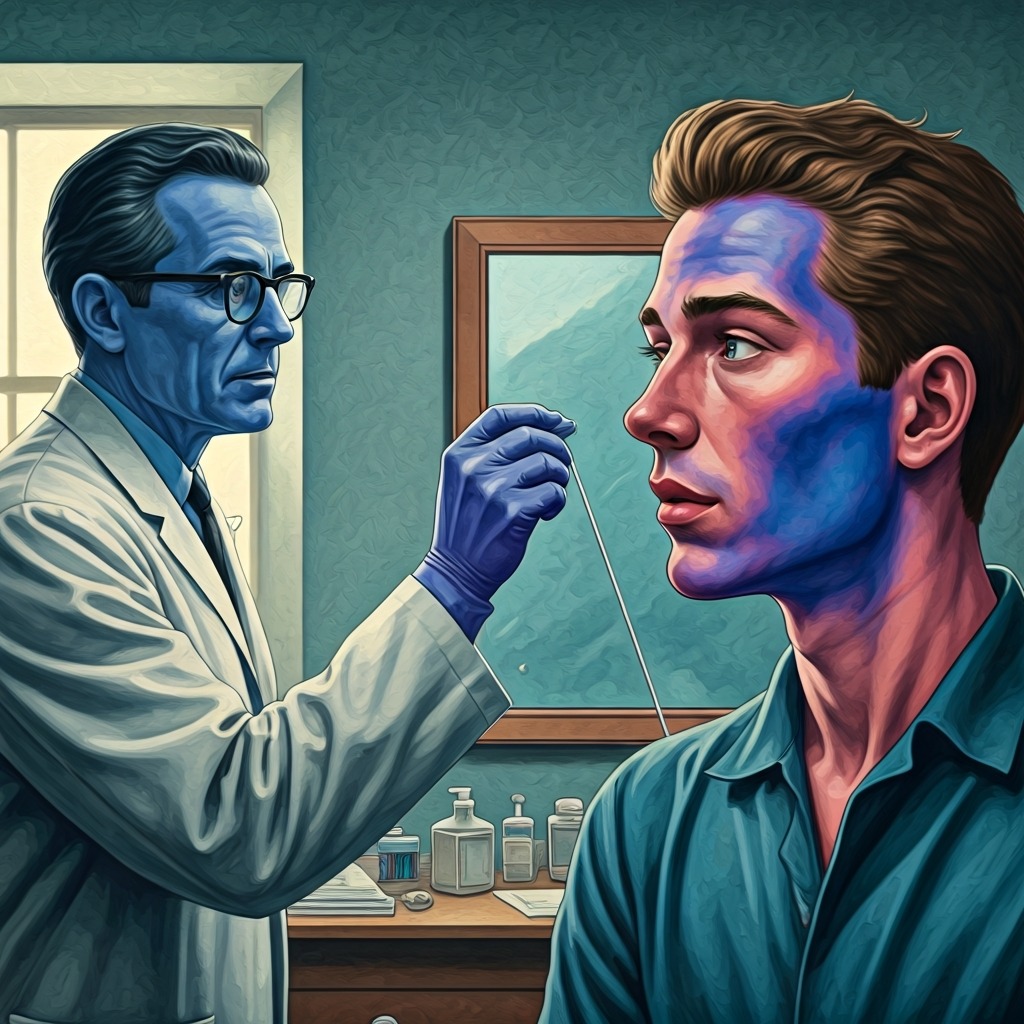
Deep in the unforgiving wilderness of the Appalachian Mountains, a secret was hidden for generations. If you ventured far enough into the heavily forested, fiercely isolated region of Troublesome Creek, Kentucky, local folklore whispered of a family unlike any other. They were flesh and blood, yet they bore a startling anomaly: their skin was the color of a bruised plum, and their lips a dark, vivid purple.
This wasn’t magic, and it wasn’t a myth. It was the incredibly true story of the Blue Fugates—a tale of profound isolation, an astronomical genetic coincidence, and a medical paradox that continues to astound scientists today.
A Reverse-Genetic Lottery
The mystery began in the early 19th century when Martin Fugate, a French orphan, immigrated to the United States and settled in the rugged terrain of eastern Kentucky. He eventually married a local woman named Elizabeth Smith. To the naked eye, Martin and Elizabeth were perfectly ordinary. But beneath the surface, they had just won the ultimate reverse-genetic lottery.
By an astonishing coincidence, both Martin and Elizabeth carried an incredibly rare, recessive gene for a blood disorder known as methemoglobinemia. Because the gene was recessive, neither exhibited any symptoms. But when they began having children, the genetic math caught up with them. To the shock of the isolated community, several of their offspring were born with startling, smurf-blue skin.
Chocolate Blood and the Pressure Cooker
To understand the Fugate family’s striking appearance, one must look under the hood of human biology. Normally, our bodies rely on an enzyme called cytochrome b5 reductase to convert methemoglobin—a form of hemoglobin that cannot carry oxygen—back into normal, oxygen-rich hemoglobin. The Fugates were completely missing this crucial enzyme.
Without it, methemoglobin built up in their veins. The result? Their blood wasn’t the typical crimson red; it was a dark, rich chocolate brown. This dark blood running through their capillaries severely limited oxygen release to their body tissues, giving their skin a striking blue pallor. Yet, despite looking as though they were in a constant state of oxygen deprivation, the Fugates were surprisingly healthy and lived incredibly long lives.
Normally, a rare recessive trait like this would wash out of the gene pool within a generation or two. But Troublesome Creek had no roads, no railways, and no new visitors. The families who settled there were locked in extreme geographic isolation. With no one else around, they intermarried for generations. This endogamy acted as a genetic pressure cooker, concentrating the recessive gene and resulting in a high frequency of blue-skinned children.
Aware of the social stigma and the cruel stares of outsiders, the blue family members retreated further into the hills, hiding away from a rapidly industrializing world that simply didn’t understand them.
The Paradox of the Blue Pill
Fast forward to the 1960s. Rumors of the “Blue People of Kentucky” finally reached the ears of Dr. Madison Cawein III, a hematologist from the University of Kentucky. To a medical investigator like Cawein, this was the ultimate puzzle. Teaming up with a determined local nurse named Ruth Pendergrass, Cawein set out into the Appalachian backwoods to track down the elusive Fugates.
Finding them was no easy feat. The family was deeply suspicious of outsiders. But Cawein and Pendergrass eventually earned their trust, and the doctor began drawing blood. He quickly deduced the missing enzyme and officially diagnosed the methemoglobinemia.
Then came the cure—a solution so beautifully paradoxical it sounds like fiction. To cure the blue skin, Dr. Cawein needed to provide the Fugates’ bodies with an electron donor that could force the methemoglobin to convert back to normal hemoglobin. His treatment of choice? A chemical dye called methylene blue.
Yes, the doctor injected a blue dye into the blue people to cure their blue skin.
The results were instantaneous and almost magical. Within minutes of the injection, the methylene blue triggered the chemical reaction their bodies had been missing since birth. For the first time in their lives, the dark brown blood in their veins turned red, and the Fugates watched in absolute awe as their skin faded from blue to a normal, healthy pink. To maintain their new complexion, Cawein left them with methylene blue pills to take daily.
Fading Into History
As the 20th century marched on, the extreme isolation of Troublesome Creek was finally shattered. Coal mining operations moved in, modern infrastructure opened up the region, and the local gene pool rapidly diversified. As new families arrived and the descendants of Martin and Elizabeth married outside their tight-knit community, the recessive trait faded back into the genetic background.
The last known descendant born with active blue skin was Benjamin Stacy in 1975. As Benjamin grew older, his skin naturally lost its blue tint. However, the genetic echo of his ancestors never entirely vanished—his skin would still briefly regain a bluish hue, and his lips would turn a vivid purple, whenever he was cold or angry.
Today, the Blue Fugates remain one of the premier examples of the founder effect and isolated population genetics in medical history. It is a brilliant, lingering reminder that sometimes, the most unbelievable medical mysteries aren’t fiction at all—they are just waiting to be discovered at the end of a dirt road.