We tend to view history as a grand, sweeping narrative forged by stoic heroes and brilliant tacticians. But sometimes, the fate of an entire kingdom hinges on something utterly absurd. In the brutal, freezing winter of 1429, right in the middle of the Hundred Years’ War, the survival of France didn’t come down to a shiny sword or a brilliant flanking maneuver. It came down to thousands of barrels of salted fish.
The Strangled City
By early February, the French were staring into the abyss. The English had been besieging the strategically vital city of Orléans for months, slowly strangling the life out of it. But maintaining a medieval siege in the dead of winter was a logistical nightmare. To keep their massive army fed in the freezing mud, the English relied on a continuous, highly vulnerable lifeline of supply convoys.
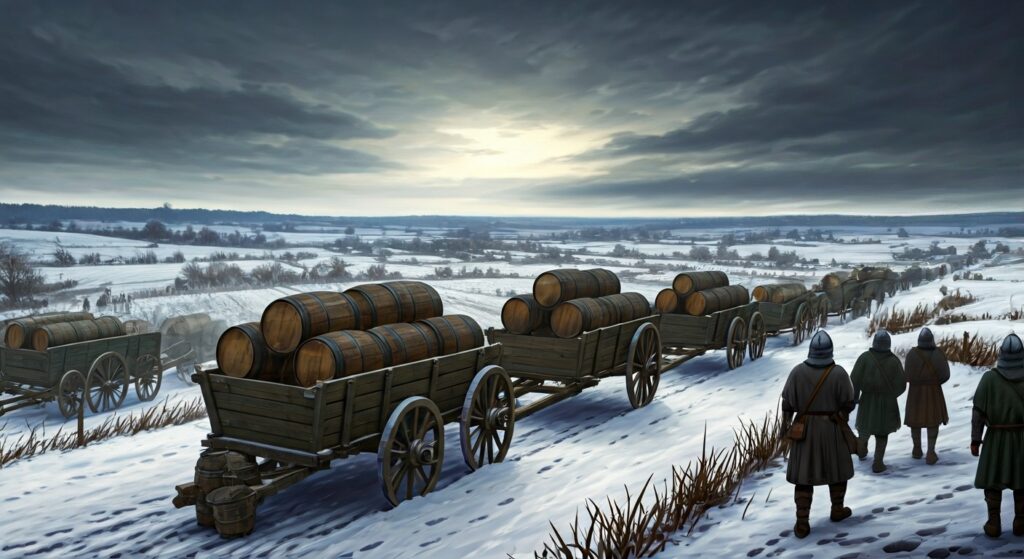
Enter Sir John Fastolf. On February 12, the seasoned English knight was commanding a massive supply train from Paris to reinforce the besiegers. Because the Christian season of Lent was fast approaching—a strict period forbidding the consumption of meat—the convoy was packed to the brim with Lenten rations. It was a slow-moving, miles-long behemoth consisting of roughly 300 wagons hauling crossbows, cannons, gunpowder, and an absurd amount of salted herrings.
Lumbering through the open countryside, the convoy was a sitting duck. And the French knew it.
A Fortress of Fish
Recognizing a golden opportunity to starve out the English, a combined force of French and Scottish troops moved in for the kill. Numbering around 5,000 men, they were led by Charles de Bourbon and the Scottish commander Sir John Stewart of Darnley.
Fastolf was heavily outnumbered. Caught in the open near Rouvray-Saint-Denis with no natural defenses, he had to think fast. He relied on a staple of medieval defensive tactics: the laager, or wagon fort. Fastolf ordered his men to arrange the 300 wagons into a massive, circular barricade. But wagons alone leave fatal gaps. To fortify the perimeter, the English used the very cargo they were hauling. They stacked heavy barrels of salted herrings between the carts and drove sharpened stakes into the freezing earth to deter the French cavalry.
The trap was set, but the English were entirely boxed in.
The Fatal Miscalculation
At first, the French strategy was flawless. They deployed their artillery, keeping their men safely out of range of the dreaded English longbows. Cannons began to systematically batter the wooden wagons. The English, lacking artillery of their own, could only huddle behind their makeshift walls as cannonballs shattered the barricades, sending lethal splinters of wood and chunks of salted fish raining down upon them.
Had the French simply maintained this bombardment, they would have annihilated Fastolf’s forces. But medieval battlefield discipline was notoriously fragile. Sir John Stewart and his Scottish highlanders grew impatient. Defying strict orders to hold the line, the Scots dismounted and launched a rash, uncoordinated frontal assault directly at the wagon fort.
It was a catastrophic blunder.
The Catalyst for a Legend
Because the Scots were charging directly into the line of fire, the French artillery had to immediately cease their bombardment to avoid massacring their allies. The Scottish charge played right into Fastolf’s hands. Firing from the safety of their fish-fortified barricades, the English archers stood up and unleashed devastating, sky-darkening volleys.
The Scottish force was decimated in the mud, and Sir John Stewart was killed. Panicking as they watched their allies fall, the French cavalry finally charged, but they couldn’t breach the wagon fort and were similarly shredded by arrow fire. Fastolf ruthlessly ordered a counter-attack, routing the remaining forces.
When the dust settled, the battlefield was a grotesque tapestry of shattered wagons, dead soldiers, and thousands of salted herrings strewn across the blood-soaked ground. It was a humiliating defeat that pushed Orléans to the absolute brink of surrender.
But the ‘Battle of the Herrings’ holds a secret, much deeper significance.
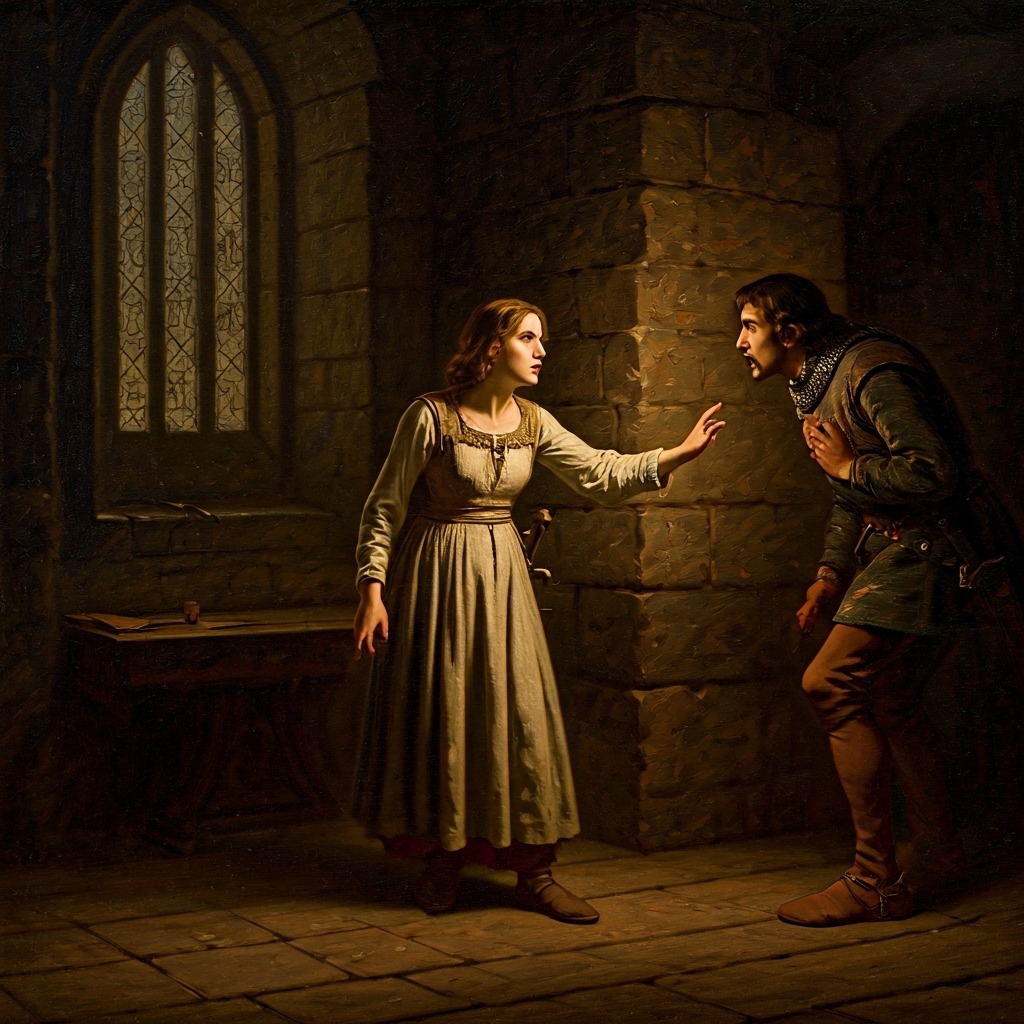
Miles away in Vaucouleurs, an unknown teenage peasant girl had been desperately trying to convince a local garrison commander, Robert de Baudricourt, to give her an armed escort to the French Dauphin. He had laughed her out of the room multiple times. But according to historical accounts, Joan of Arc came to him and predicted a terrible, highly specific defeat for French forces near Orléans—days before any messengers could have possibly arrived with the news.
When the bloodied survivors finally limped in and confirmed that the French had indeed been slaughtered over a pile of salted fish, Baudricourt was terrified by the girl’s seemingly miraculous foresight. He finally took her seriously, granting her the escort to Chinon.
And just like that, a bizarre fight over Lenten rations set the stage for Joan of Arc to lift the Siege of Orléans and alter the course of European history forever.