We’ve all dropped a tool. A clatter, a curse, a bruised knuckle. But on a humid September evening in 1980, an airman dropped an eight-pound socket wrench inside a subterranean silo in Arkansas. The consequence wasn’t a bruised knuckle. It was the near-annihilation of the eastern United States.
The incident at Launch Complex 374-7 remains one of the most terrifying—and utterly preventable—’Broken Arrow’ incidents in American history. It is a chilling reminder that the apocalypse doesn’t always hinge on the dramatic push of a red button. Sometimes, it hinges on a single, mundane mistake.
The Longest 80-Foot Drop
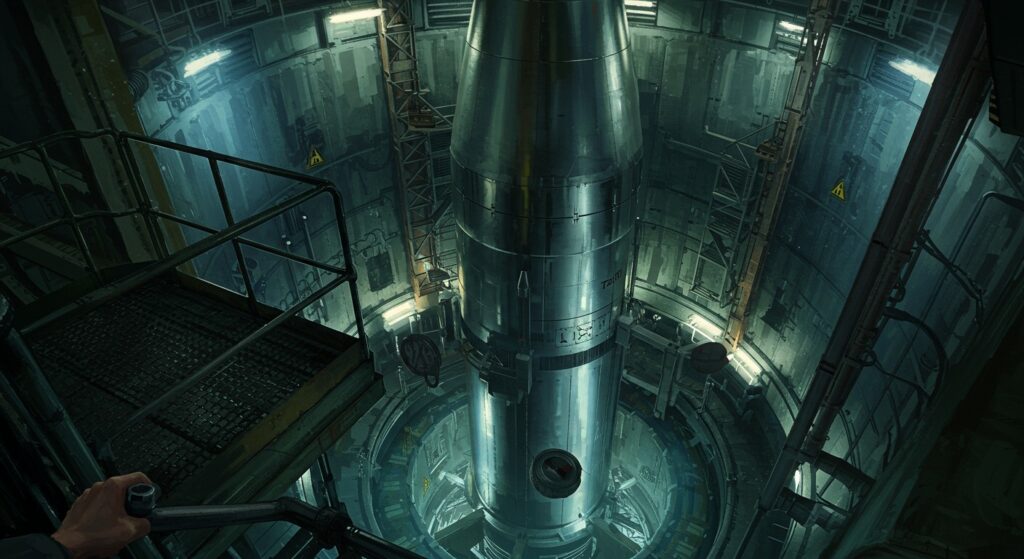
On September 18, 1980, Airmen David Powell and Jeffrey Plumb descended into a Titan II Intercontinental Ballistic Missile silo nestled in the quiet countryside near Damascus, Arkansas. Their mission was seemingly routine: check the oxidizer pressure on the missile.
The Titan II was a towering, liquid-fueled leviathan of the Cold War. Perched at the very tip of this metallic beast was a W53 nuclear warhead with a yield of 9 megatons—an explosive force roughly 600 times more powerful than the bomb dropped on Hiroshima.
To access the oxidizer tank, protocol strictly mandated the use of a torque wrench. Powell, however, opted for a standard ratchet. It was a fatal deviation. Unlike a torque wrench, the ratchet lacked a locking mechanism to secure the heavy socket in place.
As Powell maneuvered the tool, the eight-pound socket slipped.
Time must have slowed to a crawl for the two airmen as they watched the heavy piece of metal plummet. It fell 80 feet down the shaft, ricocheted off a thrust mount, and slammed directly into the missile’s Stage I fuel tank. The metal skin of the Titan II, designed to be lightweight for flight, was astonishingly thin. The socket punctured it with terrifying ease.
A Toxic Ticking Clock
Instantly, a thick, toxic vapor began spewing into the silo. The Titan II was fueled by Aerozine 50 and utilized nitrogen tetroxide as an oxidizer. These chemicals are hypergolic, meaning they ignite spontaneously the moment they come into contact with one another.
Powell and Plumb scrambled for their lives as the Aerozine 50 leaked uncontrollably, filling the confined space with highly explosive gas. Above ground, a paralyzing standoff began. The Strategic Air Command (SAC) in Omaha realized that if the fuel tank depressurized entirely, the missile could collapse on itself, rupturing the oxidizer tank above it. The resulting mixture would trigger an immediate, catastrophic detonation.
As hours bled into the night, military brass frantically debated how to vent the explosive vapors without triggering a spark. Meanwhile, they initiated an evacuation of the immediate area but refused to confirm or deny the presence of a nuclear warhead to local Arkansas authorities, citing strict national security protocols. Civilian emergency responders were left entirely in the dark, fighting to manage a panicked public while standing on the edge of a potential nuclear ground zero.
Into the Belly of the Beast
By the early hours of September 19, SAC made a desperate decision. They ordered a two-man team—Senior Airman David Livingston and Sergeant Jeffrey Kennedy—back into the highly volatile silo to turn on an exhaust fan and clear the vapors.
In hindsight, it was a suicide mission.
At approximately 3:00 AM, shortly after Livingston and Kennedy entered the complex, the inevitable happened. The exact ignition source remains a mystery—likely an electrical arc from the very exhaust fan they were ordered to activate—but the result was instantaneous.
The silo erupted.
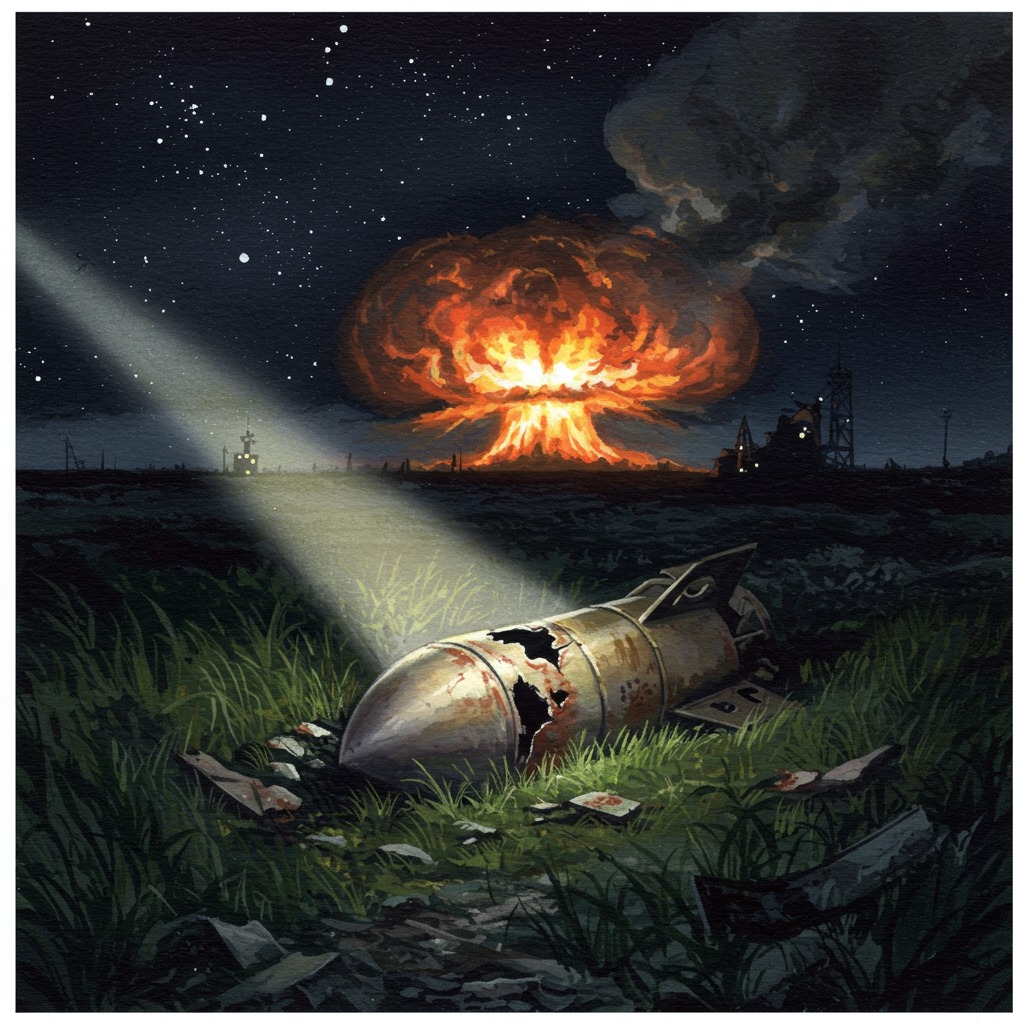
The force of the hypergolic explosion was almost incomprehensible. It instantly vaporized the subterranean complex and blew the silo’s massive 740-ton concrete and steel door 200 feet into the night sky.
The Warhead in the Ditch
When the smoke began to clear and the shockwave dissipated, a new, unthinkable horror dawned on the survivors. The explosion had violently ejected the 9-megaton W53 nuclear warhead out of the silo. It had been launched into the air, flying through the darkness before crashing back to earth.
For a few heart-stopping hours, search teams scoured the pitch-black debris field, terrified of what they might find. Miraculously, when they located the weapon in a ditch about 100 feet from the launch complex gate, they discovered that its safety mechanisms had functioned exactly as engineered. The warhead was battered, but it had not detonated. A nuclear holocaust that would have decimated Arkansas and blanketed the eastern seaboard in lethal fallout had been narrowly averted.
The True Cost of the Cold War
The human toll of the Damascus incident was tragic. Senior Airman David Livingston succumbed to his severe injuries shortly after the explosion, and 21 other military personnel were wounded in the blast.
In the aftermath, the Air Force quickly moved to isolate the blame, pointing the finger squarely at Airman Powell for his failure to use the correct wrench, and subsequently discharging him from the military. However, critics and historians have forcefully argued that Damascus was a systemic failure.
The Titan II program was aging, plagued by leaks, and reliant on incredibly dangerous liquid fuels. The prevailing military culture of the Cold War prioritized constant operational readiness over safety, creating a fragile ecosystem where something as simple as a dropped tool could trigger an apocalyptic scenario.
The terrifying near-miss in Arkansas proved to be the death knell for the Titan II program. The undeniable dangers of liquid-fueled ICBMs forced the United States to accelerate their retirement, shifting the nation’s nuclear arsenal entirely to safer, solid-fueled missiles. We survived the night of September 19, 1980, but the crater left behind in Damascus remains a haunting monument to how close we came to the edge.