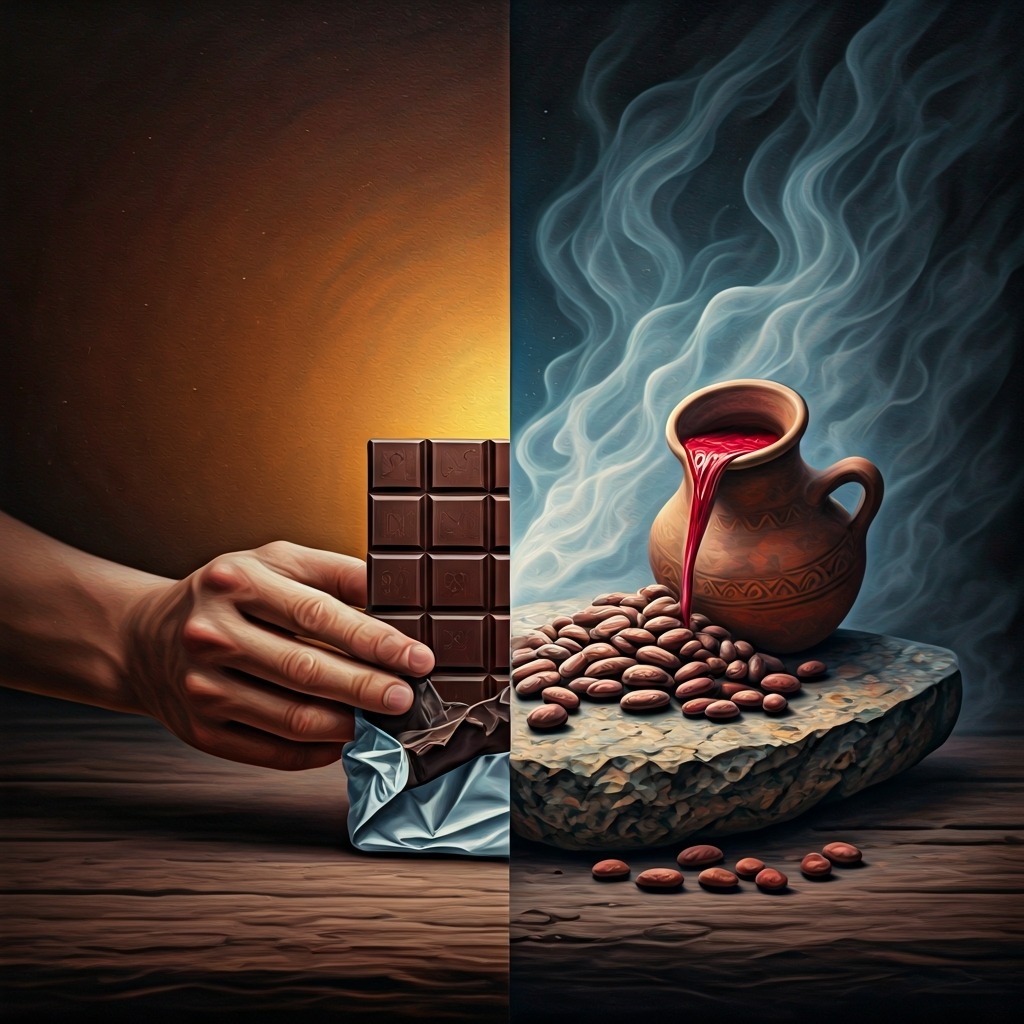
Next time you unwrap a sweet, smooth chocolate bar, pause before you take a bite. You are holding what was once considered the ultimate sacred elixir—a substance so powerful it was worth more than gold, and so revered it was literally used to buy human lives. Forget everything you know about chocolate. The true origin story of cacao is a dark, thrilling saga of divine theft, bloody rituals, and ancient counterfeiting rings.
A Gift the Gods Tried to Hide
In the ancient Americas, cacao was never meant for mortal lips. According to Aztec mythology, the god Quetzalcoatl was condemned by his fellow deities for daring to share the secret of chocolate with humanity. The Maya held a similar reverence, believing the gods discovered cacao hidden deep within the bowels of a sacred mountain. Because of this divine origin, cacao wasn’t a casual snack. It was a potent, bitter liquid reserved almost entirely for nobility, fierce warriors, and high priests. To drink it was to partake in something profoundly spiritual—and highly restricted.
The Original Blood-Red Brew
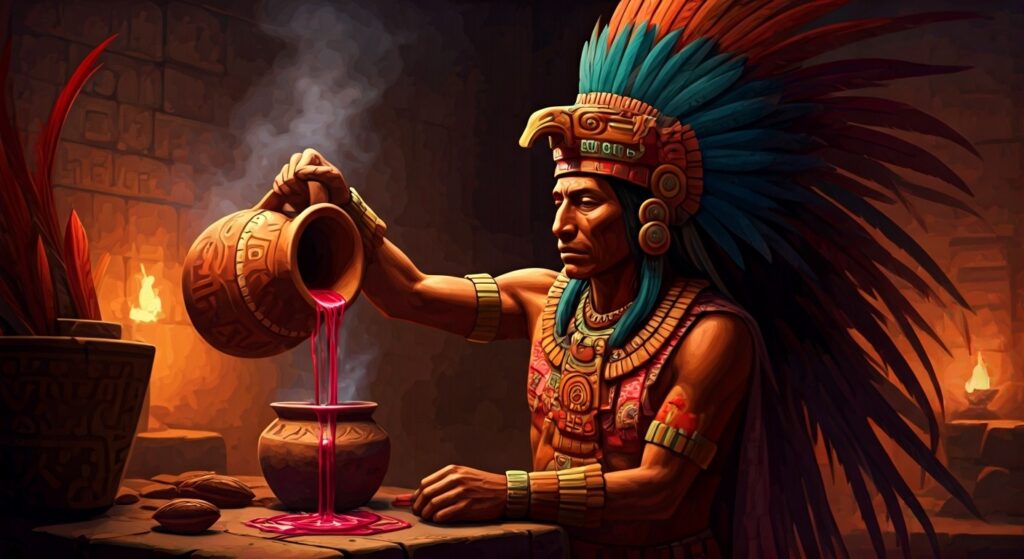
If an ancient Olmec, Maya, or Aztec noble handed you a cup of cacao, you would likely recoil. Preparation was a labor-intensive, mystical art. The beans were carefully fermented, roasted, and meticulously ground into a thick paste on a stone metate. This paste was mixed with water and spiked with intense local flavors: fiery chili peppers, fragrant vanilla orchids, and a highly prized botanical called ear flower.
But the most striking addition was achiote. This seed dyed the beverage a deep, unsettling blood-red. Packed with theobromine and caffeine, the drink was highly stimulating. To the Mesoamericans, this racing of the heart and the crimson hue made cacao synonymous with human blood. The preparer would pour the brew from a great height between two vessels, creating a thick, rich foam at the top—considered the absolute pinnacle of luxury.
The Elixir of Sacrifice
The connection between cacao and blood wasn’t merely symbolic; it was terrifyingly literal. The beverage was a centerpiece in ceremonies marking the most critical moments of human existence. But it also played a darker, suspenseful role in the religious rites of the Aztec Empire.
Because of its comforting and stimulating properties, a special gourd of this blood-red cacao was often given to sacrificial victims. It was designed to lift their spirits and calm their nerves before they were led to the altar. In some highly sacred rituals, the cacao was even mixed directly with the blood of the sacrificed, creating a potent, horrifying communion between the mortal and the divine.
Money Does Grow on Trees
Beyond its spiritual weight, cacao was the literal lifeblood of the Mesoamerican economy. It functioned as a standard fiat currency across the region. Imagine paying your rent or buying your groceries with handfuls of beans.
Market prices were strictly standardized: a fresh avocado would set you back three cacao beans, while a whole turkey cost one hundred. The Aztec Empire demanded staggering amounts of cacao as tribute from conquered territories, filling the royal storehouses of Emperor Moctezuma II with millions of beans.
But where there is immense wealth, there is deception. Because a single bean held such immense value, ancient con artists emerged from the shadows. These fraudsters would meticulously hollow out the cacao shells, painstakingly filling the empty husks with dirt, clay, or amaranth dough to pass them off as real currency in the bustling markets. It was a high-stakes crime in an empire where the punishment for theft was often death.
The Sweet Surrender
How did this bitter, spicy, blood-red currency become the sweet, solid treat sitting in your pantry?
The transformation began with the Spanish conquest in the 16th century. At first, European colonizers found the bitter, chili-infused froth completely unpalatable. But eventually, they began tinkering with the recipe. They stripped away the chili and the achiote, replacing them with imported cane sugar, cinnamon, and milk, and decided to serve it hot rather than cold.
This sweetened, pacified version of the sacred drink was exported back to Europe, where it remained an exclusive, aristocratic beverage for centuries. It wasn’t until the Industrial Revolution mechanized production and extracted the cocoa butter that the solid, mass-produced chocolate bar was finally born.
We gained a sweet treat, but we lost a divine, blood-red elixir. Next time you take a bite of chocolate, remember the fierce, ancient world it came from.