It is the spring of 1944, and the Battle of Monte Cassino is a meat grinder. Cementing itself as one of the bloodiest and most grueling engagements on the Western Front, the Italian valley is a nightmare of flying shrapnel and deafening artillery. Allied forces are pinned down. The mud is thick with blood and the shattered debris of war.
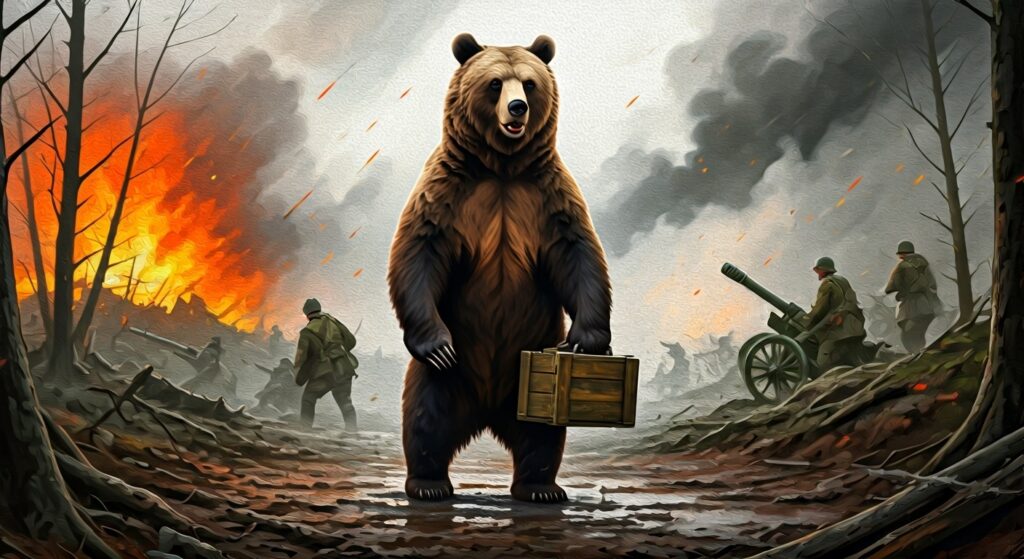
Amidst the chaos, a soldier steps up to a supply truck. He doesn’t speak. He doesn’t flinch. Standing over six feet tall and weighing a staggering 400 pounds, he casually accepts a 100-pound crate of high-explosive artillery shells. He turns, walks upright through the deafening barrage, and delivers the munitions to the firing line without dropping a single one.
The twist? This elite soldier wasn’t human.
A Ransom in the Desert
To understand how a massive Syrian brown bear ended up carrying high explosives for the Allies, we have to rewind to 1942 in Hamadan, Iran.
The Polish soldiers of Anders’ Army were a hardened, traumatized ghost-battalion. Composed largely of POWs and deportees recently released from the horrors of Soviet gulags, these men were marching through the Middle East to join the British forces. They had lost their homeland, their families, and their humanity.
While traversing the rugged Iranian landscape, they encountered a young local boy carrying a squirming sack. Inside was an orphaned bear cub. For men who had been stripped of everything, the tiny, helpless creature sparked a desperate need to nurture. They bought the cub in a makeshift back-alley deal, trading a few Persian coins, some bread, and a tin of meat for his life.
They named him Wojtek (pronounced Voy-tek)—a diminutive of Wojciech, which translates roughly to “happy warrior.”
At first, Wojtek was so small he had to be fed condensed milk from an empty vodka bottle. But as he grew into a 400-pound behemoth, his diet adapted to the rough-and-tumble lifestyle of a WWII encampment. He became famous among the troops for his two great vices: drinking beer (his absolute favorite beverage) and smoking. Or rather, he would accept a lit cigarette, take a single puff, and then promptly swallow it.
Wojtek wrestled with the men, learned to salute officers, and slept in their tents on freezing desert nights, acting as a massive, fur-covered space heater. For these displaced soldiers, he wasn’t just a pet; he was a vital psychological anchor.
The Strangest Loophole in Military History
By 1944, the Polish II Corps was stationed in Egypt, awaiting orders to sail to Italy and join the brutal Allied campaign.
But a massive bureaucratic wall stood in their way. British transport regulations strictly forbade mascot animals on military vessels. The British port authorities expected the Polish troops to leave their beloved bear behind in the Egyptian desert.
But desperate men get creative. The Polish commander orchestrated a loophole so audacious it defies belief. He didn’t try to smuggle the bear. Instead, he officially drafted him.
Wojtek was formally enlisted into the 22nd Artillery Supply Company. He was given the rank of Private, assigned an official serial number, and even issued a paybook. When the British inspectors checked the manifest, Private Wojtek was listed as a legitimate soldier. The bear boarded the ship.
Trial by Fire at Monte Cassino
Wojtek’s defining moment arrived in the blood-soaked valleys of Monte Cassino. He wasn’t kept in a cage or hidden away from the front lines; he was right in the thick of it.
Observing his human comrades frantically struggling to move heavy munitions under relentless fire, Wojtek decided to pitch in. He stood up on his hind legs, held out his massive paws, and began mirroring the soldiers. He carried 100-pound crates of heavy munitions from the supply trucks to the artillery positions. He navigated the treacherous, crater-filled terrain with terrifying efficiency, never dropping a single shell.
His actions were so legendary that the 22nd Company officially changed its military emblem to a depiction of a bear carrying a massive artillery shell. Private Wojtek had proved he was exactly what his name meant: a happy warrior.
The Veteran Behind Bars
After the war ended, Wojtek’s unit was transported to Berwickshire, Scotland. The men who had lost their country to Soviet occupation couldn’t return home, and neither could their bear. When the Polish troops were finally demobilized in 1947, Private Wojtek was honorably discharged and relocated to the Edinburgh Zoo.
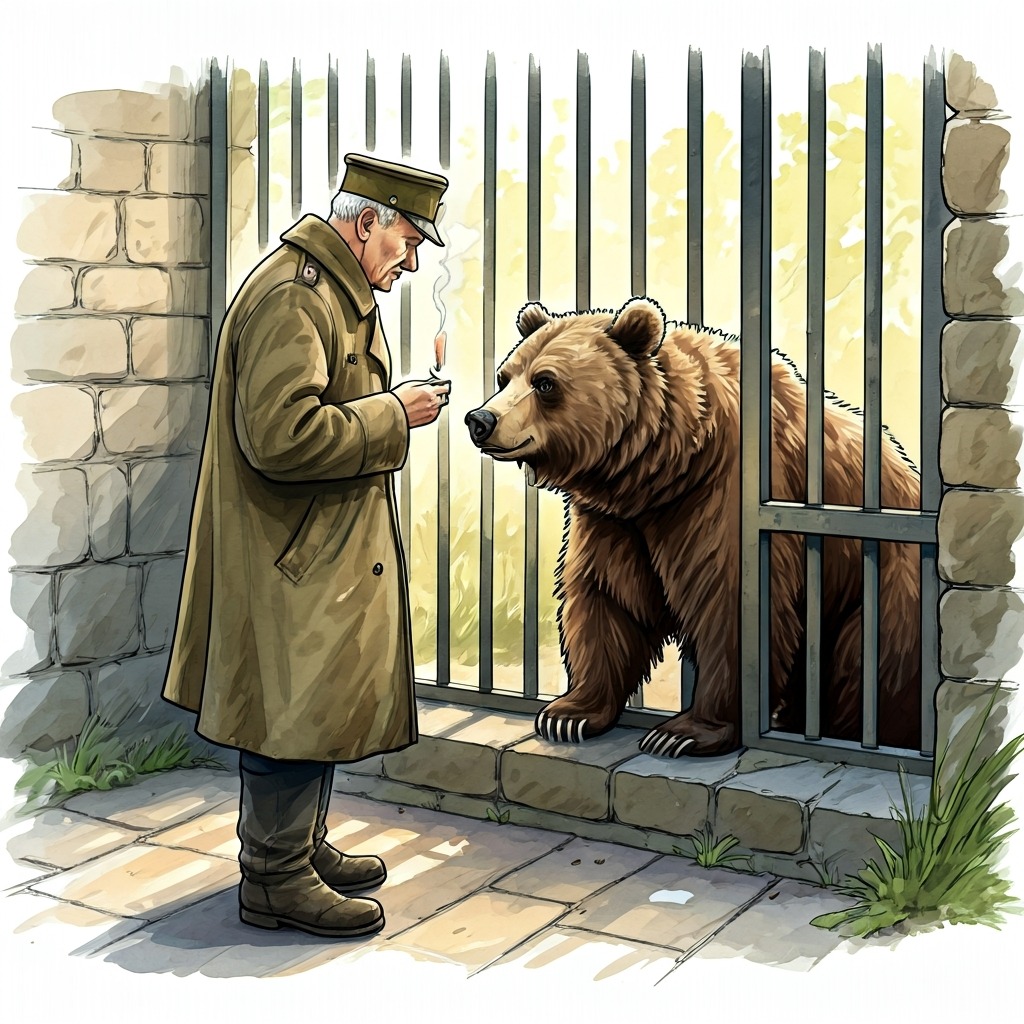
But the bond forged in the fires of Monte Cassino refused to break. For years, Wojtek’s former brothers-in-arms would visit him at the zoo. Much to the absolute horror of the zoo staff, these battle-hardened veterans would occasionally jump the enclosures to wrestle with the massive bear in the dirt, or toss him lit cigarettes, which he still happily swallowed.
Wojtek lived out his days in Scotland, passing away in 1963 at the age of 21. Today, statues of the Soldier Bear stand in Edinburgh, Poland, and across the globe.
Behind the beer-drinking, cigarette-eating spectacle is a profound story of survival. Wojtek was a 400-pound lifeline for men who had endured the absolute worst of the 20th century. He fought for a country he had never even seen, simply because his brothers asked him to.