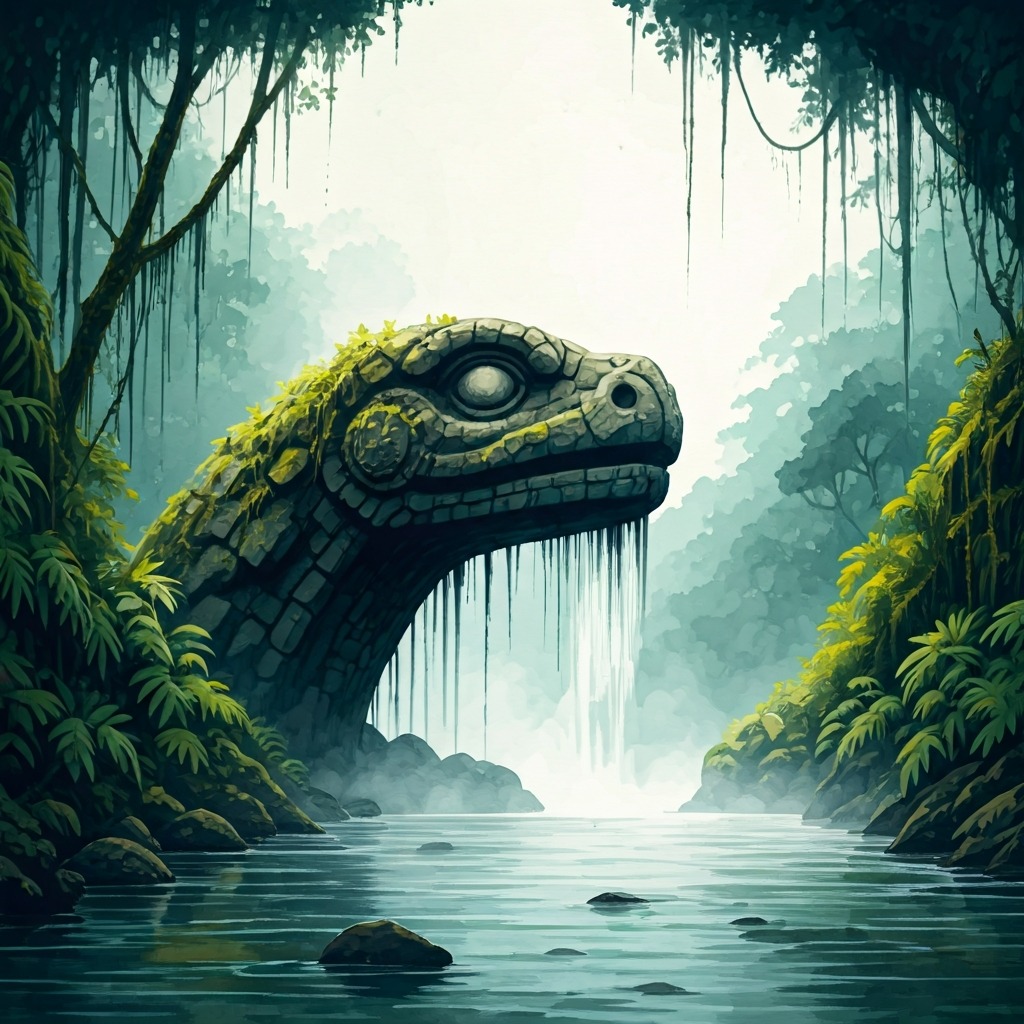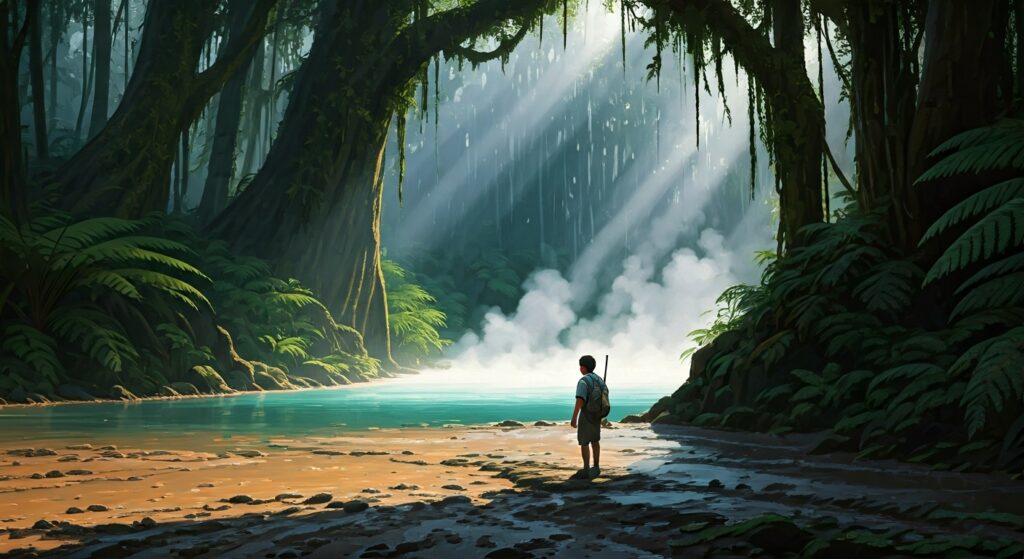
Deep in the Peruvian Amazon, a terrifying legend circulated for generations. Locals whispered of a hidden river so hot it literally boiled its victims alive. For centuries, the scientific community dismissed the stories as pure folklore—a myth born from the unforgiving jungle. But the jaw-dropping truth is far more bizarre than fiction: the boiling river is absolutely real.\n\n## A Grandfather’s Legend\n\nThe journey to uncover this natural wonder didn’t begin in a laboratory, but at a family dinner table. Andrés Ruzo, who would later become a geothermal scientist and National Geographic Explorer, grew up captivated by his grandfather’s stories. Among the most haunting was the tale of a nightmarish Amazonian landscape, complete with a river of boiling water.\n\nYears later, while pursuing his PhD in geophysics, Ruzo couldn’t shake the story. He asked his colleagues if such a river could exist. The consensus was a resounding no. Boiling rivers require active volcanoes, and the Amazon basin is hundreds of miles from the nearest volcanic activity.\n\nYet, the mystery gnawed at him. In 2011, Ruzo ventured deep into the Peruvian jungle, expecting to find, at best, a tepid stream. Instead, he found a monster.\n\n## The Serpent’s Scalding Breath\n\nHidden beneath the dense jungle canopy, Ruzo discovered Shanay-Timpishka, which translates to \”boiled with the heat of the sun\” in the local Asháninka language.\n\nThe sheer scale of the anomaly is staggering. The river stretches for four miles, with water temperatures ranging from 120 to nearly 200 degrees Fahrenheit. In some stretches, the water erupts in a violent, rolling boil. Thick steam billows through the trees, creating an eerie, fog-drenched atmosphere that feels entirely otherworldly.\n\nThe river’s extreme heat creates a lethal environment. If a small animal, reptile, or insect slips into the water, the results are instantaneous and gruesome. The creatures are essentially cooked alive. The intense heat immediately denatures their proteins, turning their eyes a milky, opaque white before the scalding current sweeps their lifeless bodies away.\n\n## An Impossible Geological Engine\n\nHow does a four-mile stretch of boiling water exist in a non-volcanic region? The closest active volcano is over 400 miles away. To generate this kind of geothermal feature, a massive magma heat source is typically required right next door.\n\nGeologists studying the phenomenon hypothesize that Shanay-Timpishka is the result of an unprecedented hydrothermal system. Think of the Earth’s crust as a giant plumbing network. Rainwater gathers high in the Andes Mountains and seeps deep into the Earth. As it travels further down, it is heated by the planet’s natural geothermal gradient. Eventually, this superheated water is thrust back to the surface through deep fault lines, erupting as a massive hot spring. The sheer volume of boiling water being pumped out defies everything scientists previously understood about non-volcanic regions.\n\n## The Mother of the Waters\n\nLong before Western science \”discovered\” the river, it was a deeply sacred site for the indigenous Asháninka people. To them, the river is not a geological anomaly; it is a powerful spiritual entity.\n\nOverseen by traditional shamans, the steaming waters are used for daily life—brewing tea, cooking, and performing medicinal ceremonies. At the river’s source sits a massive boulder shaped remarkably like a serpent’s head. The locals call this spirit Yacumama, the \”mother of the waters,\” who breathes hot water into the world.\n\nFascinatingly, the deadly river is also a mother to life that shouldn’t exist. Despite the lethal temperatures, scientists have discovered extremophile microbes thriving in the boiling currents. Some of these organisms are entirely new to science, surviving in a harsh environment that would instantly kill almost anything else on Earth.\n\n## A Fragile Miracle\n\nToday, the Boiling River faces a threat far more dangerous than its own scalding waters. The surrounding jungle is under siege from illegal logging, clear-cutting for agriculture, and potential energy development.\n\nConservation efforts, spearheaded by Ruzo alongside local indigenous leaders, are racing against the clock to protect this unique ecosystem. They are working to strike a delicate balance between scientific research, sustainable eco-tourism, and the preservation of indigenous heritage.\n\nShanay-Timpishka is a brilliant, roaring reminder that our planet still holds uncharted mysteries that defy our understanding of science. It proves that sometimes, the most terrifying legends are actually grounded in reality.