The open ocean is a graveyard of human hubris. For centuries, shipbuilders have forged vessels of iron and steel, convinced they have finally tamed the deep. But the sea always has the final word. In the annals of maritime history, few stories illustrate this terrifying reality better than the SS Waratah—a vessel dubbed the “Titanic of the South.” She possessed every modern luxury, was commanded by a veteran captain, and sailed a well-traveled route. And then, in the blink of an eye, she simply ceased to exist.
The Pride of the Blue Anchor Line
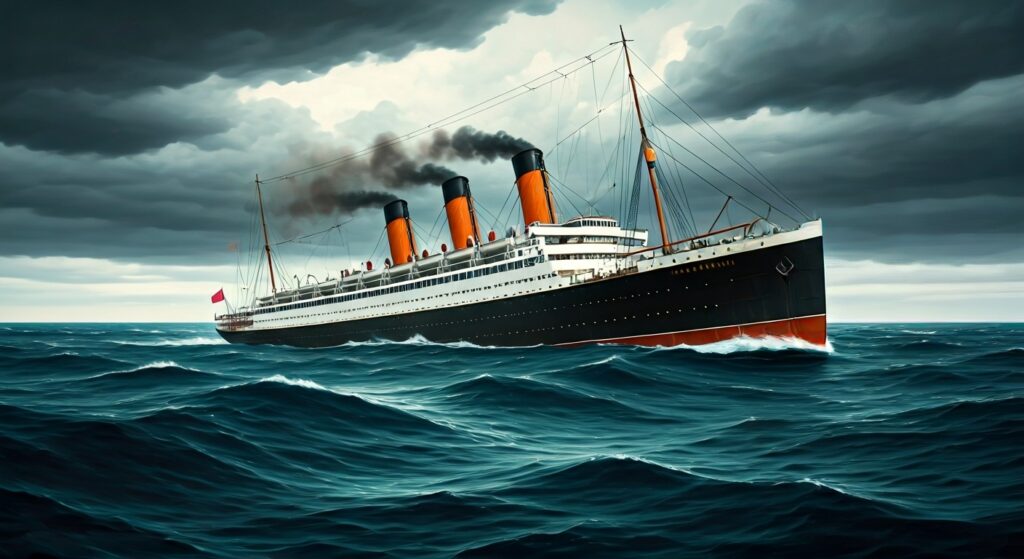
In 1908, the ocean was the only highway connecting the far-flung corners of the globe. Enter the SS Waratah, a 9,339-ton luxury passenger and cargo liner built in Glasgow. Designed specifically for the lucrative migrant and cargo route between Europe and Australia, she was the undisputed crown jewel of the Blue Anchor Line. Boasting 100 first-class cabins and state-of-the-art amenities, she was engineered to conquer the seas.
By July 1909, the Waratah was on only her second voyage. At the helm stood Captain Josiah Edward Ilbery, a highly experienced mariner who knew the treacherous waters between Australia, Africa, and Europe like the back of his hand. The ship had successfully crossed the Indian Ocean and docked in Durban, South Africa. To the untrained eye, she was a flawless triumph of modern engineering. But to one man on board, the Waratah was a floating coffin.
The Lingering Roll and the Bloody Sword
Claude Sawyer was a seasoned sea traveler holding a ticket all the way to Cape Town. Yet, during the Indian Ocean crossing, Sawyer noticed something deeply unsettling about the way the Waratah handled the waves. She felt dangerously top-heavy. When the ship rolled into a swell, she didn’t snap back upright. Instead, she suffered from a “lingering roll”—hanging precariously on her side for a terrifying fraction of a second too long before righting herself.
Sawyer’s mechanical unease soon morphed into full-blown psychological terror. Night after night, he was plagued by a gruesome nightmare: a man standing over the ship, wielding a blood-stained sword. Spooked beyond reason by his own premonitions and the ship’s sluggish physics, Sawyer abandoned his ticket and fled the vessel in Durban. His friends likely thought he had lost his mind. Days later, they would realize he was the luckiest man alive.
Into the Teeth of the Gale
On July 26, 1909, the Waratah departed Durban for Cape Town, carrying 211 passengers and crew.
The following morning, she exchanged routine flashing-light signals with the steamer Clan MacIntyre. The weather was manageable, the crew seemed at ease, and the Waratah steamed ahead, slowly disappearing over the horizon. That mundane exchange of lights was the last confirmed contact anyone would ever have with the ship.
Shortly after passing the Clan MacIntyre, the region was violently ambushed by a freakish winter gale. This was no ordinary storm; it was a monstrous tempest characterized by hurricane-force winds and towering, violent swells. The eastern coast of South Africa is notoriously treacherous, home to the Agulhas Current, where fast-moving waters meet gale-force winds to create mountainous, ship-breaking conditions.
When the Waratah failed to arrive in Cape Town, authorities weren’t immediately panicked. Weather delays were common. But as days turned into weeks, the silence grew deafening.
Swallowed Without a Trace
A 9,000-ton luxury liner isn’t supposed to just vanish. Extensive search efforts were immediately launched. Ships scoured the coastline and the open ocean, desperate for debris, lifeboats, or survivors.
They found nothing. Not a single piece of verifiable wreckage. Not a single life jacket. Not a single body. The Waratah and her 211 souls had been plucked from the water by an invisible hand.
The subsequent Board of Trade inquiry in London became a bitter battleground of conflicting testimonies. The builders and owners fiercely defended the ship’s seaworthiness. But former crew members and maritime experts echoed Claude Sawyer’s chilling observations: the ship lacked proper ballast and was dangerously top-heavy.
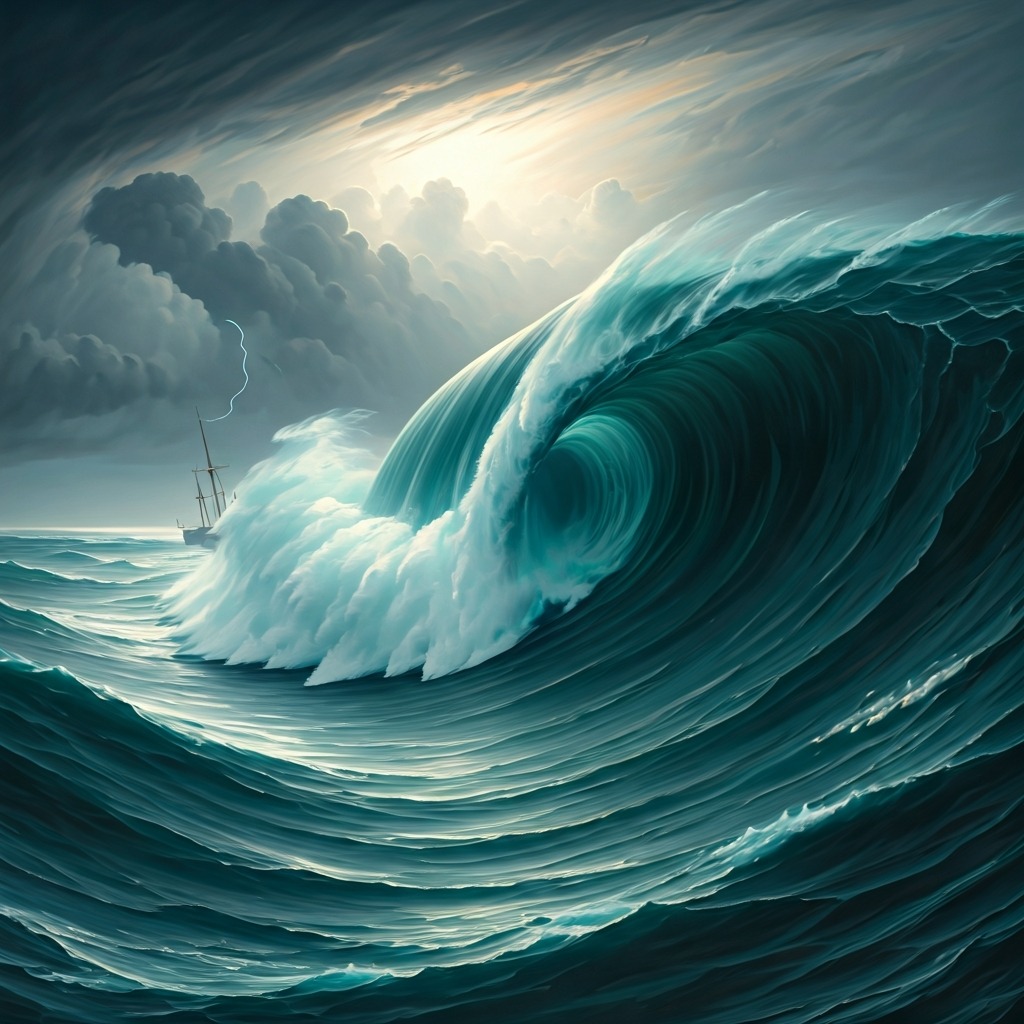
The inquiry ultimately concluded that the Waratah likely capsized in a storm of exceptional violence. The prevailing theory is that she was struck by a “rogue wave”—a freak, towering wall of water notorious along the Transkei coast. Caught in her lingering roll, the ship simply turned turtle and sank to the bottom in a matter of minutes, trapping everyone inside.
The Ocean Keeps Its Secrets
The financial fallout from the disaster completely ruined the Blue Anchor Line, which was forced into liquidation shortly after. But the mystery of the Waratah only grew.
For over a century, the wreck has been the holy grail for shipwreck hunters. Marine explorer Emlyn Brown spent over two decades searching for the vessel, investigating numerous sonar anomalies off the South African coast. Despite his relentless dedication, Brown officially abandoned his search in 2004. He concluded that the ocean had completely, and permanently, claimed the Waratah.
Today, the disappearance of the SS Waratah remains one of maritime history’s most baffling mysteries. It stands as a dark reminder of the limits of human engineering, and the terrifying, untamable power of the sea.