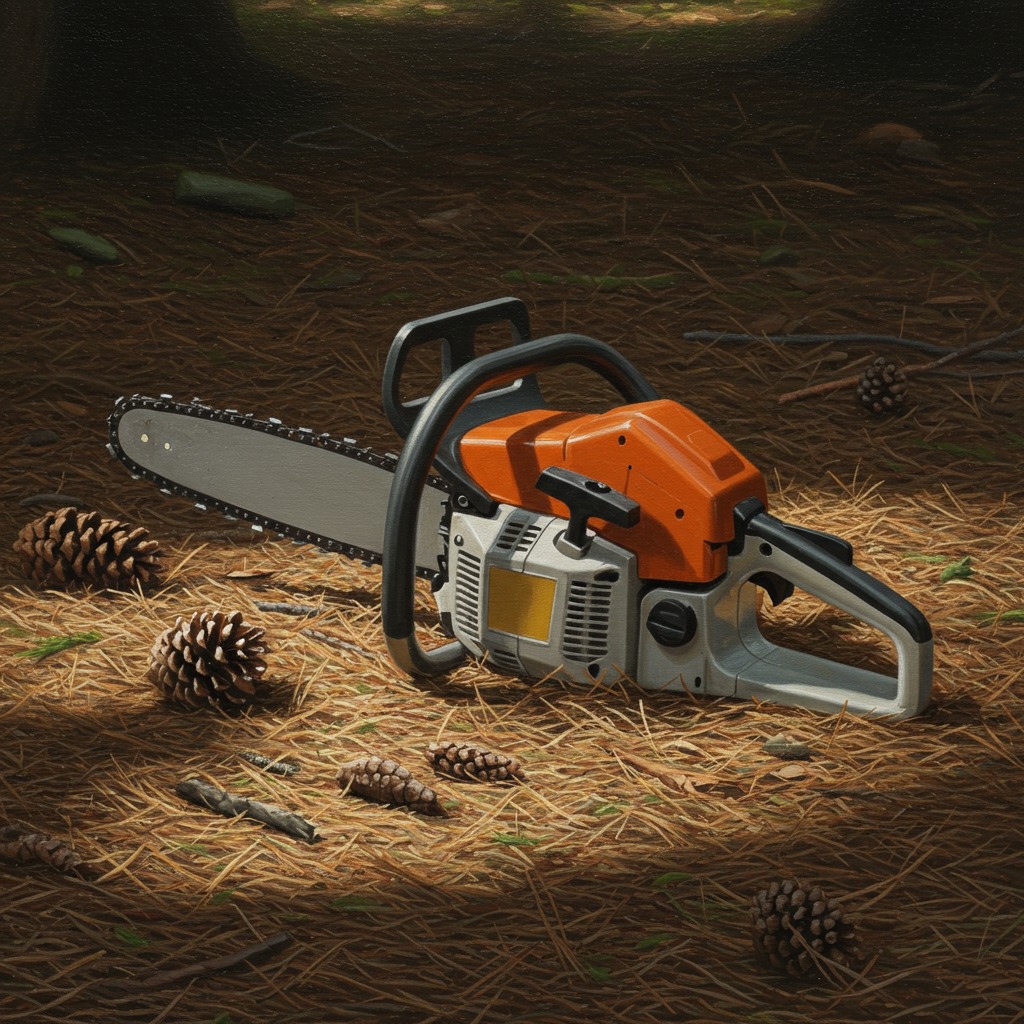
The roar of a two-stroke engine. The acrid smell of gasoline and splintered wood. A masked killer chasing teenagers through the backwoods. The chainsaw is modern culture’s ultimate symbol of brute, mechanical force.
But its true origin story isn’t found in a lumberyard or a Hollywood horror movie. It’s hidden in the blood-soaked annals of 18th-century medicine. And the truth is more terrifying than any fiction.
The chainsaw was not invented to cut wood.
It was invented to cut through the bone of conscious, pregnant women.
A Scream in the Delivery Room
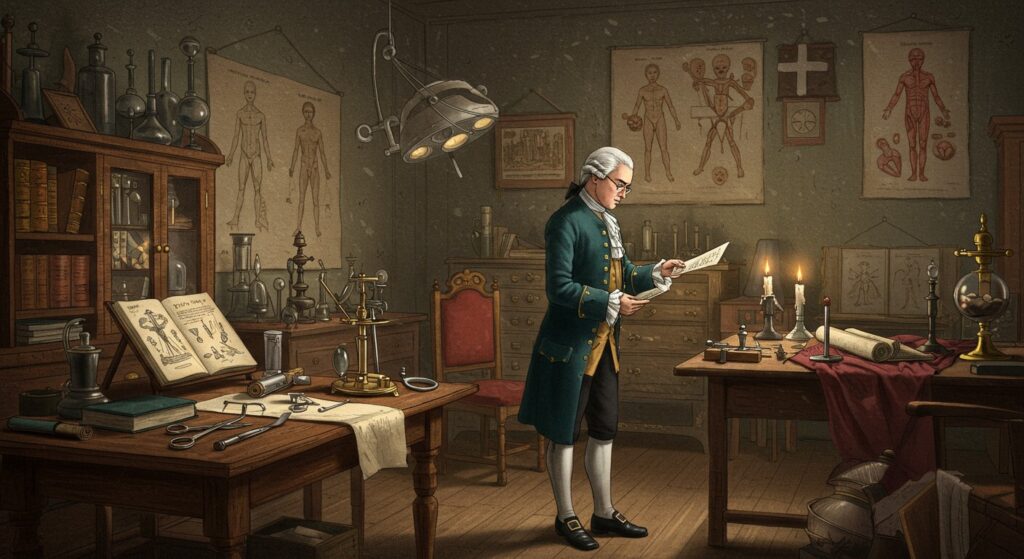
To understand this horrifying leap of logic, you must step into the nightmare of an 18th-century delivery room. Childbirth was a gamble with death. If a baby was breech or too large to pass through the birth canal, the joyous occasion became a lethal trap.
Today, a Cesarean section is a routine, life-saving procedure. But in the 1700s, long before anesthesia and antiseptics, a C-section was a death sentence. The massive blood loss and inevitable infection meant it was a last resort, performed only to save the baby from a mother who was already dead or dying. Doctors needed another way.
Their solution was a desperate, brutal procedure known as a symphysiotomy.
The Agony of the Knife
The human pelvis is formed by two halves, joined at the front by a tough band of cartilage called the pubic symphysis. The theory was grimly simple: if a doctor could sever that cartilage, the pelvis would hinge open, widening the birth canal just enough for the baby to pass.
The reality was a surgical horror show. Using a small knife, a doctor would hack away at the cartilage—all while the mother was fully conscious. The process was agonizingly slow and dangerously imprecise. One slip of the blade could sever an artery or puncture the bladder, causing catastrophic bleeding and permanent injury. It was a bloody, desperate race against time, and the medical world desperately needed a better tool.
A Stroke of Horrifying Genius
Enter two Scottish doctors, John Aitken and James Jeffray, in the 1780s. They realized the problem wasn’t the procedure, but the clumsy tool. A straight knife was simply too crude for such a delicate, confined space.
Their solution was a chilling stroke of genius: the flexible saw. Imagine a fine watch chain, but with every link fitted with tiny, serrated teeth. During a difficult birth, a doctor would guide this chain behind the mother’s pubic bone. Then, grasping two handles, the doctor would pull the chain back and forth, sawing through the cartilage from the inside out.
To our modern ears, it sounds like medieval torture. But to an 18th-century surgeon, it was an act of mercy. The flexible saw was faster, more precise, and saved countless mothers from the butchery of the knife.
The Birth of the Machine
The flexible saw was a medical triumph, but it was still powered by exhausting manual labor. In 1830, a German orthopedist named Bernhard Heine took the next logical, terrifying step: he mechanized it.
Heine created the osteotome. He took the serrated chain, wrapped it around a guiding blade, and attached it to a manual hand-crank. As the surgeon turned the crank, the chain rotated continuously. It was, in every mechanical sense, the world’s first chainsaw. It cut bone so cleanly and efficiently that it quickly became the preferred instrument for amputations and other bone surgeries.
From Operating Table to Forest Floor
So how did this surgical instrument escape the operating theater and find its way into the forest? The answer lies in the relentless march of progress. By the late 19th century, the discovery of general anesthesia and antiseptics had revolutionized medicine. C-sections became survivable, and the brutal symphysiotomy—along with its specialized tool—was rendered obsolete.
But the abandoned osteotome held a powerful secret. Inventors realized that the same principle used to slice cleanly through human bone could be scaled up to fell a 200-foot pine. In 1905, the first patent was filed for a massive “endless chain saw” for logging. By 1929, Andreas Stihl had perfected the first gas-powered model, and the transformation was complete.
The next time you hear that familiar, aggressive roar, remember its secret history. Before it was a tool of destruction, it was a tool of salvation, born from the screams of the delivery room.