In the early 1770s, the London Stock Exchange was consumed by a feverish, unprecedented betting pool. The British elite were wagering thousands of pounds not on the fate of empires or the outcome of wars, but on the biological sex of a single, terrifyingly lethal French diplomat. The subject of their obsession refused to submit to a medical examination, claiming it would be an affront to their honor.
This was no ordinary aristocrat. This was the Chevalier d’Eon—a master of the blade, a chameleon of the court, and a rogue intelligence agent who possessed enough state secrets to bring the greatest powers of Europe to their knees.
Forget the burner phones and crypto-keys of modern espionage. The tale of history’s most audacious spy involves powdered wigs, stolen invasion plans, and a geopolitical standoff settled by a royal wardrobe.
The King’s Shadow and the Russian Corset
Born in 1728 to an impoverished noble family in Tonnerre, France, Charles-Geneviève-Louis-Auguste-André-Timothée d’Eon de Beaumont was a prodigy. Armed with degrees in civil and canon law, d’Eon was also an exceptionally lethal fencer. This deadly grace caught the eye of King Louis XV, who quietly recruited the young noble into the Secret du Roi (The King’s Secret)—a clandestine, personal intelligence network that operated entirely in the shadows, often directly contradicting official French foreign policy.
In 1756, d’Eon was handed a nearly impossible mission: infiltrate the Russian court of Empress Elizabeth and establish a pro-French alliance. The problem was that anti-French factions had locked down the borders. A French diplomat couldn’t just waltz into St. Petersburg.
So, d’Eon didn’t waltz. They put on a corset.
Bypassing heavily armed border guards, the brilliant spy adopted the persona of “Lia de Beaumont,” a French noblewoman. D’Eon not only successfully infiltrated the hostile court but managed to serve as a maid of honor to the Empress herself. The audacious disguise worked flawlessly, and the mission was a massive diplomatic triumph.
From Courtly Silks to Bloodied Sabers
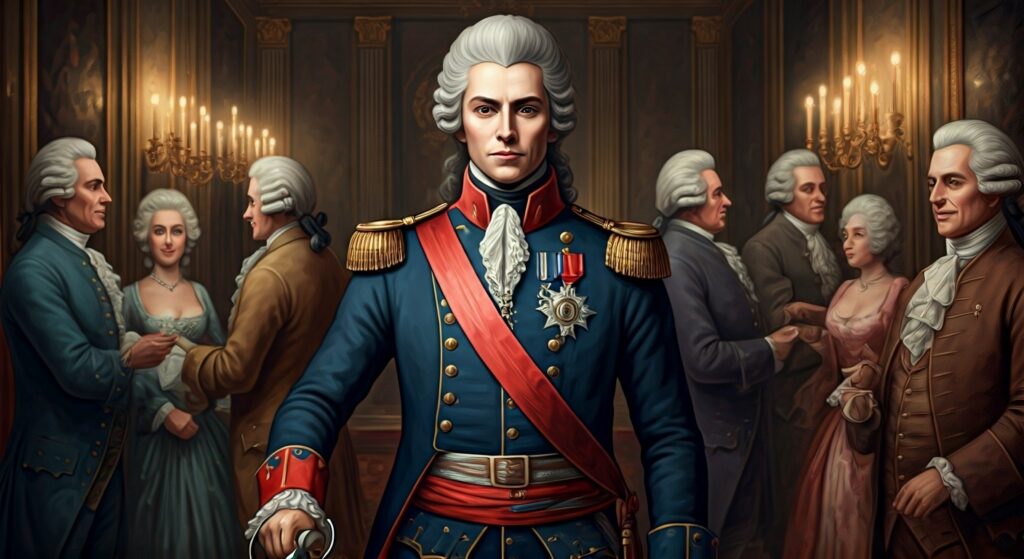
You would think successfully infiltrating a foreign superpower would be the peak of an intelligence career, but d’Eon was just getting started. Returning to France, the spy traded courtly silks for a military uniform, joining the dragoons to fight in the brutal Seven Years’ War.
Living and fighting as a man, d’Eon demonstrated terrifying bravery on the battlefield. After taking wounds to the head and leg at the Battle of Villinghausen, d’Eon was awarded the prestigious Cross of Saint-Louis. This high honor officially granted them the title of “Chevalier.”
Rogue Agent: Blackmailing the Crown
In 1762, the French Crown sent their newly minted Chevalier to London to help draft the Treaty of Paris. But the Secret du Roi had a shadow objective for their star agent: scout locations for a highly classified, potential French invasion of Britain.
The mission went south when a bitter feud erupted between d’Eon and the new, utterly insufferable French ambassador, the Comte de Guerchy. When Louis XV ordered his spy back to France, d’Eon flat-out refused.
Going completely rogue, d’Eon pulled a move of absolute geopolitical audacity. To protect themselves from extradition—or a quiet assassination in a London alleyway—d’Eon blackmailed the King of France. The threat was simple and devastating: Leave me alone, or I hand the secret British invasion plans directly to the British government.
The king backed down. D’Eon remained in London as a political exile, living a life of high-society intrigue while the city’s elite placed frantic bets on whether the decorated dragoon was actually a woman.
A Playwright, a Queen, and a Silk Prison
When Louis XV died in 1774, his successor, Louis XVI, desperately wanted those explosive invasion documents back. To negotiate with the rogue spy, the new king sent Pierre Beaumarchais—the famous playwright behind The Barber of Seville, who moonlighted as a French spy.
During these tense negotiations, d’Eon made a stunning claim: they had actually been assigned female at birth but were raised as a boy by their father to secure a family inheritance.
A bizarre and unprecedented treaty was struck. The French crown agreed to pay off d’Eon’s massive London debts and allow them to safely return to France. The catch? D’Eon had to hand over the invasion documents and agree to live the rest of their life in “appropriate” female attire.
D’Eon agreed. And if one is forced into a new wardrobe by royal decree, it might as well be the best. Queen Marie Antoinette herself reportedly provided the funds for d’Eon’s lavish new dresses. From 1777 onward, the fearsome dragoon lived publicly as “Mademoiselle d’Eon.”
The Final Duel in Crinoline
The later years of d’Eon’s life were a tragic but fiercely resilient chapter. After the French Revolution decimated the monarchy, d’Eon’s royal pension was entirely abolished, leaving the aging spy destitute in England.
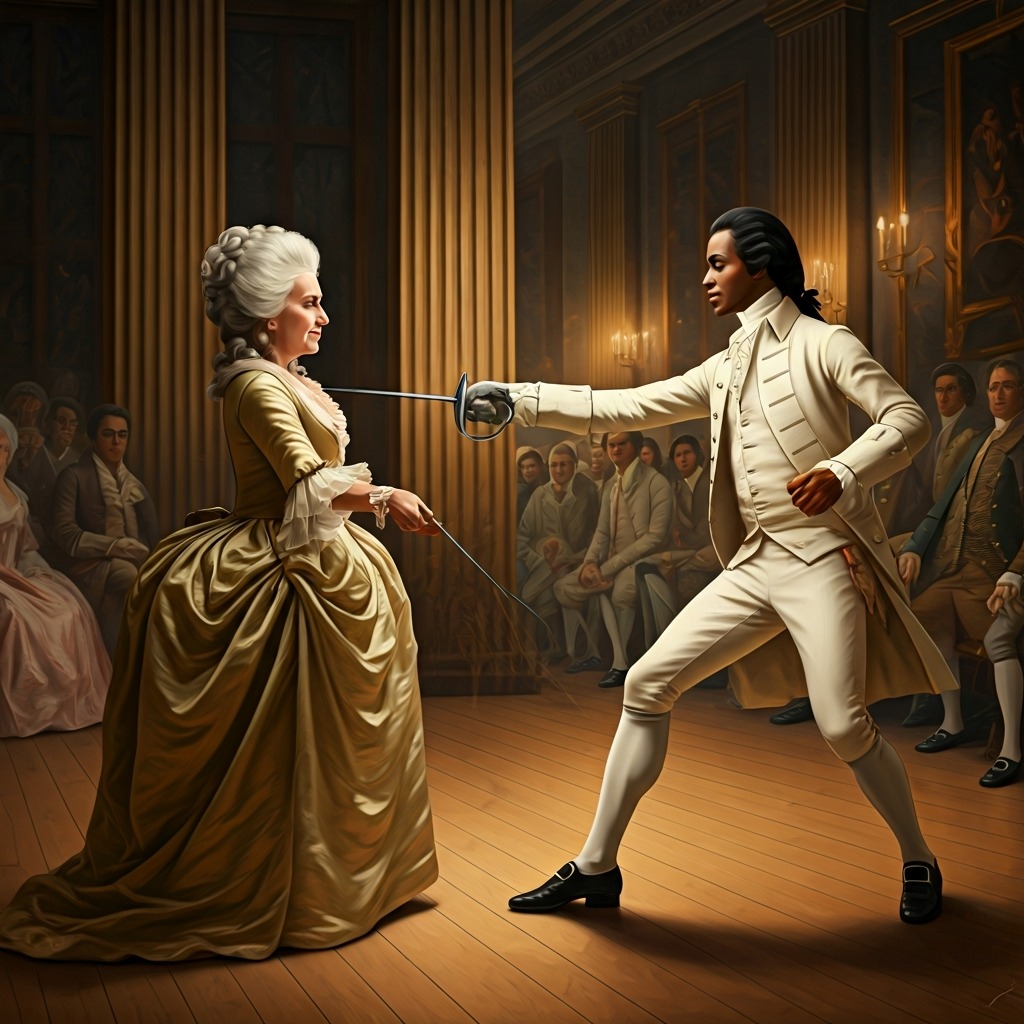
To survive, d’Eon returned to the one skill that had never failed them: the blade. The elderly Mademoiselle d’Eon performed in public fencing exhibitions to pay the rent, demonstrating sheer physical prowess by dueling in the heavy, restrictive, multi-layered women’s gowns of the late 18th century.
In 1787, d’Eon participated in one of the most famous fencing matches in history, crossing swords with the pioneering Black classical composer and master fencer, the Chevalier de Saint-Georges. The visual of these two extraordinary historical outsiders clashing blades in a London hall remains nothing short of cinematic.
D’Eon passed away in poverty in London in 1810 at the age of 81. A post-mortem examination, witnessed by several doctors to finally settle the decades-old public curiosity, revealed that d’Eon possessed male anatomical sex characteristics, though the physicians specifically noted an “unusual roundness in the formation of limbs.”
Today, the Chevalier d’Eon remains a brilliant, multifaceted enigma. To military historians, they were a master tactician who outplayed the French monarchy. To gender historians, d’Eon is a pioneering icon of gender fluidity—so much so that early 20th-century sexologist Havelock Ellis coined the term “eonism” to describe transgender behaviors. Ultimately, d’Eon was a survivor who proved that true power lies in the ability to define oneself, no matter the cost.