Whispers in the Dust of Nineveh
Beneath the sun-baked dirt of mid-19th century Iraq, a shattered secret lay waiting in the dark. When archaeologists brushed away the sand from the ruins of the Library of Ashurbanipal, their fingers grazed cold, hard clay. They had unearthed a series of broken tablets covered in tiny, wedge-shaped scratches. They didn’t know it yet, but they were holding the very DNA of human storytelling.
These weren’t ancient tax records or mundane royal decrees. They were the fragmented pieces of a masterpiece. Composed in cuneiform, the earliest Sumerian poems of this tale date back to around 2100 BCE, with the definitive Akkadian version compiled by a master scribe named Sin-leqi-unninni around 1200 BCE.
It was the Epic of Gilgamesh. Long before modern literature gave us superheroes, tragic flaws, or the buddy-cop comedy, a Mesopotamian scribe carved the blueprint for all of them into the mud.
The Tyrant and the Wild Man
Our story begins not with a noble hero, but with a monster wearing a crown. Gilgamesh is the two-thirds divine king of Uruk, and he is an absolute terror. He oppresses his people, takes whatever he desires, and exhausts his subjects with a boundless, terrifying energy.
Desperate, the citizens of Uruk cry out to the heavens for relief. The gods, in their infinite wisdom, decide that the only way to stop an unstoppable force is to forge an immovable object. Enter Enkidu: a wild man raised by beasts, roaming the steppes, completely ignorant of civilization.
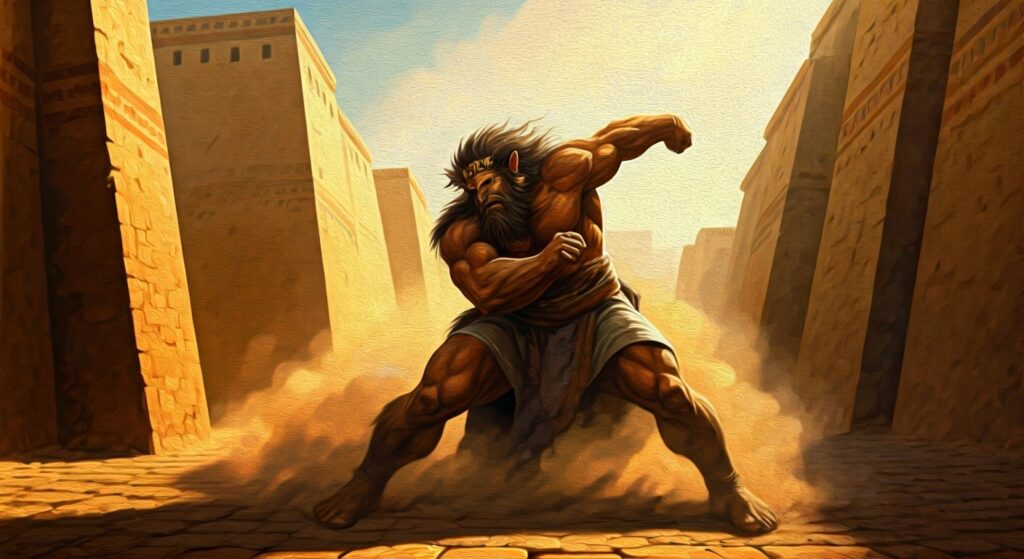
When the two finally meet in the streets of Uruk, the tension is suffocating. They lock eyes. They clash. Their brutal wrestling match shakes the very walls of the city. But when the dust settles, a highly unexpected twist occurs. They don’t kill each other. Instead, they burst into laughter. They have finally recognized their equal, and in that violent moment, the world’s first literary brotherhood is born.
A Goddess Scorned and a Fatal Mistake
With Enkidu by his side, Gilgamesh channels his restless energy away from tormenting his people and toward achieving eternal glory. The duo embarks on a terrifying quest into the forbidden Cedar Forest to slay its monstrous guardian, Humbaba.
They are victorious, but success breeds a dangerous hubris. When Gilgamesh returns, shimmering with triumph, Ishtar, the goddess of love and war, proposes to him. Gilgamesh, possessing the tact of a sledgehammer, violently rejects her, listing all her past lovers who met terrible fates.
Hell hath no fury like a Mesopotamian goddess scorned. Ishtar unleashes the apocalyptic Bull of Heaven to tear Uruk apart. Together, Gilgamesh and Enkidu slay the beast, but this time, they have gone too far. You can kill a monster, but you cannot humiliate the divine without consequence. The gods hand down a chilling sentence: one of the heroes must die. And it won’t be the demigod.
Enkidu falls mysteriously ill and wastes away, leaving Gilgamesh to watch his equal—his only true friend—slip into the void.
A Desperate Race Against the Inevitable
Here, the Epic pivots from a grand action-adventure into a haunting psychological thriller. Devastated by grief, Gilgamesh isn’t just mourning Enkidu; he is looking at his friend’s corpse and seeing his own inescapable future.
Consumed by the existential dread of human mortality, Gilgamesh abandons his throne, sheds his royal robes, and wanders the wilderness. He is hunting for a ghost: Utnapishtim, a mortal who survived a catastrophic global deluge and was granted eternal life by the gods. (If this sounds familiar, it’s because Utnapishtim’s tale strikingly parallels and predates the Biblical story of Noah’s Ark by centuries.)
Gilgamesh journeys to the literal edge of the world, crossing the treacherous Waters of Death, driven by a singular, frantic question: How do I cheat the grave?
The Serpent’s Thief and the Bread of Sleep
When he finally tracks down Utnapishtim, the immortal survivor is thoroughly unimpressed by the ragged, desperate king. To prove that Gilgamesh is entirely unfit for immortality, Utnapishtim issues a deceptively simple challenge: stay awake for a week.
Gilgamesh, exhausted from his harrowing travels, immediately passes out.
To prove how long the king has slept, Utnapishtim’s wife bakes a loaf of bread and places it by his head for every day he remains unconscious. When Gilgamesh wakes, he is surrounded by seven decaying loaves of bread—the ultimate, undeniable receipt of his mortal frailty.
Taking pity on the weeping king, Utnapishtim reveals a consolation prize: a magical plant at the bottom of the ocean that restores youth. Gilgamesh dives into the depths and retrieves it. Victory is finally in his grasp! But on his journey home, while bathing in a cool pool, a snake slithers up and devours the plant. The serpent sheds its skin, instantly renewed, leaving Gilgamesh with absolutely nothing.
The Walls That Outlasted Time
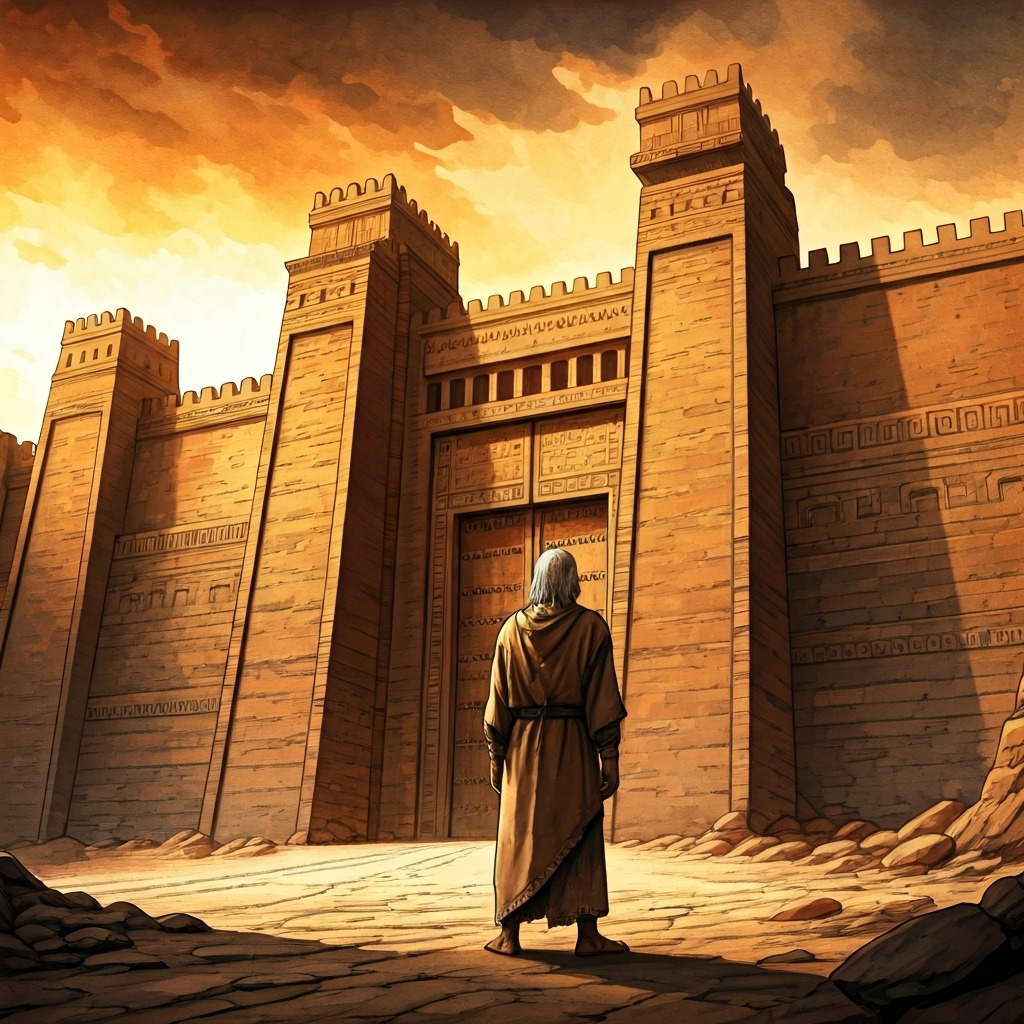
Gilgamesh returns to Uruk empty-handed and defeated. But as he approaches the city, he looks up at the magnificent, towering brick walls he once commanded to be built.
In a profound moment of clarity, the tyrant-turned-hero realizes the ultimate truth. Flesh will always fail. Kings will die, and magic will be stolen. But the civilization we build, the people we protect, and the stories we leave behind? That is how we live forever.
Over four thousand years later, we are still whispering his name. Against all odds, the mud-carved king pulled it off.