When we picture 18th-century Paris, we envision powdered wigs, grand architecture, and the dawn of the Enlightenment. We rarely picture sleep-deprived teenagers orchestrating a demonic psychological warfare campaign against a pampered house cat. Yet, hidden within the history of European typography lies one of the darkest, most bizarre tales of street-level rebellion ever recorded. It is a story of starvation, psychological torture, and a deeply unsettling sense of humor. Welcome to the Rue Saint-Séverin in the late 1730s.
The Squalor and the Pampered Pet
To understand the sheer madness of what transpired, one must look at the miserable reality of the Parisian printing industry. The traditional guild system was collapsing. Master printers were transforming into wealthy bourgeois capitalists, while their apprentices and journeymen were left to rot in squalor.
Enter Nicolas Contat and his fellow apprentice, Jerome. These boys lived in a freezing, miserable room, subjected to grueling labor and fed literal scraps from the master’s table—food often so rotten it was deemed unfit even for the household pets.
And speaking of pets, this brings us to the true villain of our story: a luxurious, pampered cat named la Grise (the Gray).
While the boys choked down spoiled offal, the master’s wife doted on la Grise, feeding the feline freshly roasted fowl. It was an absolute slap in the face. To make matters worse, the neighborhood was overrun with alley cats. Every night, this feral feline army would gather on the roof above the apprentices’ freezing quarters, howling endlessly and robbing the exhausted boys of their precious sleep. Driven to the brink by exhaustion and burning resentment, the apprentices decided they had finally had enough.
The Phantom of the Rooftops
Jerome was not just an overworked apprentice; he was a master of mimicry. Hatched in the freezing dark of their squalid room, his plan was as brilliant as it was petty.
For several nights, Jerome crawled out onto the treacherous, sloping rooftops of Paris. Positioning himself near the master’s bedroom window, he unleashed a chorus of demonic, blood-curdling cat howls. He wailed and shrieked, perfectly mimicking a feral cat turf war, until the sleep-deprived master and his wife were driven to the edge of insanity.
The psychological warfare worked. The master printer finally snapped. He ordered his apprentices to eradicate the neighborhood cats once and for all. But there was one strict, non-negotiable caveat: under no circumstances were they to harm his wife’s beloved la Grise.
A Sanctioned License for Slaughter
The apprentices, joined by the shop’s journeymen, gleefully seized their newly sanctioned license for violence. They armed themselves with broom handles, heavy iron bars from the printing presses, and whatever makeshift weapons they could find.
But they had no intention of following the master’s one rule.
The moment the hunt began, Jerome made a beeline for la Grise. With a swift, brutal strike of an iron bar, he bludgeoned the pampered pet, breaking her spine. He unceremoniously shoved her lifeless body into a gutter to hide the evidence. With their primary target eliminated, the workers unleashed a wave of terror on the alley cats of Rue Saint-Séverin, chasing them down and beating them half to death.
The Court of the Damned
If the story ended there, it would merely be a tragic tale of animal cruelty. But what the workers did next elevated the event into a bizarre, macabre piece of cultural theater.
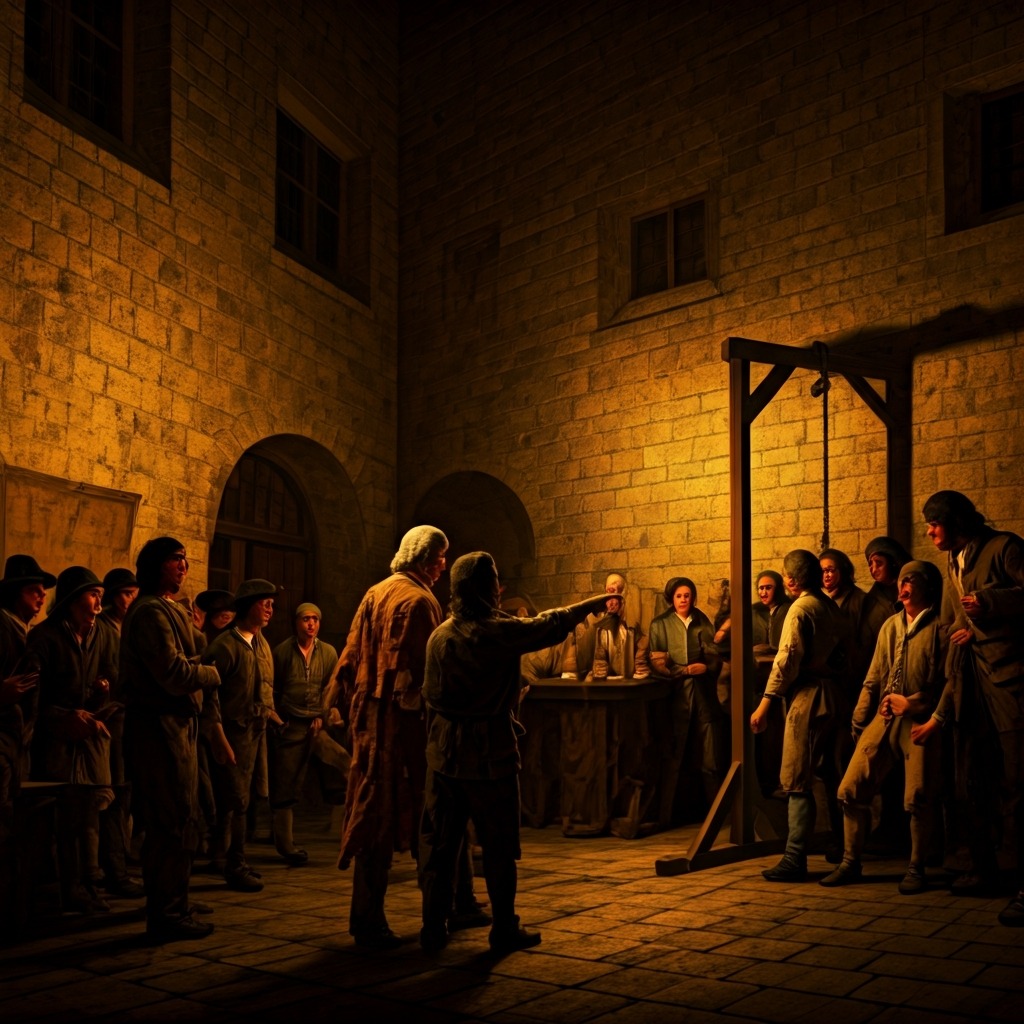
The men gathered the maimed and dead cats in the courtyard. Instead of disposing of the bodies, they held a mock trial. This was rooted in the rich early modern European tradition of charivari (rough music) and Carnival—festivals where the strict social order was temporarily, and often violently, inverted.
The workers appointed a judge, guards, a confessor, and a public executioner. The cats were formally charged with the crime of witchcraft and the theft of the workers’ sleep. In a grotesque parody of the French justice system, the animals were pronounced guilty, given “last rites,” and ritually hanged from makeshift gallows in the courtyard.
The Punchline of the Powerless
When the master’s wife stepped into the courtyard and discovered the gruesome scene, she was horrified. She immediately suspected that her beloved la Grise was among the swinging victims. The master printer arrived moments later, but in a classic display of capitalist priorities, his primary fury was not directed at the dead animals. He was enraged that his workers had halted printing production just to hang cats.
For the workers, however, the event was a triumphant, uproarious success. It was the funniest thing they had ever done. For months afterward, whenever the master left the shop, the workers would reenact the massacre in elaborate pantomimes called copies. They would bang on the printing presses and howl with laughter, using the memory of the slaughtered cats to mock their employers and relieve the soul-crushing drudgery of their labor.
But why was this funny?
To understand the humor, one must decode the 18th-century symbolism. Cats were deeply associated with witchcraft, bad luck, and female sexuality. By killing la Grise and putting the cats on trial, the workers were symbolically assaulting the master’s household. They were insulting the master’s wife—subtly accusing her of promiscuity or witchcraft—and humiliating the master himself.
It was an early, theatrical form of class warfare. The powerless apprentices couldn’t afford to go on a real labor strike; that would result in imprisonment or starvation. Instead, they used the only tools at their disposal—violence, mockery, and ritual—to strike a devastating psychological blow against their bourgeois masters without crossing the line into punishable mutiny. Today, we look at the Great Cat Massacre and see horrifying cruelty. But to the starving, exhausted workers of 1730s Paris, it was a brilliant, multi-layered joke. It was a street-level revolution, printed not with ink and typeface, but with the blood of the master’s favorite pet.