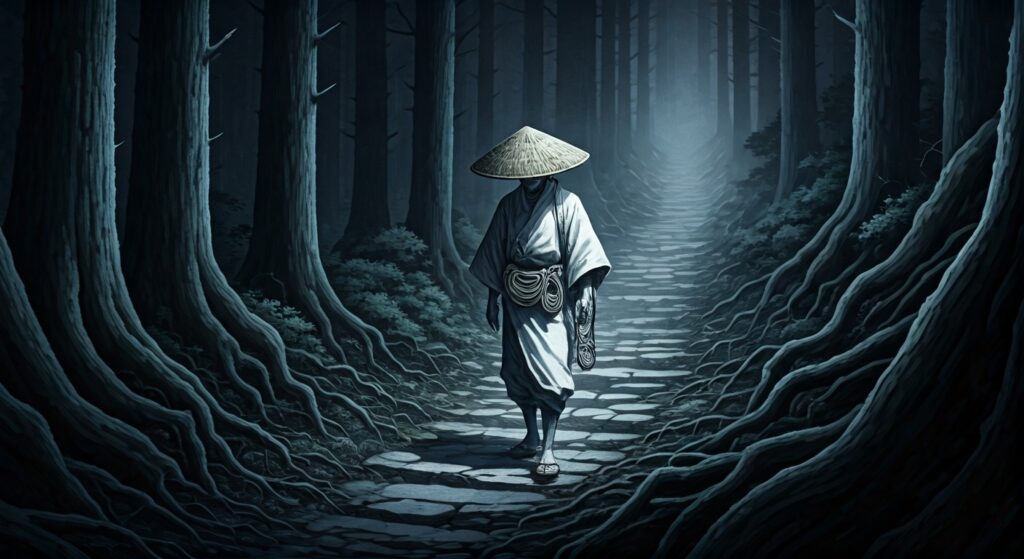
Deep in the ancient, root-choked forests of Japan’s Mount Hiei, a phantom slips through the midnight mist. He wears the unlined, white cotton robes of a corpse. On his feet are flimsy straw sandals that will disintegrate before sunrise. Tucked into his belt is a traditional short sword and a length of rope.
These weapons are not for protection against the elements or wild animals. They are for himself.
Welcome to the Kaihogyo, a secretive and grueling 1,000-day endurance challenge undertaken by the Tendai Buddhist monks of Mount Hiei. Forget modern ultramarathons, carbon-plated shoes, and electrolyte gels. For these ascetics, extreme physical suffering is not a sport—it is a direct portal to the divine. And the penalty for failure is death.
The Walking Ghosts of Mount Hiei
Rooted in the teachings of a 9th-century monk named So-o, the Kaihogyo (translating to “circling the mountain”) is a quest to achieve Sokushin Jobutsu—enlightenment in this very body. The philosophy is as brutal as it is beautiful: by completely exhausting the physical form, a monk strips away his ego to reveal the pure, unadulterated spirit underneath.
The ultimate version of this practice is a staggering 1,000-day regimen spread out over seven years. During the first three years, a participating monk must run 30 kilometers a day for 100 consecutive days. In years four and five, the schedule aggressively ramps up to 200 consecutive days of 30-kilometer runs.
They navigate the treacherous mountain trails in waraji—traditional straw sandals that offer zero shock absorption and fall apart so quickly the monks must carry multiple replacement pairs just to survive a single day. Their uniform is equally chilling. Crowned with a large woven hat shaped like a lotus flower, they wear the white robes traditionally reserved for the dead. It is a constant, haunting reminder of their status: a marathon monk is a walking ghost who has already surrendered his life to the mountain.
The Blade and the Rope
Historically, and symbolically to this day, a monk who embarks on the 100th day of his first year crosses a terrifying point of no return. From that morning onward, the stakes become absolute.
The monk must carry a tanto (a Japanese short sword) and a rope with him at all times. If he fails to complete his daily run for any reason—whether he shatters an ankle, contracts a severe illness, or simply collapses from unimaginable exhaustion—he is expected to take his own life by disembowelment or hanging.
There are no sick days. There are no rescue teams. You either complete the route, or you do not come back alive.
Nine Days in the Abyss
If a monk somehow survives the first five years of this grueling gauntlet, he isn’t rewarded with rest. He is rewarded with the Doiri, or “entering the temple”—a nine-day trial of extreme sensory and physical deprivation that defies human biology.
The monk must survive without food, without water, without sleep, and without rest. He sits in the temple, tasked with chanting the mantra of Fudo Myoo—the Immovable Wisdom King—100,000 times. To ensure the practitioner doesn’t cheat or accidentally drift off, two attendant monks flank him at all times.
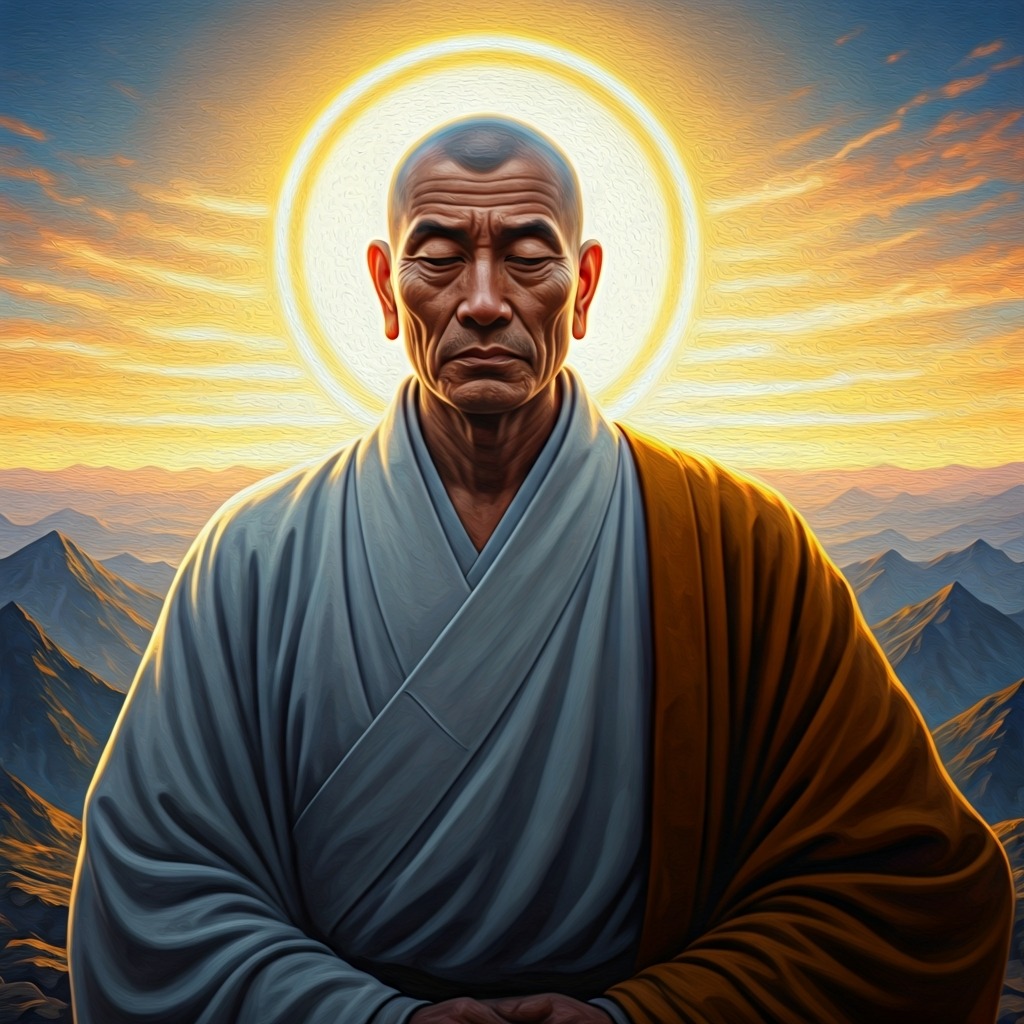
From a physiological standpoint, surviving nine days without water pushes the absolute boundaries of what the human body can endure. Surviving the Doiri is said to bring the monk face-to-face with the Grim Reaper himself, allowing him to emerge on the other side as a “living Buddha.”
The Final Descent
If you thought the Doiri was the climax, the final two years of the Kaihogyo are where human endurance enters the realm of the supernatural.
In the sixth year, the daily running distance doubles. The monk must cover 60 kilometers a day for 100 days. Then comes the seventh and final year. For 100 consecutive days, the monk must run 84 kilometers a day. That is the equivalent of running two Olympic marathons daily on rugged mountain terrain, wearing nothing but straw sandals. Once that impossible feat is achieved, he completes a final 100 days of 30-kilometer runs to cool down and close the 1,000-day cycle.
Since 1585, fewer than 50 monks have successfully completed the 1,000-day Kaihogyo. Those who cross the final finish line earn the title of Daigyoman Ajari (Saintly Masters of the Highest Practice) and are revered as national treasures throughout Japan.
To the Tendai monks, this is not an athletic event to be won. It is an active, moving meditation—the ultimate sacrifice of the self, designed to guide all sentient beings toward enlightenment. It stands as a breathtaking testament to exactly what the human body, and the human spirit, is truly capable of.