The Spark That Ignited an Empire
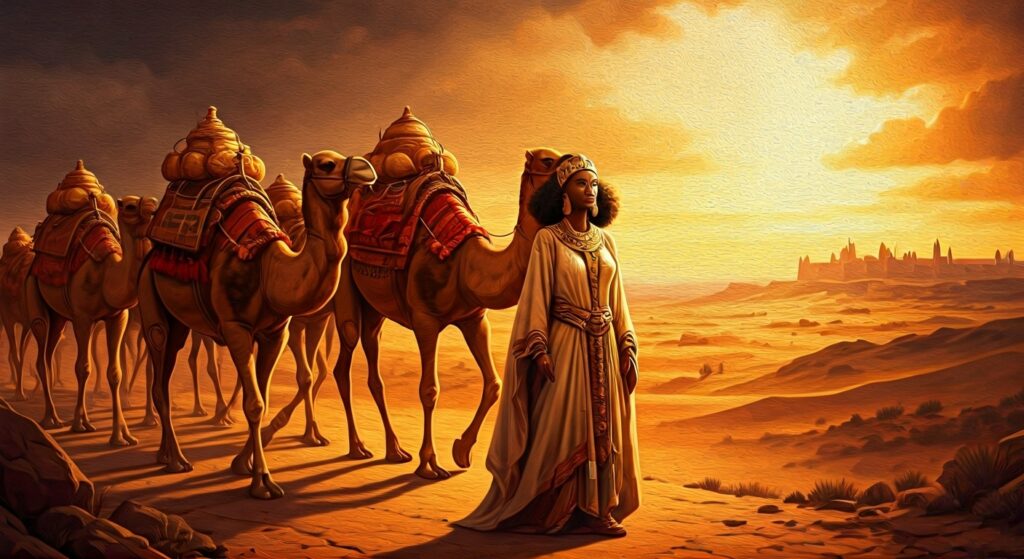
Long before the world obsessed over modern power couples, the ancient world witnessed a collision of empires so profound it altered the course of history. At the center of this epic was a woman often relegated to the margins of Western texts as an unnamed, enigmatic foreigner. But in the Kebra Nagast—the 14th-century Ethiopian national epic—she is Makeda, the brilliant, fabulously wealthy Queen of Sheba.
Ruling over a vast empire centered in Aksum, Makeda was no mere figurehead; she was a relentless seeker of truth. And when whispers of a distant king with unparalleled intellect reached her court, she set her sights on Jerusalem.
A Caravan of Riddles and Riches
The catalyst for her legendary journey was a merchant named Tamrin. Returning from supplying materials for King Solomon’s magnificent Temple, Tamrin brought back tales that defied belief. He spoke of Solomon’s unmatched wisdom, the flawless order of his kingdom, and the jaw-dropping architecture of Jerusalem.
Intrigued, Makeda refused to rely on hearsay. She organized a staggering caravan of 797 camels, groaning under the weight of gold, precious stones, and exotic spices. She was riding to Jerusalem not to bow, but to test this supposedly brilliant king with the most complex riddles of the ancient world.
When Makeda arrived, she threw her hardest questions at Solomon, and he answered them effortlessly. Yet, it wasn’t his intellect that ultimately captivated the Queen—it was the spiritual and divine order of his realm. Moved by what she witnessed, Makeda renounced her people’s traditional worship of the sun and stars, choosing instead to embrace the God of Israel.
The Midnight Oath
As Makeda’s departure loomed, Solomon realized he could not let her leave without securing an heir. But Makeda was a sovereign queen; she could not be commanded, only outmaneuvered. Solomon devised a cunning, high-stakes trap.
He hosted a lavish farewell banquet, deliberately serving heavily spiced, salt-rich delicacies. Before retiring for the night, Makeda demanded an oath: Solomon must swear not to take her by force. The King agreed, but countered with his own condition—she must promise not to take anything of his without permission. Believing the request to be trivial, Makeda agreed.
In the dead of night, the trap was sprung. Makeda awoke with a burning, desperate thirst. Spotting a crystal bowl of water strategically placed in her chamber, she lifted it to her lips. Instantly, Solomon—who had been feigning sleep—caught her arm. He declared she had taken his water without permission, breaking her sacred oath. Freed from his promise, the two consummated their union.
Antiquity’s Greatest Heist
Makeda returned to Aksum and gave birth to a son, Menelik I, whose name translates to “Son of the Wise.” Years later, when Menelik traveled to Jerusalem to meet his father, Solomon was overjoyed, begging his heir to remain and rule Israel. But Menelik’s heart belonged to Ethiopia. Conceding defeat, Solomon decreed that the firstborn sons of Israel’s highest priests and nobles must accompany Menelik back to Aksum to establish a Jewish kingdom.
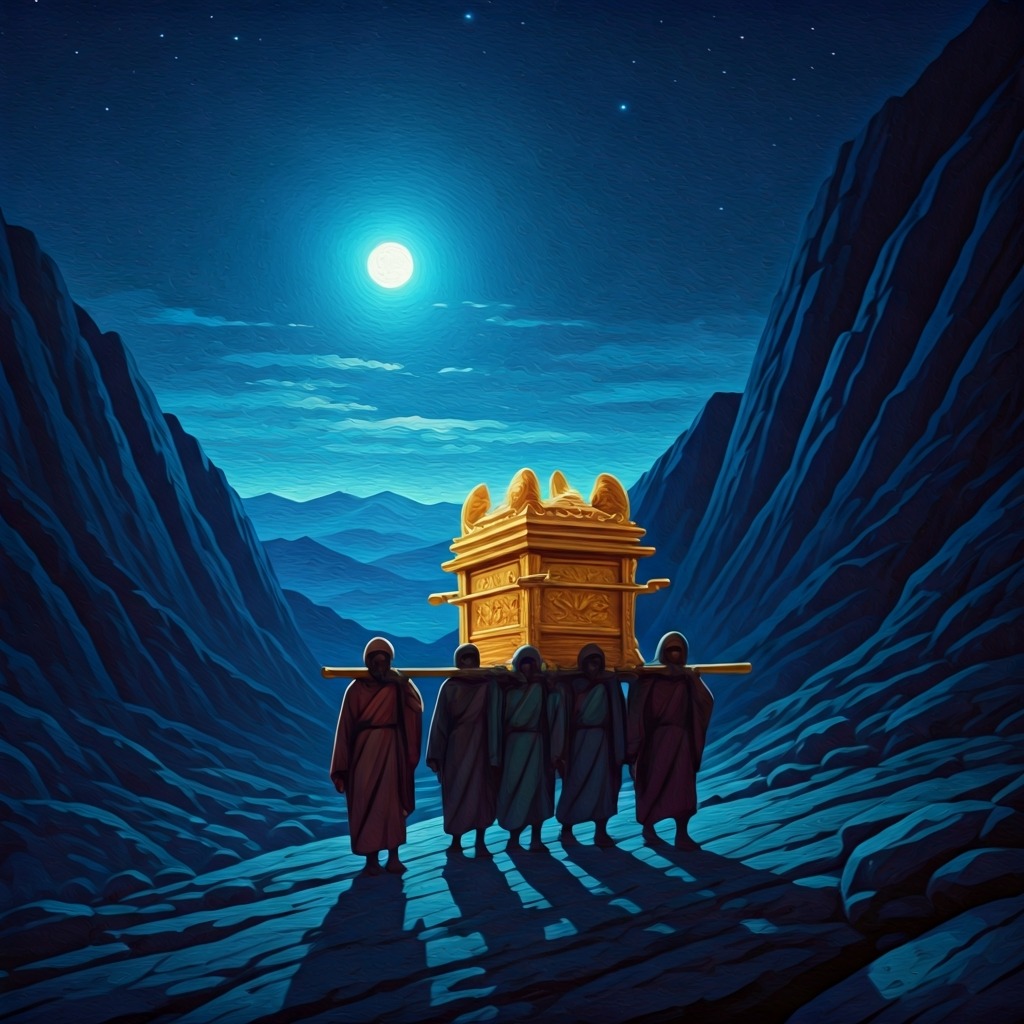
Furious at their sudden exile, these young Israelite nobles plotted their revenge. In a twist that forever altered biblical history, they infiltrated the Temple, secretly stole the legendary Ark of the Covenant, and left behind a flawless replica.
When Menelik discovered the ultimate heist on the road home, he didn’t turn back. The impossibly swift pace of their journey convinced him of one thing: this was divine intervention. God wanted the Ark in Ethiopia. To this day, the Ethiopian Orthodox Tewahedo Church maintains that the original Ark rests securely in the Church of Our Lady Mary of Zion in Aksum.
A Bloodline Forged in Legend
This epic saga is far more than ancient myth; it is the absolute bedrock of Ethiopian identity.
By claiming direct descent from Menelik I, Ethiopian emperors legitimized their rule through a divine bloodline connecting them straight to the House of David. This Solomonic Dynasty—officially restored in 1270 AD—ruled Ethiopia for nearly three millennia, surviving all the way until the deposition of Emperor Haile Selassie in 1974.
Makeda was never just a footnote in someone else’s holy book. She was a revered founding mother, a brilliant monarch, and the matriarch of one of the longest-ruling imperial houses in human history.