The Season the Sun Forgot
Imagine waking up in the middle of June, expecting the warm, golden embrace of summer, only to find a thick, silent blanket of snow suffocating your garden. The rivers are freezing over. The birds are dead. This isn’t the opening scene of a dystopian thriller—this was the terrifying reality of 1816.
Across the Northern Hemisphere, average global temperatures mysteriously plummeted. The season was swallowed by a relentless, biting cold, earning 1816 the ominous moniker, the “Year Without a Summer.” Dark-humored locals simply called it “Eighteen Hundred and Froze to Death.” But what could possibly steal an entire season? To solve this global whodunit, we have to examine the victims of a world pushed to the brink.
A Global Crime Scene
The impacts of this sudden deep-freeze were immediate, catastrophic, and worldwide. In Europe, nations were already bleeding and bankrupt from the Napoleonic Wars. When the sudden drop in temperature brought relentless, torrential rains, it triggered massive crop failures across Great Britain, Ireland, France, and Switzerland. Food prices skyrocketed, sparking widespread riots, arson, and looting. It became the worst famine of the 19th century. In Switzerland, the crisis was so apocalyptic that the government declared a national emergency.
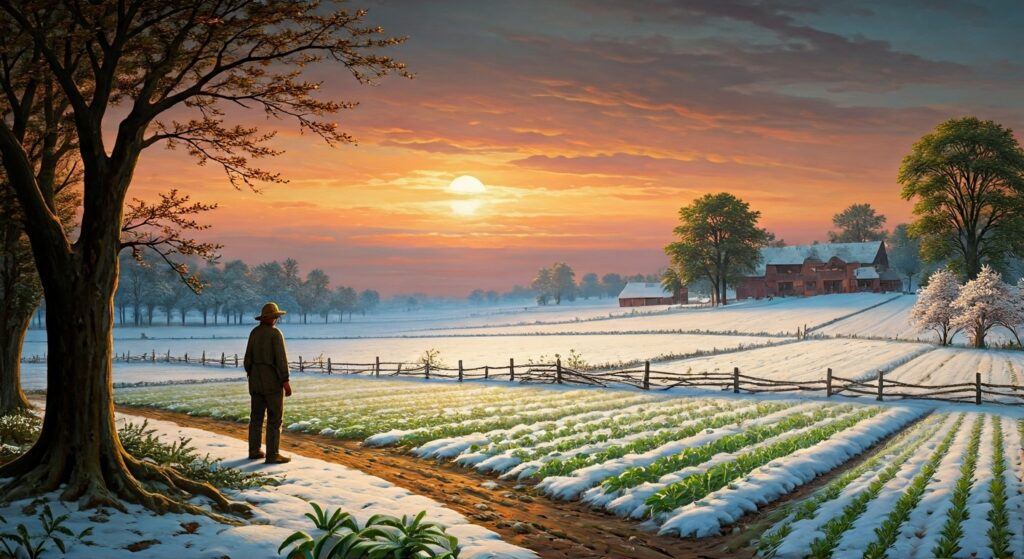
Across the Atlantic, the situation was equally eerie. A dry spring in New England and eastern Canada suddenly morphed into a frozen nightmare. Snow fell heavily in June. Killing frosts struck in July and August, repeatedly assassinating vital crops like corn and beans. The agricultural collapse was so absolute that it permanently reshaped the demographic map of the United States, accelerating a desperate mass migration from New England into Western New York and the Northwest Territory.
Meanwhile, in Asia, the climate anomaly was quietly brewing a microscopic killer. The sudden shift in global weather disrupted the Asian monsoon cycle. In India, a delayed summer monsoon caused torrential late-season rains that flooded the Ganges basin. Epidemiologists believe this sudden climate shock triggered the mutation of a waterborne bacterium, initiating the First Cholera Pandemic that would eventually sweep across the globe.
So, who—or what—was the culprit behind this worldwide domino effect of doom?
The Killer in the Stratosphere
The perpetrator wasn’t a geopolitical mastermind or a divine curse. The killer was hiding in the stratosphere, and the crime had been committed a year earlier, thousands of miles away.
In April 1815, on the island of Sumbawa in the Dutch East Indies (modern-day Indonesia), Mount Tambora woke up.
Ranking as a Volcanic Explosivity Index (VEI) 7 event, it remains the most powerful volcanic eruption in recorded human history. The blast was so cataclysmic it ejected an estimated 100 cubic kilometers of ash and pumice into the sky. But the ash wasn’t the real murder weapon—it was the gas.
Tambora blasted millions of tons of sulfur dioxide into the stratosphere. Once in the upper atmosphere, the gas oxidized into sulfate aerosols that blanketed the globe. This toxic veil acted like a giant mirror, reflecting solar radiation back into space and plunging the Earth into a severe, multi-year “volcanic winter.”
Monsters, Bicycles, and the Opium Trade
Here is where the story pivots from a tragedy into a bizarre fever dream. The Year Without a Summer didn’t just cause economic ruin; it fundamentally altered human culture in ways that still shape our world today.
Because of the high atmospheric ash, the skies were filled with spectacular, vividly colored, apocalyptic sunsets—eerie skies immortalized in the famous atmospheric landscape paintings of J.M.W. Turner.
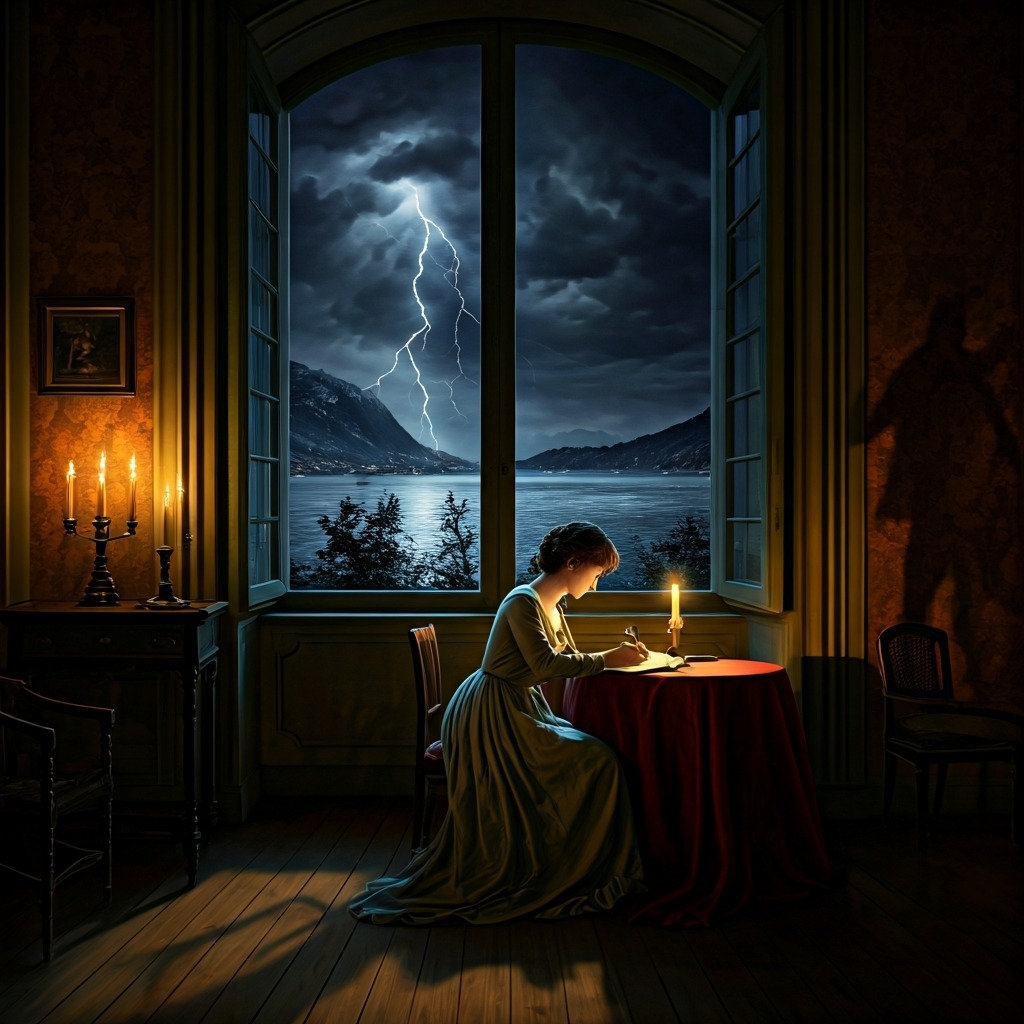
But the gloom also birthed literal monsters. In Switzerland, the incessant, freezing rain trapped a group of writers indoors at the Villa Diodati near Lake Geneva. Suffering from severe cabin fever, Lord Byron proposed a ghost story contest to pass the time. In this claustrophobic, stormy environment, an eighteen-year-old Mary Shelley conceived the story of Frankenstein, and John Polidori wrote The Vampyre. In one rainy, miserable weekend, the foundations of modern science fiction and vampire literature were born.
The weirdness didn’t stop there. In Germany, the extreme cost of oats due to crop failures made keeping horses prohibitively expensive. This transit crisis inspired inventor Karl Drais to develop the ‘Laufmaschine’ (the dandy horse), the direct precursor to the modern bicycle.
And in China, the freezing temperatures devastated rice production in the Yunnan province, leading to mass starvation. Desperate to survive, Chinese farmers abandoned traditional food crops and turned to a much hardier, more reliable cash crop: opium. This desperate agricultural pivot had profound, devastating socio-political consequences for the region that would last for over a century.
The Ultimate Butterfly Effect
The Year Without a Summer stands as the ultimate historical case study of climate teleconnections. It is a chilling realization that a mountain blowing its top in Indonesia could invent the bicycle in Germany, birth Frankenstein in Switzerland, spread cholera in India, and push American pioneers into the Midwest.
It is a stark reminder of how fragile our world truly is, and how a single geological event can trigger a cascading series of global disasters. In the annals of history, reality is always far stranger—and more terrifying—than fiction.