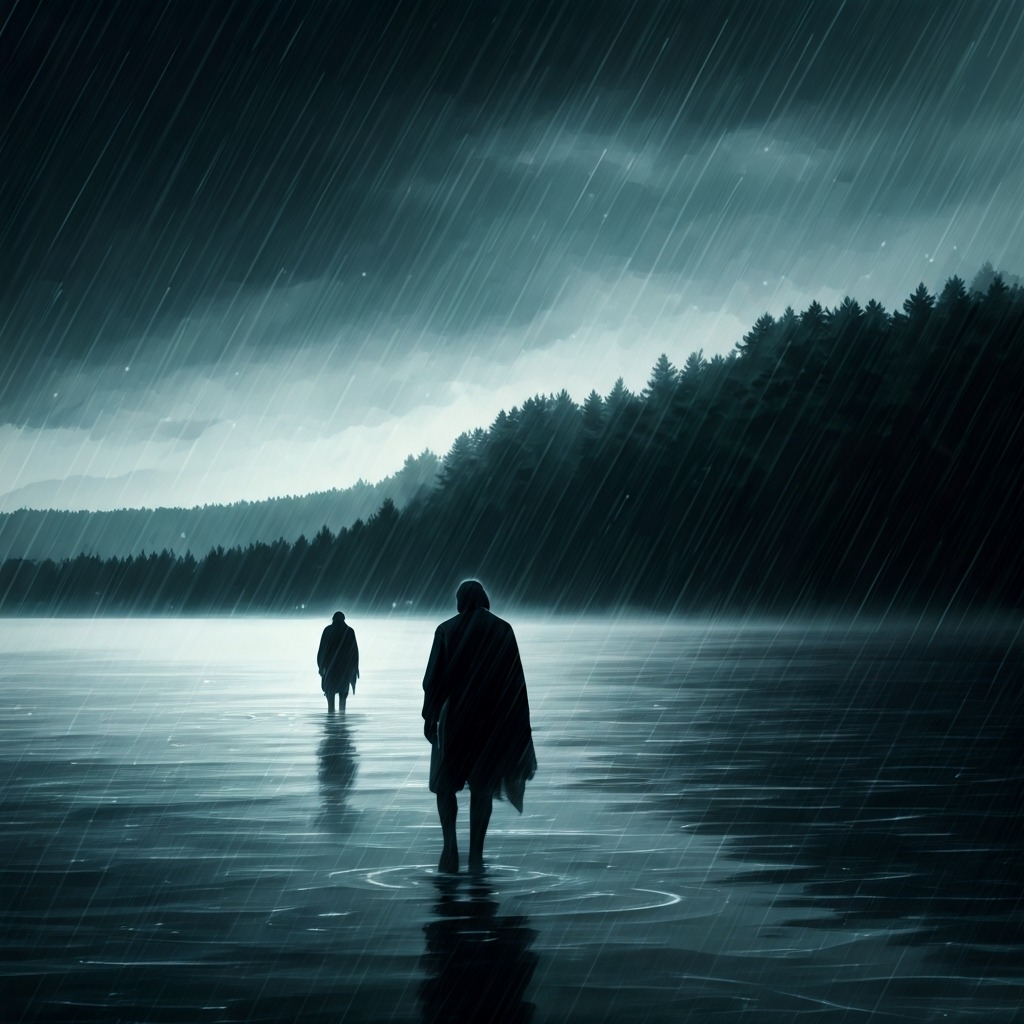
On a rain-swept evening in June 1886, two men vanished into the mist along the shores of Lake Starnberg. Hours later, search parties found their lifeless bodies floating in waist-deep water. One was a prominent psychiatrist. The other was Ludwig II, the deposed King of Bavaria.
The exact circumstances of their deaths remain one of history’s most enduring, spine-tingling mysteries—a violent end to a life spent chasing a fairy tale.
When the real world grew too treacherous for King Ludwig II, he didn’t just step away from his throne. He bankrupted himself to build a cinematic universe, was betrayed by his own ministers, and died at the center of a conspiracy that remains unsolved over a century later.
The Boy King’s Retreat
Imagine being handed the keys to a European kingdom when you are barely old enough to vote. Ludwig ascended to the throne in 1864 at the age of 18. Almost immediately, the crushing political reality of his situation set in. Europe was rapidly modernizing, and Bavaria was slowly but surely being subjugated by the growing military might of Prussia.
For a deeply romantic teenager who idolized the absolute, unchecked power of France’s Louis XIV, this was a bitter pill to swallow. So, Ludwig simply refused to swallow it.
Instead of focusing on statecraft, treaties, or the looming threat of war, Ludwig retreated into an idealized, mythological past. He became completely obsessed with the sweeping, epic operas of his close friend and patron, the composer Richard Wagner. Ludwig didn’t just want to listen to these myths; he wanted to live inside them. And to do that, he needed the ultimate stage.
A Fortress Built for Applause, Not Artillery
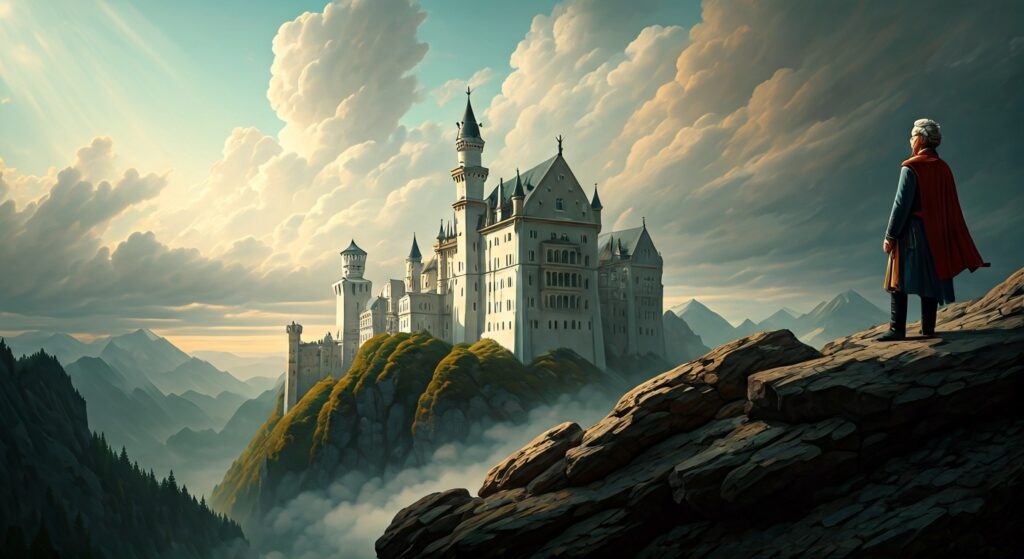
Perched dramatically on a rugged Alpine cliff above his childhood home of Hohenschwangau, Ludwig began his architectural crusade. His crowning achievement was Neuschwanstein Castle.
But here is where the story takes a theatrical turn: Ludwig didn’t hire a traditional architect to design this massive stone fortress. He hired Christian Jank, a theatrical set designer.
Neuschwanstein was never meant to be a functional, defensive fortress. It was conceived as a grand, habitable stage—a physical manifestation of Wagnerian mythology. The interior was plastered with elaborate frescoes depicting the dramatic legends of Tannhäuser, Parsifal, and Lohengrin. He even built an artificial stalactite cave right in the middle of the castle, known as the Venus Grotto, complete with mood lighting and a little gilded boat he could row across a subterranean lake.
Yet, do not let the medieval fantasy facade fool you. Ludwig was essentially building a 19th-century smart home. Behind the ancient-looking stone walls, the castle was equipped with cutting-edge technology, including central heating, flushing toilets, and an electric bell system to summon his servants.
A Kingdom of Debt
Neuschwanstein alone wasn’t enough to satisfy Ludwig’s obsession. He also built Linderhof Palace, a hyper-ornate, intimate homage to French Rococo style, and began work on Herrenchiemsee, a massive replica of the Palace of Versailles isolated on an island.
Building three fairy-tale palaces simultaneously is exactly as expensive as it sounds. But here is the crucial detail: Ludwig didn’t use Bavarian state funds to build his dream worlds. Instead, he completely drained his personal fortune and borrowed heavily from foreign royalty.
By 1886, Ludwig had amassed a staggering, kingdom-shaking debt. His ministers were terrified. The king was ignoring his duties, hiding in his artificial caves, and owing millions to foreign powers. They needed him gone, but you cannot simply fire a king. You have to destroy him.
A Diagnosis in the Shadows
This is where the historical narrative shifts into a psychological thriller.
Alarmed by his erratic behavior and the mounting financial liabilities, Ludwig’s ministers orchestrated a ruthless deposition. They assembled a panel of psychiatrists, led by a man named Dr. Bernhard von Gudden. In a move of staggering political audacity, Dr. von Gudden declared the king legally insane—without ever actually examining him.
Based entirely on court gossip, coerced servant testimonies, and his massive debts, Ludwig was stripped of his power and confined to Berg Castle. The “Fairy Tale King” was now a prisoner in his own realm.
The Shallow Waters of Lake Starnberg
Just days after being removed from power, the story comes to its chilling, abrupt end.
On that rainy evening in June 1886, Ludwig and Dr. von Gudden went for a walk along the shores of Lake Starnberg. They never returned.
Was it murder, orchestrated by the ministers to tie up a loose end? Was it a desperate suicide by a broken king? Or was it a frantic escape attempt gone horribly wrong, with the doctor caught in the crossfire? We still don’t know.
Ironically, the very castles that bankrupted Ludwig and cost him his throne became his ultimate triumph. Just weeks after his mysterious death, the Bavarian government opened Neuschwanstein to the paying public to recoup his staggering debts.
Today, it stands as one of the most visited castles in the world. It famously served as the direct inspiration for Walt Disney’s Sleeping Beauty Castle, cementing Ludwig’s tragic, chaotic vision in global pop culture. He may have lost his crown, his sanity, and his life, but in the end, the Swan King got exactly what he wanted: a fairy tale that will never be forgotten.