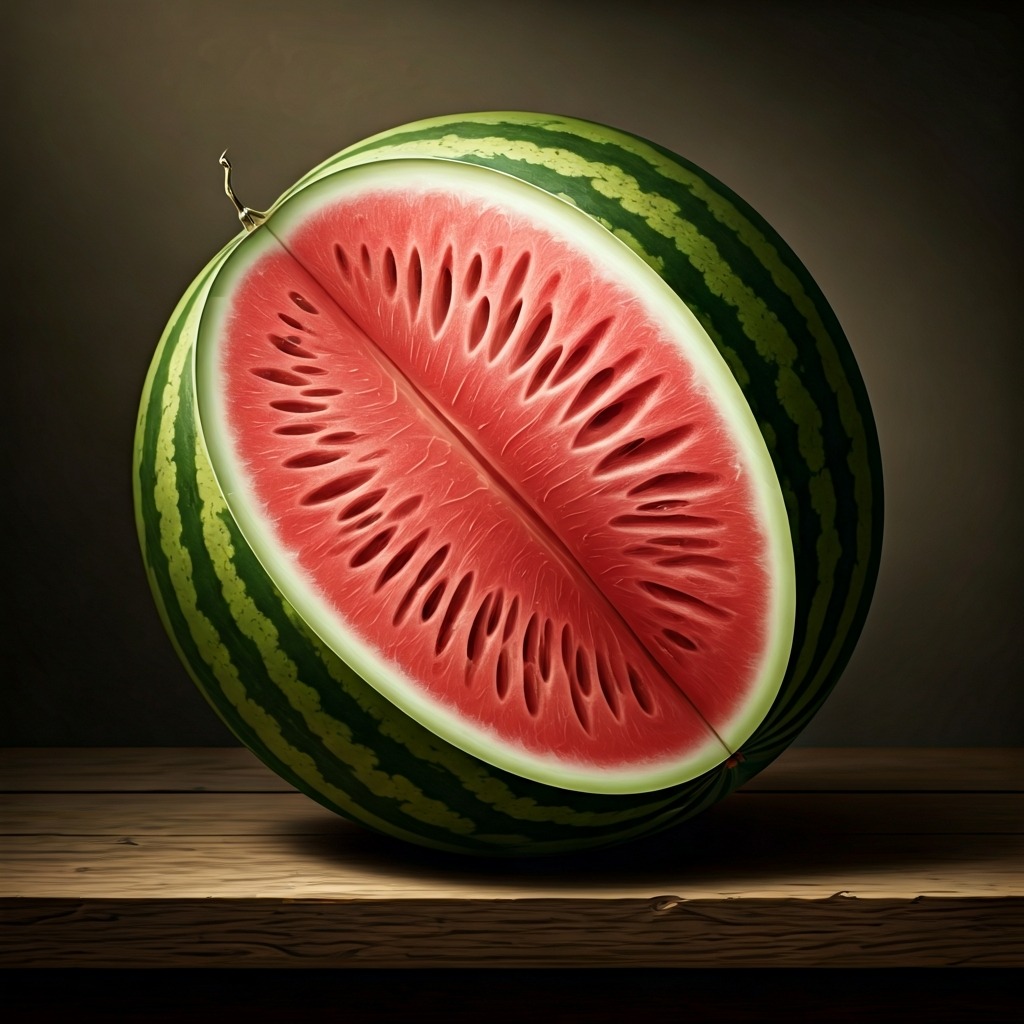
Slice into a crisp, ruby-red watermelon, and you are tasting the ultimate summer staple. But beneath that sweet, dripping flesh lies a massive, ancient secret. The fruit we devour at picnics has been lying to us for millennia. It was once a pale, bitter survivalist lurking in the harsh African desert. Welcome to one of the juiciest cold cases in botanical history.
The Bitter Imposter and a DNA Plot Twist
For decades, experts confidently traced the watermelon’s lineage to the citron melon of South Africa or the egusi melon of West Africa. There was just one glaring problem: those wild relatives are absolutely vile. Small, pale, and rock-hard, they are loaded with cucurbitacin—a compound that makes them horribly bitter and, in some cases, highly toxic.
How did a poisonous sphere of despair transform into a sugary delight? The truth remained buried until scientists played botanical detectives.
Recent DNA sequencing shattered the accepted timeline. The watermelon’s true ancestor isn’t from South or West Africa at all. It is the Kordofan melon from Sudan. This wild child had whitish pulp and a bland flavor, but crucially, it lacked the toxic cucurbitacin trait. Somewhere in the deep past, a desperate ancient farmer stumbled across this non-bitter mutant and saw its hidden potential.
The Pharaoh’s Biological Hydro-Flask
How did a bland, pale melon from Sudan become ancient royalty? Enter the pharaohs.
The earliest hard evidence of watermelon domestication doesn’t come from a garden, but from the dark, sealed tombs of Northeast Africa. Seeds dating back over 4,000 years were discovered in the legendary burial chamber of King Tutankhamun. But King Tut and his contemporaries weren’t eating them for dessert.
In the scorching heat of the dry season, ancient Egyptians needed a reliable way to store water. With their incredibly thick rinds, these early watermelons were the ancient world’s biological hydro-flasks. They could be stored in cool, shaded areas for months without spoiling, providing a crucial, long-lasting source of hydration. Tomb paintings from the era depict these ancient watermelons with their recognizable striped rinds, oddly elongated and served proudly on trays as vital survival tools.
The Accidental Ruby Masterpiece
The leap from a pale desert canteen to a sweet, red delicacy was a complete genetic accident.
Over millennia, ancient farmers selectively bred the crop, obsessively saving seeds from the sweetest melons they could find. But here is the ultimate genetic plot twist: the gene that determines sugar content in watermelons is inextricably linked to the gene that produces lycopene—the antioxidant responsible for a deep, vibrant red color.
By relentlessly chasing a sweeter taste, early agricultural pioneers inadvertently gave the watermelon its fabulous crimson makeover.
The Renaissance Reveal
Armed with its new sweet taste and striking color, the watermelon was ready to conquer the globe. It traveled across the Mediterranean via ancient trade routes, seducing Greeks and Romans. By the 10th century, it reached China, and Moorish invaders soon brought it to the Iberian Peninsula. Eventually, European colonists and the transatlantic slave trade carried it to the Americas.
Yet, the fruit was still evolving. If you want visual proof of the watermelon’s awkward teenage phase, look no further than 17th-century art.
In the still-life paintings of Italian artist Giovanni Stanchi, watermelons don’t look like today’s uniform, fleshy treats. Stanchi painted them with incredibly thick rinds and pale, compartmentalized, swirling flesh. It is a stunning visual record proving that the thin-rinded, ruby-red, sugar-packed watermelon we know today is a surprisingly recent product of intensive agricultural engineering.
The next time you bite into a slice, remember: you aren’t just eating fruit. You are tasting a magnificent, 4,000-year transformation from a pale desert survivor into a global icon.