Buried Alive in the Stars
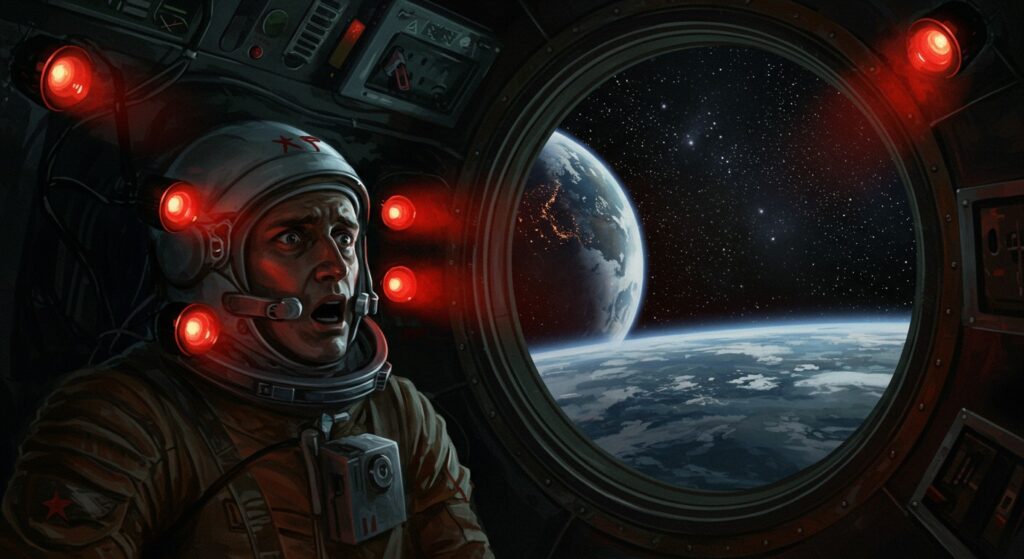
Picture the suffocating terror of being sealed inside a tin capsule, hurtling hundreds of miles above the Earth, knowing you will never go home. The cabin temperature is spiking. The controls are dead. And worst of all? The nation that launched you into the dark void is already scrubbing your name from the history books.
This is the chilling premise behind the “Phantom Cosmonauts”—a persistent, blood-curdling Cold War conspiracy theory. It alleges that the Soviet Union sent several human beings into space long before Yuri Gagarin’s historic April 1961 flight, only to watch them die in orbit and systematically erase their existence from human memory.
Of all the declassified files and whispered rumors of the Cold War, the sheer paranoia surrounding these lost space travelers is one of the few tales that genuinely warrants leaving the lights on. It is a labyrinthine story of intercepted radio signals, doctored photographs, and a culture of state-sponsored secrecy so absolute that the line between historical fact and pure nightmare blurred completely.
The Eavesdroppers of Torre Bert
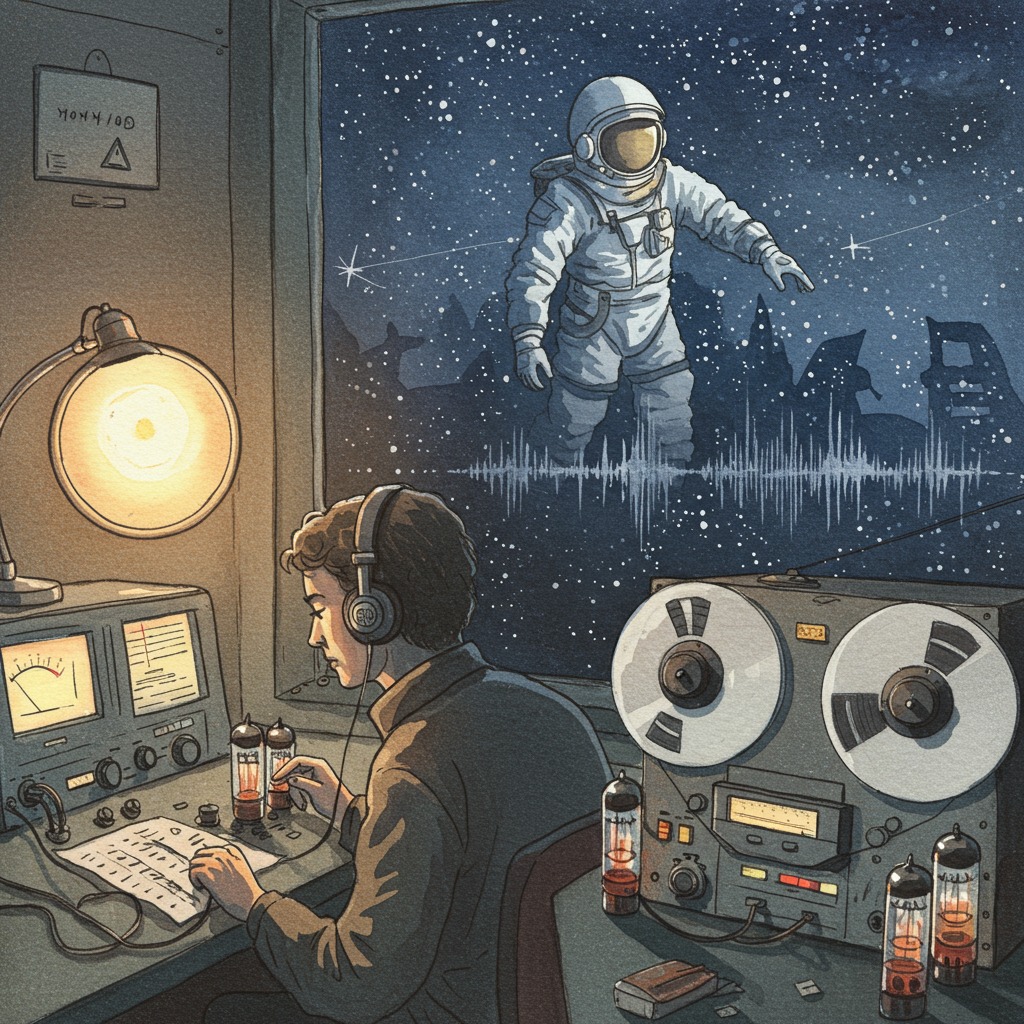
The most haunting evidence for the Phantom Cosmonauts didn’t come from a highly-funded government spy agency, but from two amateur radio operators in Italy. Achille and Giovanni Judica-Cordiglia set up a makeshift listening station called Torre Bert near Turin. Between 1957 and 1964, the brothers claimed to have intercepted multiple distress signals from doomed Soviet spacecraft.
Their most infamous recording, allegedly captured in May 1961, is pure nightmare fuel. Through a thick, crackling haze of static, a female voice speaking in Russian can be heard frantically reporting rising temperatures. She sounds utterly terrified, her voice breaking as she asks if she is going to explode, right before the transmission abruptly cuts out into dead air. To anyone listening, it sounded exactly like a woman burning alive during atmospheric reentry.
But the brothers’ intercepts weren’t the only whispers leaking out from behind the Iron Curtain.
The Man Who Fell to China
While Yuri Gagarin was paraded around the globe as the smiling, flawless face of Soviet superiority, rumors swirled that he wasn’t actually the first man in space—just the first one to survive and look good for the cameras.
Conspiracy theorists pointed to Vladimir Ilyushin, a highly decorated Soviet test pilot. According to the legend, Ilyushin launched into orbit days before Gagarin. However, his capsule suffered a catastrophic malfunction and veered wildly off course, eventually crashing in China. The theory suggests the Soviets, desperate to maintain their pristine image of technological perfection, swept the botched mission under the rug, left Ilyushin in foreign custody, and hurriedly launched Gagarin instead.
Erasing the Dead
Why did the world so readily believe these wild tales of phantom cosmonauts? Because the Soviet Union’s obsession with propaganda and extreme secrecy made them terrifyingly plausible.
The USSR had a documented, ruthless habit of airbrushing disgraced or deceased cosmonauts out of official photographs. Men like Grigori Nelyubov, who was expelled from the space program for disciplinary reasons, simply vanished from group portraits as if he had never been born.
More horrifyingly, the Soviets successfully covered up massive, fatal accidents. In 1960, a launchpad explosion known as the Nedelin catastrophe incinerated over 100 personnel—a disaster kept hidden from the world for decades. Even closer to the space program was the tragic 1961 death of cosmonaut Valentin Bondarenko. He burned to death in a high-altitude isolation chamber fire, a fatal accident the Soviets managed to keep completely secret until the 1980s.
When the truth about Bondarenko and Nedelin finally surfaced, it breathed terrifying new life into the Lost Cosmonauts theory. If the Kremlin could hide a hundred burning men on a launchpad, why couldn’t they hide one in orbit?
The Unblinking Eye of the West
Despite the tantalizing mystery, modern aerospace historians and declassified documents have brought the Phantom Cosmonauts crashing back to Earth.
During the height of the Space Race, the United States was watching the skies with eagle-eyed paranoia. Military and intelligence agencies, including NORAD, were meticulously tracking every single Soviet launch. Space experts agree that it would have been technologically impossible for the USSR to launch a manned spacecraft into orbit, have it fail, and somehow hide the telemetry and trajectory from Western tracking stations. The US would have known, and they would have loudly broadcasted the Soviet failure to the world to score political points.
As for the chilling Torre Bert recordings? The devil is in the details. Linguistic experts who have analyzed the audio of the burning woman note that she speaks with a distinct, unnatural non-Russian accent. Furthermore, her frantic final words are filled with grammatically incorrect phrasing. The consensus is that the audio, while terrifying, was almost certainly an elaborate fabrication.
The Soviet Union undeniably engaged in ruthless cover-ups. They hid ground-based fatalities and erased failed candidates from the public record to project an illusion of flawless superiority. But the men and women who supposedly floated off into the dark, crying out for a home that had already forgotten them? They remain exactly what their name implies: phantoms, born from the dark shadows of Cold War paranoia.