“From here to Timbuktu.” For generations, the phrase has been a cultural punchline—shorthand for the absolute middle of nowhere. But beneath the shifting sands of this remote Malian city lies a secret that defies centuries of Western myth. Timbuktu was never the edge of the earth; it was the intellectual center of the world. And its greatest treasures were buried in the desert for four hundred years, only to spark one of the most dangerous, high-stakes smuggling operations of the 21st century.
The City of Gold and Paper
To understand the stakes of this modern-day heist, we must rewind to the 14th century. Located where the Sahara Desert meets the Niger River, Timbuktu was the beating heart of the trans-Saharan trade routes under the Mali and Songhai Empires. Merchants arrived in droves, their camels laden with gold, salt, and spices. Yet, the most lucrative commodity in this bustling metropolis wasn’t precious metal. It was books.
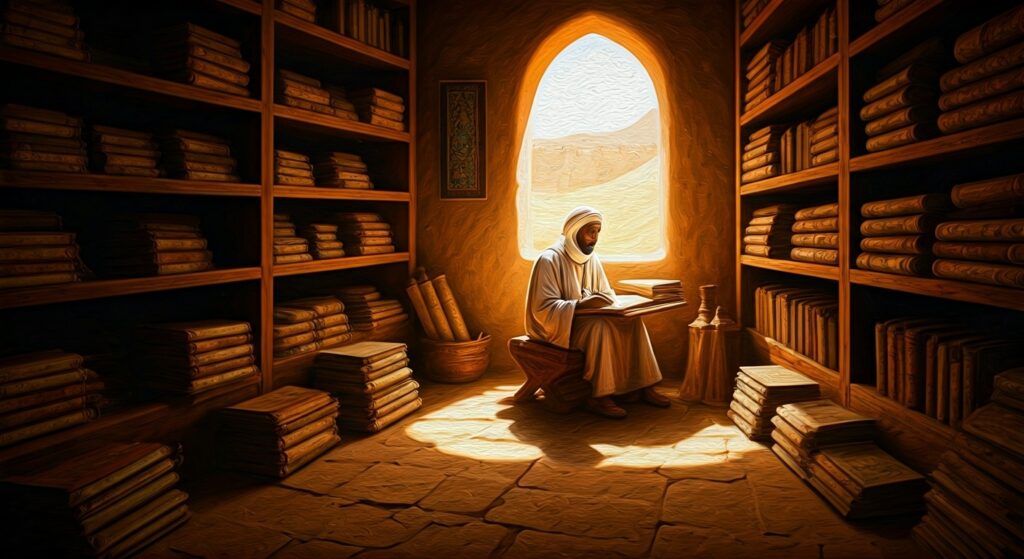
Timbuktu was a city obsessed with the written word. It was home to the legendary University of Sankore, a sprawling network of independent schools run by master scholars. At its zenith, the university boasted an enrollment of 25,000 students out of a total city population of just 100,000. One in four people walking the streets was a university student. Their libraries didn’t just rival those of Europe—they utterly eclipsed them.
Shattering the Myth of the “Unwritten” Continent
For centuries, a persistent, Eurocentric myth claimed that sub-Saharan Africa possessed only an “oral history.” The manuscripts of Timbuktu shatter that illusion into a million pieces.
Written predominantly in Arabic, as well as local African languages using an adapted Arabic script known as Ajami, these texts encompass a staggering breadth of human knowledge. They contain advanced treatises on mathematics, astronomy, physics, optics, medicine, and botany. They explore Islamic jurisprudence, conflict resolution, poetry, and even outline women’s rights. They reveal a society that celebrated intellectual discourse and scientific inquiry. Scholars like Ahmad Baba were international superstars of the Islamic world, famously authoring over forty books and maintaining a private library of 1,600 volumes.
A Golden Age, Buried Alive
But golden ages are fragile. In 1591, this intellectual utopia met a violent end. Moroccan mercenaries, armed with early firearms, invaded the Songhai Empire and sacked Timbuktu. They executed or exiled the city’s leading scholars and systematically destroyed its academic institutions.
Faced with the annihilation of their cultural identity, the families of Timbuktu did the only thing they could: they hid the books. Hundreds of thousands of fragile manuscripts were sealed inside mud walls, locked in wooden trunks, and literally buried in the unforgiving sands of the Sahara. For over four centuries, these texts were passed down secretly from generation to generation. They became sacred family heirlooms, waiting in the dark for a time when it would be safe to read them again.
The Midnight Heist
Fast forward to 2012. Timbuktu faced a terrifying echo of its past. A Tuareg rebellion in northern Mali was hijacked by Al Qaeda-linked Islamic extremists. The militants seized the city, imposed a brutal interpretation of Sharia law, and immediately began destroying historic shrines. Next on their list were the “idolatrous” manuscripts of Timbuktu.
Enter Abdel Kader Haidara. A local librarian, Haidara had spent years traversing the desert, gently persuading families to unearth their ancestral texts for preservation. Watching the extremists close in, he knew the city’s intellectual soul was about to be turned to ash. He had to act.
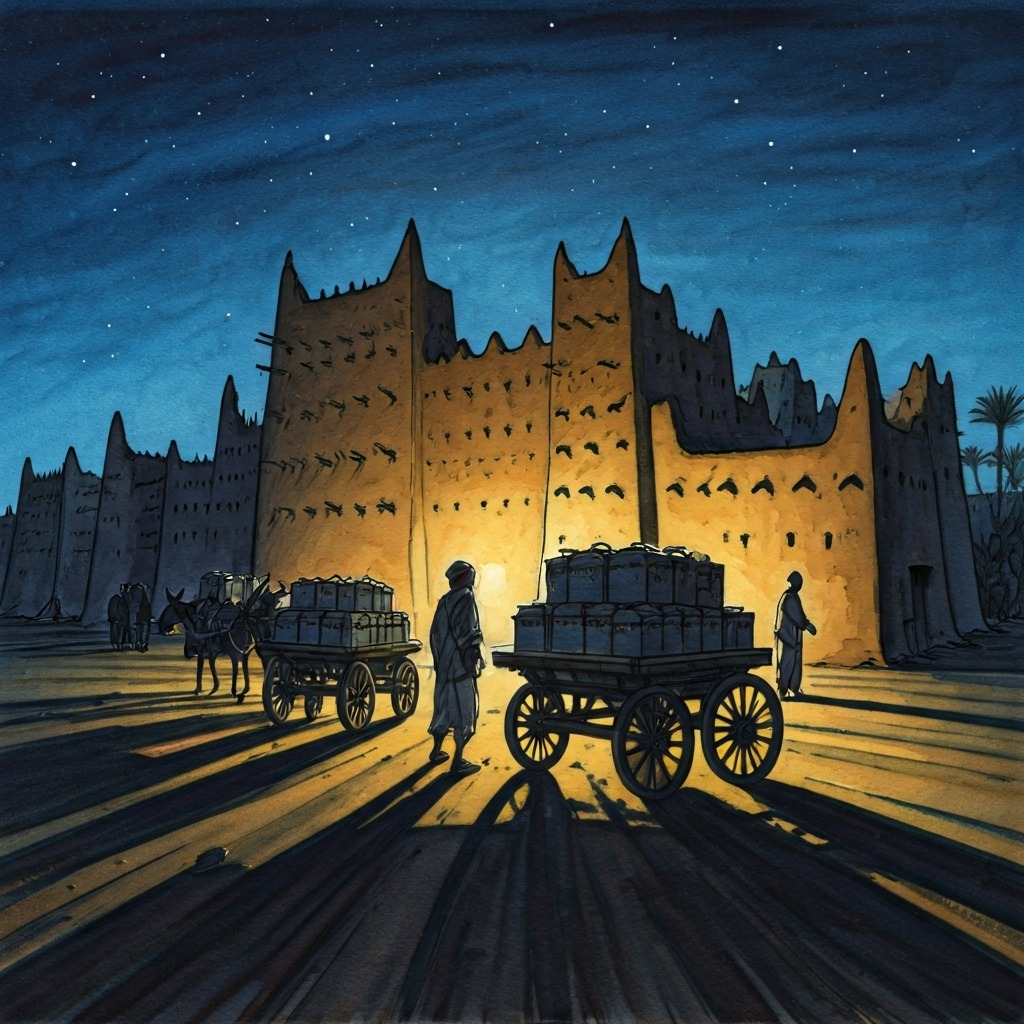
Orchestrating one of the greatest cultural rescue missions in modern history, Haidara used funds secretly raised from international organizations to buy thousands of metal footlockers. Under the cover of total darkness, a trusted network of archivists, guides, and local families meticulously packed the ancient texts.
What followed was a nerve-wracking smuggling operation. Approximately 350,000 manuscripts were moved via donkey carts to avoid arousing suspicion. They were loaded into 4×4 vehicles that tore across the desert, dodging militant checkpoints. Eventually, the precious cargo was loaded onto boats and floated down the Niger River to the relative safety of Mali’s capital, Bamako.
The Fragile Survival of History
The physical rescue was a triumph, but the story isn’t over. Today, a new race against time is underway. The humid climate of Bamako is a natural enemy to centuries-old desert parchment, forcing archivists to work around the clock to digitize and translate the rescued texts.
This mission is about far more than saving old paper. It is the reclamation of a continent’s profound legacy of written scholarship. It stands as a testament to a rich tradition of moderate, intellectually curious, and tolerant study—the exact opposite of the extremist ideology that sought to burn it. The survival of the Timbuktu libraries proves that history isn’t just what happened; it’s what brave people are willing to risk their lives to remember.