The Mapmaker’s Blind Spot
In 1440, a single slip of the pen birthed a ghost nation. It wasn’t forged in the fires of revolution or born from a bloody conquest. It was created by a clerical error—a geographical typo so spectacularly botched that it spawned a secretive, tax-free smuggler’s paradise right under the noses of Europe’s most ruthless monarchs. Welcome to the Republic of Cospaia, history’s most lucrative loophole.
A Tale of Two Rivers
The stage was set by a classic Renaissance crisis: Pope Eugene IV was drowning in debt. Desperate for a bailout, he agreed to sell the town of Sansepolcro and its surrounding lands to the wealthy Republic of Florence. The treaty was drawn up, designating a small river known as the Rio as the ironclad border between the two powers. It was a clean, simple line on a map.
Except for one glaring detail: there were two rivers named Rio, flowing parallel just 500 meters apart.
When the time came to enforce the new borders, the Papal States confidently drew their boundary at the southern Rio. Florence, equally assured, claimed the northern Rio. In the blink of an eye, a 330-hectare strip of land—and the tiny village of Cospaia nestled within it—was orphaned. The villagers woke up to a stunning realization: they had been entirely written out of the treaty. They belonged to no one.
The Accidental Anarchists
Surrounded by heavily armed, tax-hungry empires, the villagers of Cospaia could have easily panicked or pledged allegiance to the nearest monarch. Instead, they did the unthinkable: they quietly minded their own business and declared themselves an independent republic.
Miraculously, neither the Pope nor Florence marched in to crush the tiny rebellion. Both superpowers realized that a neutral buffer zone between their hostile territories was highly convenient. And so, an accidental anarchist utopia was born.
For nearly four centuries, Cospaia operated in a state of peaceful lawlessness. There was no formal government, no police force, no standing army, and absolutely no taxes. Disputes weren’t settled in courtrooms; they were hashed out by a council of family elders at the local church. Above its doors, they carved their defiant new motto: Perpetua et firma libertas—Perpetual and firm freedom.
The Black Market Boom
Cospaia’s stateless existence was a quirky historical anomaly until 1574, when a controversial new crop took root in the region: tobacco.
Neighboring powers were terrified of the plant. The Papal States, under Pope Urban VIII, slapped crippling taxes on tobacco and eventually threatened to excommunicate anyone who smoked it. But Cospaia? Cospaia had no Pope, no laws, and zero taxes. Recognizing a golden opportunity, the villagers transformed their tiny republic into the undisputed tobacco capital of Italy.
Almost overnight, the village morphed into a notorious haven for smugglers. Shady merchants, black-market opportunists, and rogue traders flocked to the lawless strip of land to move illicit goods across borders. Funded entirely by contraband leaves, this unregulated shadow economy sustained the village in unimaginable prosperity for centuries.
The Final Severance
But no utopia can hide forever. By the early 19th century, the rampant smuggling had become too loud and too rich for Cospaia’s neighbors to ignore.
In 1826, following the redrawing of European borders after the Napoleonic Wars, the Grand Duchy of Tuscany and the Papal States finally closed the 400-year-old loophole. Cospaia was formally divided and erased from the map.
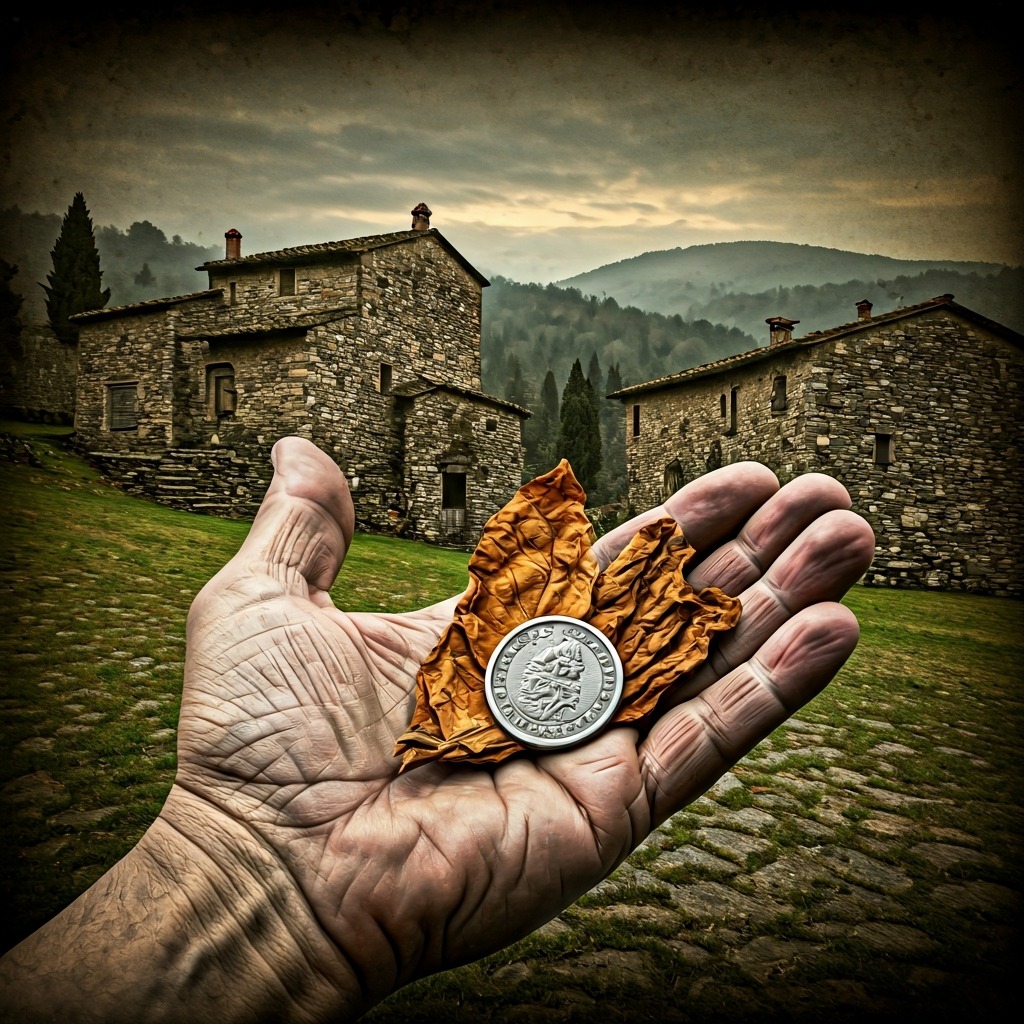
Yet, the accidental anarchists didn’t go down without a fight. Before surrendering their sovereignty, the citizens negotiated a handsome severance package. Every resident was awarded a silver coin known as a papetto, and, more importantly, they secured special privileges to continue cultivating their beloved tobacco—a defiant tradition that thrives in the region to this very day.