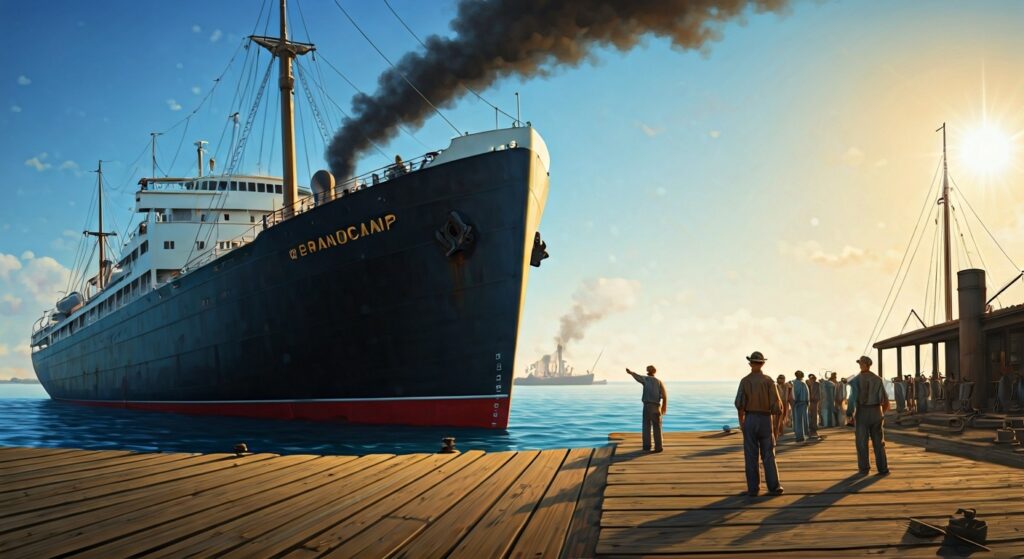
It was a picture-perfect Wednesday morning on the Texas coast. Dockworkers whistled, seagulls circled, and the port of Texas City hummed with the routine rhythm of post-war commerce. But deep in the belly of a French-registered Liberty ship, a silent, catastrophic threat was waking up.
The Monster in Hold 4
On April 16, 1947, the SS Grandcamp was taking on cargo. To the casual observer, it was just another day on Galveston Bay. But Hold 4 wasn’t carrying ordinary freight. It was packed to the brim with approximately 2,200 tons of ammonium nitrate fertilizer.
Around 8:00 AM, dockworkers noticed a faint wisp of smoke creeping up from the hold. They tried splashing it with water jugs. They tried fire extinguishers. Nothing worked. The smoke grew thicker, darker, and increasingly menacing. The crew was staring down a ticking time bomb, though no one yet realized the sheer scale of the danger.
A Fatal Miscalculation
Desperate to save the valuable cargo from water damage, the ship’s captain made a split-second decision that would seal the fate of hundreds. He ordered his men to batten down the hatches, seal the hold, and pump it full of pressurized steam. The logic was simple: smother the fire by depriving it of oxygen.
But ammonium nitrate does not play by normal rules.
Instead of suffocating the flames, the intense heat of the steam liquefied the ammonium nitrate, producing highly volatile nitrous oxide. The captain hadn’t put out the fire; he had accidentally created a massive, pressurized chemical reactor. Deep inside the hull, the pressure spiked to unimaginable levels. The ship began to visibly bulge. The water surrounding the hull actually started to boil.
9:12 AM: The Sky Falls
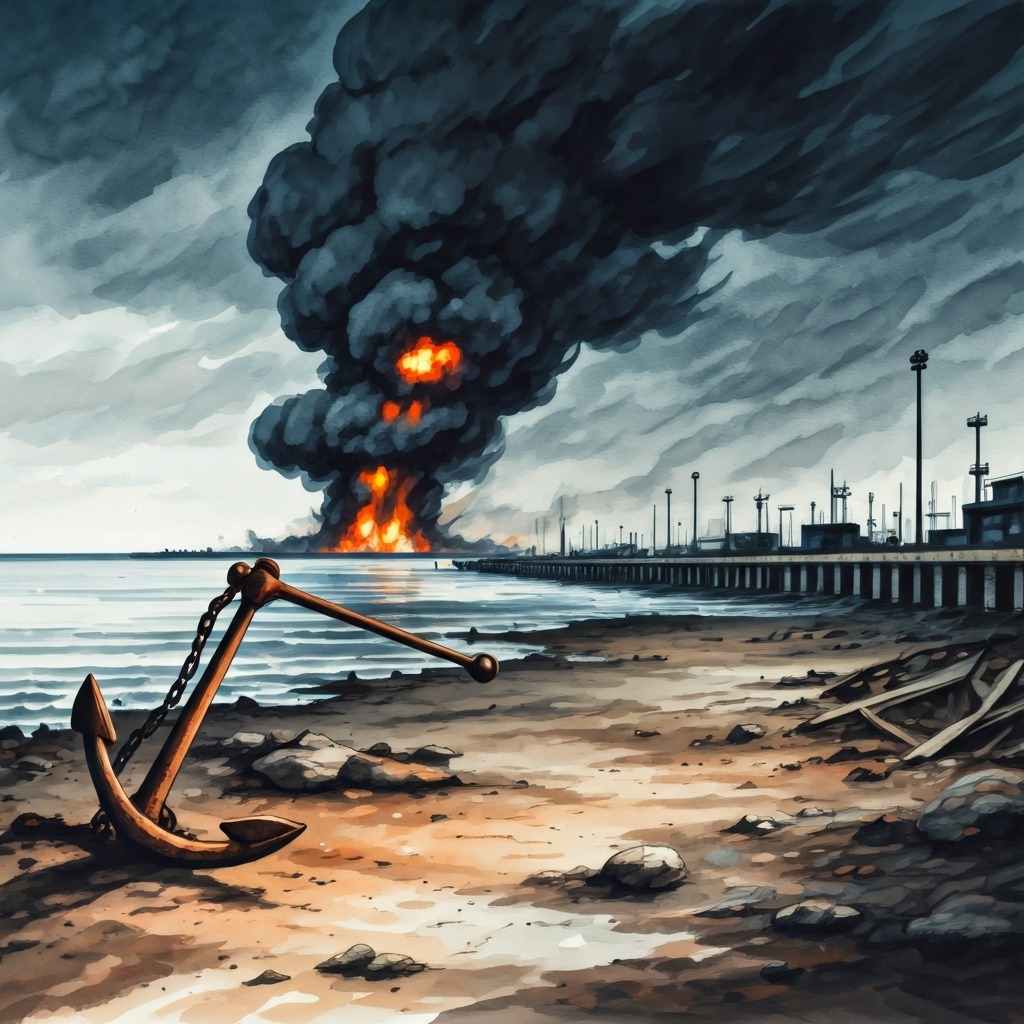
At exactly 9:12 AM, the Grandcamp didn’t just explode—it was instantly and violently vaporized.
The sheer magnitude of the blast defies comprehension. It was so powerful that it registered on seismographs in Denver, Colorado, and the deafening boom was heard 150 miles away. Shrapnel the size of houses rained down on Texas City. A staggering two-ton anchor from the ship was launched like a missile, landing 1.6 miles inland.
The shockwave was so violent it knocked two small sightseeing airplanes directly out of the sky. In the bay, the displacement of water triggered a localized 15-foot tidal wave that swept massive steel barges ashore and completely flooded the bleeding, burning docks.
Tragically, the initial blast wiped out the entire Texas City Volunteer Fire Department in a fraction of a second. Only one member survived, simply because he hadn’t responded to the initial call. The city was left entirely defenseless as the sky rained fire.
The Doomsday Chain Reaction
The blast wave ripped through the nearby Monsanto Chemical Company plant, igniting highly flammable styrene and triggering massive secondary fires. The port was a literal inferno. And sitting right in the middle of this apocalyptic nightmare was another cargo ship: the SS High Flyer.
The High Flyer was trapped. Worse, it was loaded with an additional 900 tons of ammonium nitrate and 1,800 tons of sulfur.
For hours, brave crews on tugboats desperately tried to attach tow lines and pull the burning High Flyer away from the docks. They fought through choking black smoke and raining debris, but the ship wouldn’t budge. The tension was agonizing. Everyone knew what was coming.
Fifteen hours later, on the morning of April 17, the High Flyer detonated. The second blast destroyed yet another ship, the SS Wilson B. Keene, and obliterated whatever was left of the already crippled port.
Ashes and Accountability
When the smoke finally cleared, the devastation looked like a war zone. The official death toll was recorded at 581, though historians know the actual number was likely much higher. Unrecorded transient dock workers and seamen were completely vaporized, their names lost to history. Over 5,000 people were injured—a full quarter of the town’s population.
The tragedy sparked a massive legal and regulatory reckoning. It led to the very first class-action lawsuit against the United States government under the newly passed Federal Tort Claims Act. In Dalehite v. United States, victims argued the government was grossly negligent in the manufacturing and packaging of the volatile fertilizer. While the Supreme Court eventually overturned a lower court’s ruling in favor of the victims, Congress couldn’t ignore the public outcry, eventually passing special legislation to pay out nearly $17 million in compensation.
The disaster completely revolutionized industrial safety. Ammonium nitrate could no longer be casually tossed into combustible paper bags; it required specialized containers, strict temperature controls, and rigorous transport regulations.
Texas City rebuilt, standing today as a monument to community resilience and the massive, coordinated medical response that shaped modern disaster management. Yet, the 1947 disaster remains a haunting reminder of how quickly the world can change in a single morning—and how a single, fatal miscalculation can shake the earth.