The English Channel is a graveyard. Beneath its freezing, violent churn lies a brutal history of shredded timber and drowned sailors. But off the rugged coast of Devon, England, lies a mystery that defies everything we thought we knew about the ancient world. It is a tale of international cartels, unimaginable wealth, and a 3,000-year-old ghost ship that vanished without a trace.
The Treasure With No Hull
In the late 20th century, divers braving the treacherous currents near Moor Sands stumbled upon the impossible. Scattered across the ocean floor was a staggering prehistoric fortune.
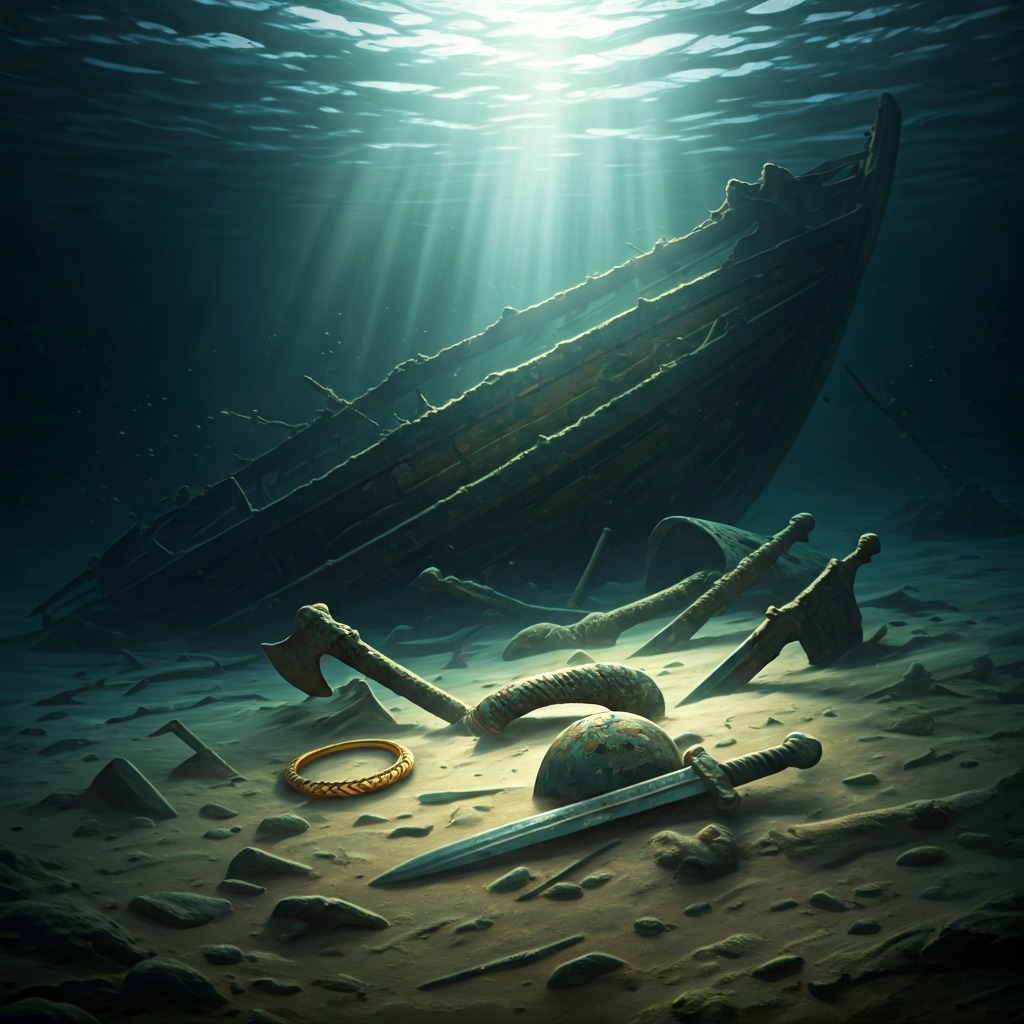
Underwater excavations eventually yielded a treasure trove of over 300 artifacts dating back to approximately 900 BC. Massive metal ingots, lethal weaponry, and exquisite gold jewelry lay half-buried in the sand.
But there was one chilling detail: there was no ship.
Not a single wooden timber, peg, or mast survived. The high-energy marine environment—a polite scientific term for the brutal, wood-shredding currents of the Channel—had completely devoured the vessel over three millennia. Yet, the tight, deliberate cluster of the heavy cargo left no room for doubt. A massive ship had gone down exactly in this spot. The ocean had simply swallowed the evidence.
A Prehistoric Cartel
What was a heavily loaded vessel doing off the coast of ancient Britain 3,000 years ago? The cargo reads like the manifest of an international syndicate.
Divers recovered hundreds of copper and tin ingots—the vital raw ingredients required to forge bronze, the absolute pinnacle of technology at the time. But the origins of these metals dropped a historical bombshell. Isotope analysis revealed the copper didn’t come from anywhere near Britain. It had been mined as far away as the Iberian Peninsula and the Alps. The tin, meanwhile, was likely sourced locally from Devon or Cornwall.
This wasn’t a random fishing boat blown off course. This was a highly organized, international supply chain operating millennia before the Roman conquest.
And they weren’t just hauling raw materials. The phantom ship was carrying luxury goods and weapons of war. Divers pulled up French-style bronze axes, rapiers, swords, and twisted gold torcs forged in distinct, continental European designs.
Daredevils of the Abyss
The Salcombe shipwreck shatters the illusion that Bronze Age Britain was an isolated, foggy rock at the edge of the world. It was a thriving, vital hub in a vast maritime network spanning from the Mediterranean to the Atlantic coast.
But how did they cross the terrifying English Channel with hundreds of pounds of metal and gold?
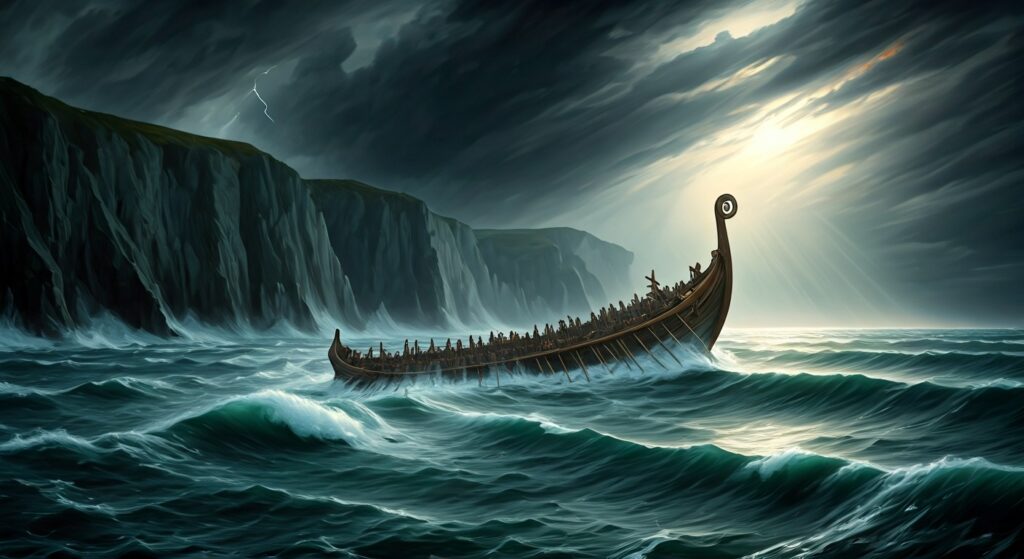
Without the surviving hull, archaeologists look to contemporary engineering, like the famous Dover Bronze Age Boat. These ancient mariners weren’t paddling hollowed-out logs. They were navigating the open ocean in massive, highly sophisticated plank-built vessels, stitched together with yew withies and waterproofed with beeswax and animal fat.
Imagine being the captain of that ship. You have no compass, no weather radar, and no coast guard to call when the sky turns black. You are hauling a king’s ransom in gold and alpine copper, trusting your life to wooden planks and ancient rope as the Atlantic swells threaten to crush you against the jagged Devon coastline.
Three thousand years ago, these brilliant, fearless mariners risked the abyss just to keep the world connected. And on one fateful day off the coast of Moor Sands, the abyss won.