In the shadow of a blood-soaked altar in West Africa, a five-year-old girl awaited her execution. Two years later, she would be sipping tea in Buckingham Palace as the beloved goddaughter of Queen Victoria.
This is not a work of historical fiction. It is the unbelievable true story of Omoba Aina, a Yoruba princess who survived a massacre, outsmarted Victorian high society, and navigated the treacherous waters of the 19th-century British Empire.
The Shadow of the Altar
In 1848, the village of Oke-Odan in present-day Nigeria was consumed by fire and iron. The notorious army of the Dahomey Kingdom swept through the Yoruba settlement, leaving a trail of devastation. Among the ashes stood a young girl named Omoba Aina. She was no ordinary captive; she was a princess of the Egbado clan.
Her royal blood spared her from immediate slaughter in the raid, but it condemned her to a far more terrifying fate. She was dragged to the Dahomey court, destined to be ritually sacrificed in the kingdom’s brutal annual customs. For two agonizing years, the brilliant child languished in captivity, the specter of the executioner’s blade hanging over her neck.
A Desperate Diplomatic Gambit
In 1850, the HMS Bonetta cut through the Atlantic waves, carrying Captain Frederick E. Forbes of the British Royal Navy. His mission was steep: persuade King Ghezo of Dahomey to abandon the lucrative transatlantic slave trade.
Forbes failed his primary mission spectacularly. However, amidst the diplomatic wreckage, he discovered the young Yoruba princess awaiting her death. Bound by protocol, Forbes could not demand her release by force. Instead, he orchestrated a desperate, brilliant gamble. He convinced King Ghezo to spare the girl by presenting her as a diplomatic “gift” from the “King of the Blacks to the Queen of the Whites.”
Stripped of her Yoruba identity, the child was carried aboard the ship and renamed Sarah Forbes Bonetta—a moniker forged from her rescuer and his vessel.
The Prodigy of Buckingham Palace
When Sarah arrived in London, Victorian high society anticipated an exotic curiosity. Queen Victoria herself expected a frightened, uncultured captive. Instead, the monarch was met with a staggering intellect.
Sarah possessed a genius-level mind, mastering fluent English in mere months and displaying an intimidating aptitude for literature, mathematics, and music. The Queen was utterly spellbound. In an unprecedented move, Victoria adopted the African princess as her goddaughter, assuming full financial responsibility for her upbringing. Overnight, the girl who had awaited death on a Dahomey altar became the darling of the British Empire’s most exclusive corridors.
The Gilded Cage
Yet, Victorian benevolence was laced with suffocating paternalism. To the British elite, Sarah was less a child and more a living trophy—a breathing testament to their abolitionist righteousness and “civilizing” prowess. She was caught in a relentless tug-of-war between her African soul and her imposed Victorian persona.
The paternalism reached its peak when Sarah developed a persistent cough. Royal physicians didn’t just prescribe medicine; they prescribed exile. Concluding that the damp British climate was incompatible with her “African constitution,” they banished her to the Female Institution in Freetown, Sierra Leone, in 1851.
Miserable and homesick for the life she had built, Sarah refused to fade into obscurity. Her undeniable brilliance eventually forced the Crown’s hand, and by 1855, she triumphantly returned to England to continue her education.
The Royal Matchmaker
As Sarah blossomed into adulthood, Queen Victoria took on a new role: matchmaker. And when the Queen of England suggests a husband, it is rarely a suggestion.
Victoria arranged for Sarah to marry Captain James Pinson Labulo Davies, a wealthy, older Yoruba businessman and philanthropist. Despite her initial reluctance, Sarah yielded to the sovereign’s immense pressure. Their August 1862 wedding at St Nicholas Church in Brighton was a dazzling, highly publicized spectacle that brought Victorian society to a standstill.
The couple eventually relocated to Lagos, Nigeria, where Sarah dedicated herself to teaching. In a poignant testament to their enduring bond, Queen Victoria became godmother to Sarah’s eldest daughter, granting the child an annuity and welcoming the next generation into the royal fold.
A Legacy Forged in Fire
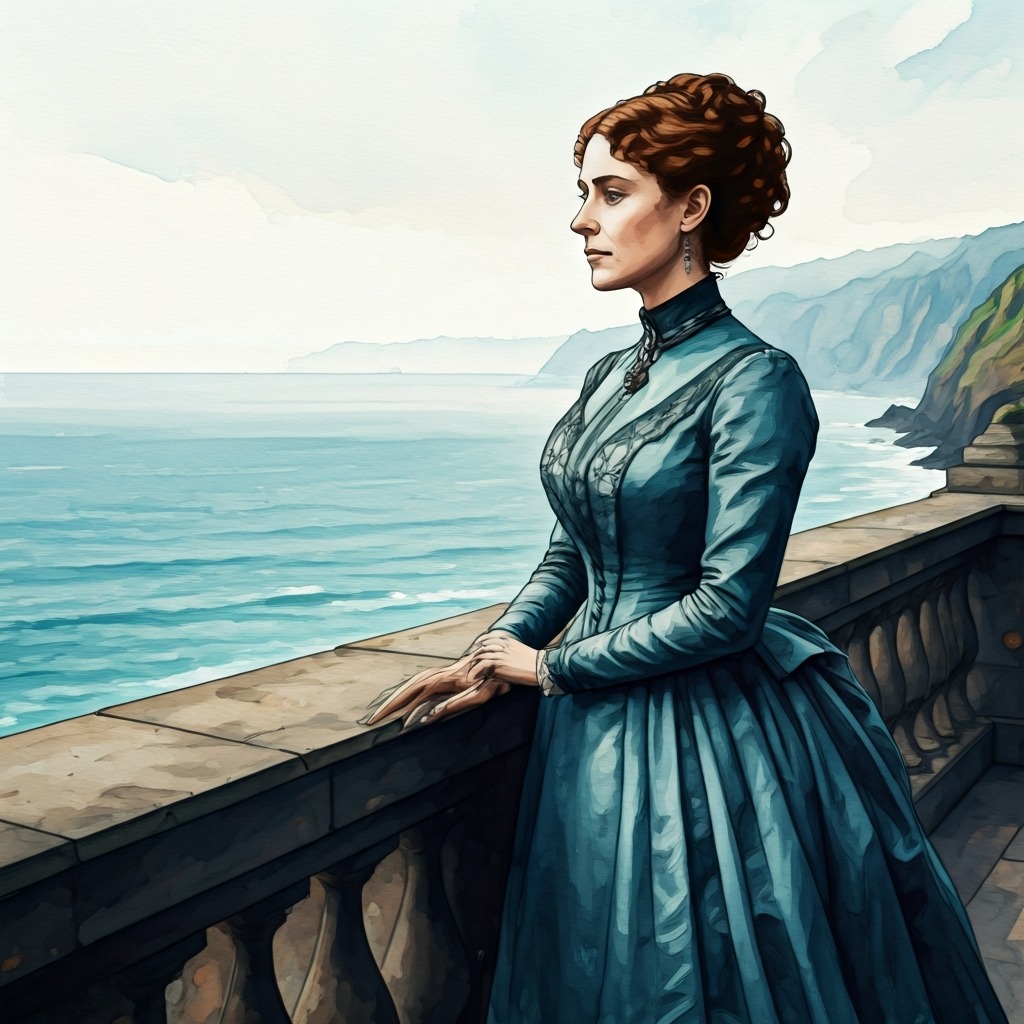
Tragically, the fragile health that had once exiled her would ultimately claim her life. Plagued by tuberculosis, Sarah traveled to the balmy shores of Madeira, Portugal, in a desperate bid for recovery. She died there in 1880, at the tragically young age of 37.
History often attempts to frame Sarah Forbes Bonetta as a passive, rescued soul—a prop in Victorian propaganda. But the truth is far more riveting. Stripped of her family, her name, and her homeland, she navigated the treacherous, rigid structures of 19th-century race, class, and empire with unmatched intellect and extraordinary grace. She was never just a survivor; she was a queen in her own right.