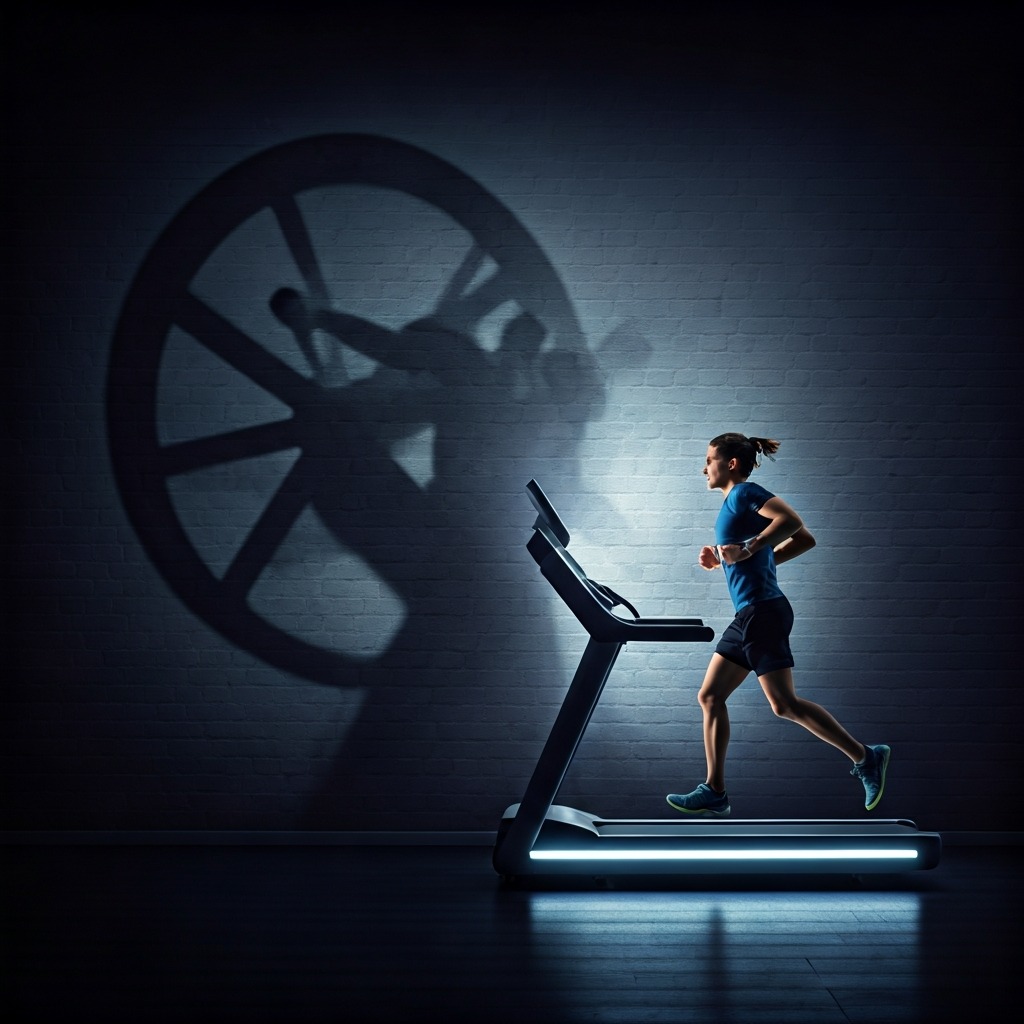
Walk into any modern fitness center, and you will hear it: the synchronized, rhythmic thud of running shoes against rubber. We pay exorbitant monthly fees to sweat, gasp, and suffer on these sleek, motorized belts in the pursuit of wellness. But beneath the neon lights and curated workout playlists lies a dark, blood-soaked lineage. If you knew the grueling history of the machine beneath your feet, you might never step onto one again.
The Engineer and the Idle Hands
Let us rewind to 1818. The English air is thick with coal smoke, and the nation’s prisons are overflowing with the desperate and the damned. Enter Sir William Cubitt, an English engineer and the pragmatic son of a miller.
While visiting the Bury St Edmunds gaol, Cubitt was struck by a sight that appalled him. It wasn’t the squalor, the disease, or the crushing despair of the inmates that offended his sensibilities—it was the fact that the prisoners were simply sitting around. To the Victorian mind, idle hands weren’t just the devil’s workshop; they were an engineering flaw. Cubitt decided these convicts required a dose of productive agony. To solve the “problem” of idle prisoners, the “treadwheel” was born.
The Endless Staircase to Nowhere
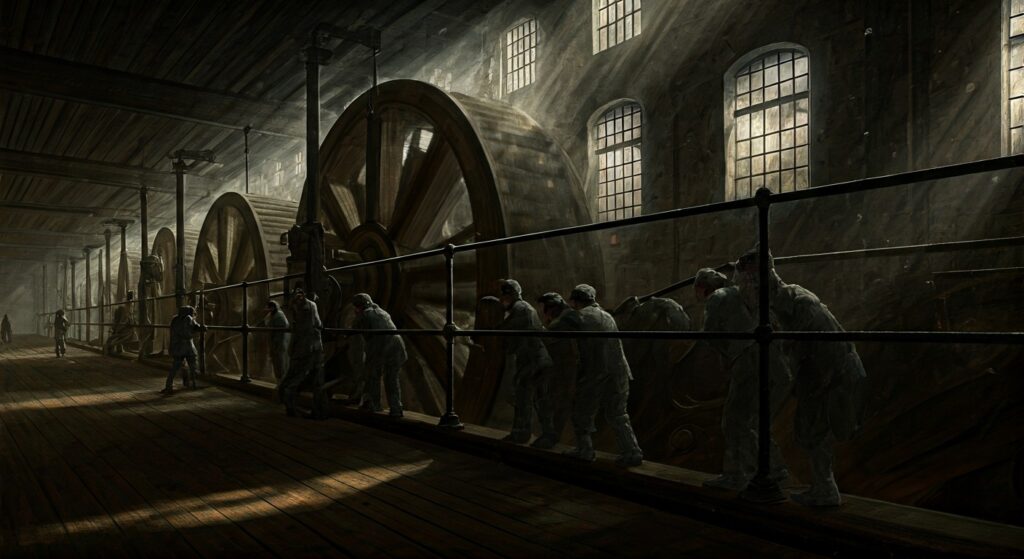
Cubitt’s original invention bore little resemblance to the flat, rubbery conveyor belts of today. It was a colossal, rotating wooden cylinder fitted with exterior steps, resembling a giant, sinister paddlewheel.
Prisoners were forced to grip a wooden bar suspended above their heads and step continuously just to keep from falling off. It was an endless, grueling staircase to nowhere. As the men climbed, their agonizing motion turned heavy subterranean gears that ground corn, pumped water, or powered mills. It was through this literal grinding of grain that the device earned its enduring name: the treadmill.
Climbing Everest on an Empty Stomach
The physical toll of the treadwheel was catastrophic. Prisoners were forced to endure up to six or more hours of continuous, grueling climbing every single day. To put that into perspective, these malnourished inmates were ascending the equivalent of 5,000 to 14,000 vertical feet daily—roughly comparable to hiking halfway up Mount Everest.
Now imagine executing that monumental physical feat on a daily diet of stale bread, watery gruel, and Victorian despair.
This extreme exertion, combined with horrific prison nutrition, led to widespread physical degradation, severe joint injuries, and, in many cases, death. Even the brilliant playwright Oscar Wilde was broken upon this wheel, subjected to its mind-numbing horror during his imprisonment in Reading Gaol. The machine cared nothing for genius; it only demanded sweat and suffering.
From Cruel Punishment to Cardiac Care
By the twilight of the 19th century, the cultural tide finally turned. Growing humanitarian movements exposed the treadwheel for what it truly was: an instrument of torture. Realizing that breaking human beings on a giant grain-grinder was a stain on society, the United Kingdom passed the Prison Act of 1898, officially banning the treadmill as an excessively cruel and unusual punishment.
The dreaded machine vanished into the shadows of history—but the beast was only sleeping.
The concept lay dormant until 1952, when Dr. Robert Bruce and Wayne Quinton at the University of Washington dusted off the blueprints. Stripping away its punitive origins, they repurposed the treadmill as a medical diagnostic tool to monitor cardiac health and stress-test the human heart.
The Ultimate Historical Irony
The final, bizarre twist in this evolution arrived in 1968. Mechanical engineer William Staub designed the PaceMaster 600, the very first affordable home treadmill. In one fell swoop, he transformed a Victorian instrument of torture into a global symbol of health, vitality, and self-improvement.
Today, the treadmill is a billion-dollar industry, a staple of modern life. But the ghosts of its past remain baked into its design. The next time you find yourself at the gym, staring at the digital timer and gasping for breath during the final ten minutes of your run, just remember: your suffering is historically accurate.