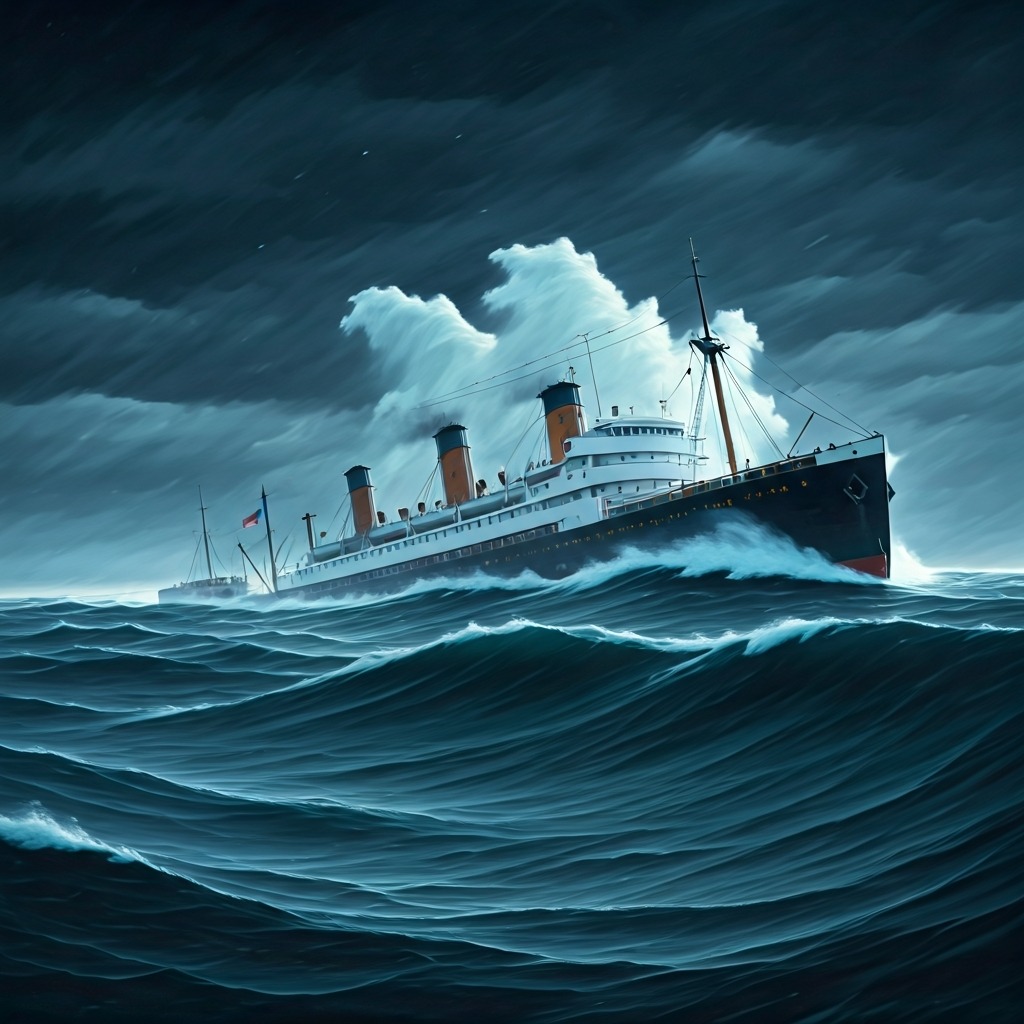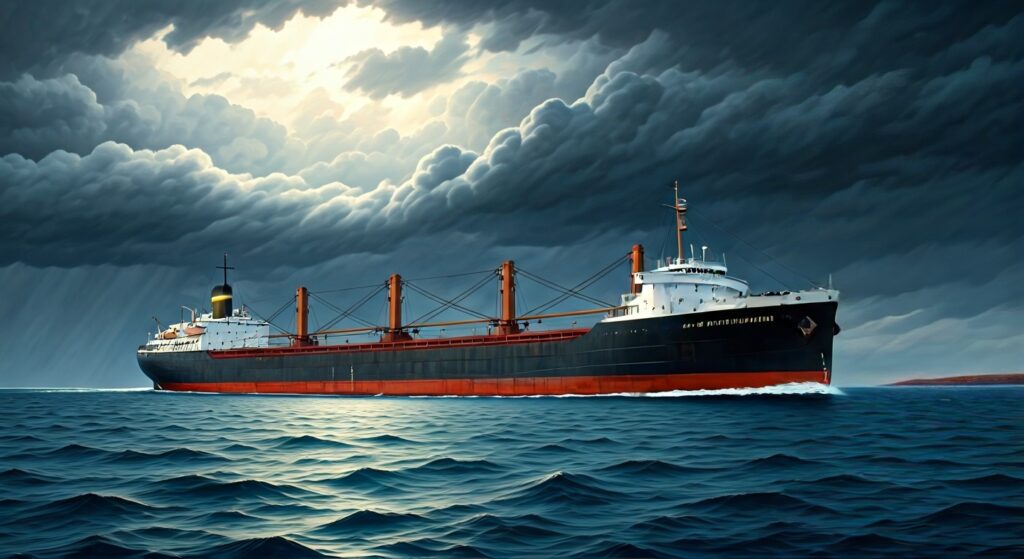
November on the Great Lakes is a death sentence for the unprepared. But the SS Edmund Fitzgerald wasn’t just any ship. She was the undisputed queen of the inland seas, a massive feat of engineering built to conquer the most unpredictable waters on earth. Yet, on a freezing night in 1975, she vanished into the black waters without a single cry for help.
The Pride of the Inland Seas
Launched in 1958, the Fitzgerald was a 729-foot steel leviathan, the largest ship on North America’s Great Lakes. For seventeen years, the “Mighty Fitz” held an unblemished record. On November 9, 1975, under the command of veteran Captain Ernest M. McSorley, she departed Superior, Wisconsin. Deep in her belly sat a staggering cargo: 26,116 tons of iron ore bound for Detroit. The weather was a brisk, gray autumn day. En route, the Fitzgerald fell in line with a second freighter, the SS Arthur M. Anderson. Together, they cut through the dark water. But Lake Superior was about to unleash hell.
Into the Teeth of a Hurricane
By November 10, the barometric pressure plummeted. The two freighters were suddenly trapped in a hurricane-force winter storm. Blinding snow squalls reduced visibility to zero. Roaring winds whipped the freezing water into monstrous, 35-foot waves. Ice coated the pitching steel decks as the crews stared up at walls of black water taller than a three-story building.
As the storm’s fury peaked, Captain McSorley radioed the Anderson with chilling news. The Fitzgerald was taking a brutal beating. She had lost two vent covers, was actively taking on water, and had developed a dangerous list. Desperate, the two captains altered course, seeking the relative shelter of the Canadian coast near Whitefish Bay. Through the violent swells, the Anderson tracked the wounded titan on radar. The Mighty Fitz was bleeding, but she was still pushing forward.
“We Are Holding Our Own”
At approximately 7:10 PM, the radio crackled in the wheelhouse of the Anderson. Captain Bernie Cooper checked in on the crippled freighter ahead of him.
Captain McSorley’s voice came back through the static: “We are holding our own.”
It was the calm, measured assessment of a man who had spent his life battling the water. It was also the last time anyone would ever hear from the Edmund Fitzgerald. Shortly after that transmission, a blinding snow squall wiped out the Anderson’s radar. When the screen finally cleared minutes later, the radar contact for the 729-foot titan was simply gone. There was no desperate Mayday. No distress flare lighting up the dark sky. In the span of just a few minutes, the largest ship on the lake had vanished into the freezing abyss.
The Three Sisters and the Silent Deep
How does a massive freighter simply disappear between radar sweeps? When the wreckage was finally located, it offered more chilling questions than answers. The Fitzgerald was found resting in two pieces at a depth of 530 feet, just 17 miles from the safety of Whitefish Bay. The violently mangled steel hull pointed to a catastrophic, instantaneous end. All 29 crew members were lost to the lake.
Decades later, experts and armchair historians alike still fiercely debate what dragged the ship down. Did the massive waves cause the hatch covers to collapse under the weight of the water? Did the Fitzgerald unknowingly scrape an uncharted reef, suffering fatal, unseen damage to her hull?
Or was she hunted by the “Three Sisters”? This terrifying maritime nightmare occurs when a sequence of three massive, rogue waves strike a ship in rapid succession. The first wave swamps the deck, the second compounds the weight before the water can drain, and the third buries the ship alive.
The tragedy sent shockwaves through the maritime industry, leading to sweeping safety overhauls and forever immortalizing the 29 men in Gordon Lightfoot’s haunting ballad. Yet, the exact sequence of events remains locked in the freezing depths. Lake Superior is famous for never giving up her dead, and she is keeping the secret of the Mighty Fitz forever.