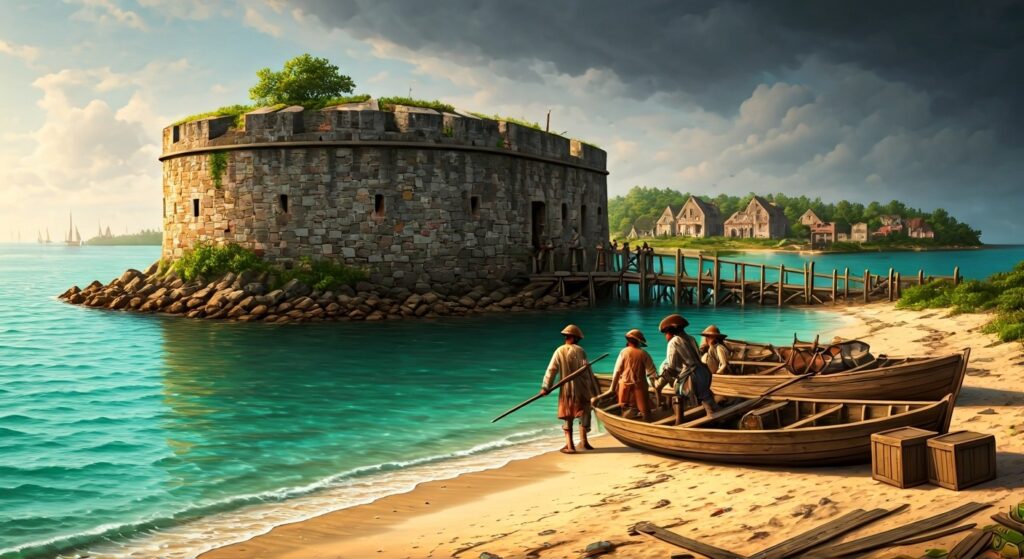
In the early 1700s, the harbor of Nassau lay dead. Following devastating Franco-Spanish raids, British authorities had practically abandoned the Bahamian island of New Providence. The governor had fled, the stone forts were crumbling into the turquoise sea, and the port was wrapped in an eerie, waiting silence.
But nature abhors a vacuum—and so do heavily armed men with a sudden lack of supervision.
By 1713, the Treaty of Utrecht had ended the War of the Spanish Succession, leaving thousands of British privateers—essentially state-sponsored mercenaries—abruptly unemployed. The Crown no longer needed them to harass Spanish galleons. Stranded, broke, and possessing a highly violent set of maritime skills, these outcasts converged on the ghost town of Nassau. Led by ruthless visionaries like Benjamin Hornigold and Thomas Barrow, they didn’t just set up a black market.
They declared themselves an independent republic.
The Terrifying Threat of Equality
This wasn’t merely a chaotic den of thieves; it was a terrifyingly functional society. What makes the Republic of Pirates historically mesmerizing is that it was arguably one of the most egalitarian and democratic societies on earth at the time.
For a sailor in the British Royal Navy or the merchant fleets, life was a floating hell. Men were subjected to brutal, autocratic hierarchies, starvation rations, and the constant, looming threat of the lash. But in Nassau, the pirates flipped the script. They operated under a strict, revolutionary set of rules known as the Pirate Code.
Every crew member had a vote. They democratically elected their captains, and more importantly, they could vote them out at any time if the commander proved cowardly or abusive. To further prevent tyranny, power was decentralized through the role of the quartermaster, who represented the crew’s interests, managed the daily affairs of the ship, and distributed the plunder.
And the pay? It was wildly equitable. While a Royal Navy captain might pocket the vast majority of a captured prize, a pirate captain typically received only one-and-a-half to two shares of the loot. Every single crew member received one full share. They even instituted an early form of workers’ compensation: if a pirate lost a limb or an eye in battle, the Code guaranteed a substantial payout from the ship’s treasury.
The Flying Gang and the Shadows of Freedom
This radical sanctuary birthed the Golden Age of Piracy and its most notorious syndicate: the “Flying Gang.” The Republic was surprisingly inclusive, offering equal standing to fierce female pirates like Anne Bonny and Mary Read. It also offered freedom to escaped African slaves and marginalized laborers, who eventually made up a significant portion of pirate crews.
However, historical reality is rarely pure, and the shadows in Nassau were dark. While modern pop culture loves to romanticize these pirates as proto-socialist revolutionaries striking back against imperial exploitation, they were still violent criminals. They disrupted vital global trade routes, and while they freed many slaves, some pirate captains still engaged in the slave trade when it proved profitable.
Still, to the empires of Europe, Nassau was a nightmare. It wasn’t just the economic devastation of lost cargo that terrified the British Crown; it was the ideological threat. A functioning, democratic underclass proving they didn’t need kings or lords to survive was a spark that could ignite a global powder keg.
The King’s Poisoned Apple
The British Empire resolved to crush the Republic. In 1718, King George I appointed a former privateer named Woodes Rogers as the Royal Governor of the Bahamas.
Rogers didn’t just sail into Nassau with heavily armed naval warships; he brought a psychological weapon. He carried the “King’s Pardon” (the Act of Grace), offering full amnesty to any pirate who surrendered.
It was a brilliant, devastating move. How do you kill a rebellion? You don’t bomb it; you buy it out. The Republic didn’t fall to cannon fire—it fractured from within. Exhausted founders like Benjamin Hornigold accepted the pardon and immediately turned traitor, becoming pirate hunters for the Crown to hunt down their former brethren. The infamous Blackbeard wasn’t even there to witness the collapse; he had already read the shifting winds and relocated his operations to the Carolinas well before Rogers arrived.
Fire in the Harbor
But hardliners like Charles Vane refused to bow. When Rogers’ warships blockaded the harbor, Vane knew he was trapped. Instead of raising a white flag, however, he orchestrated a final, spectacular act of defiance.
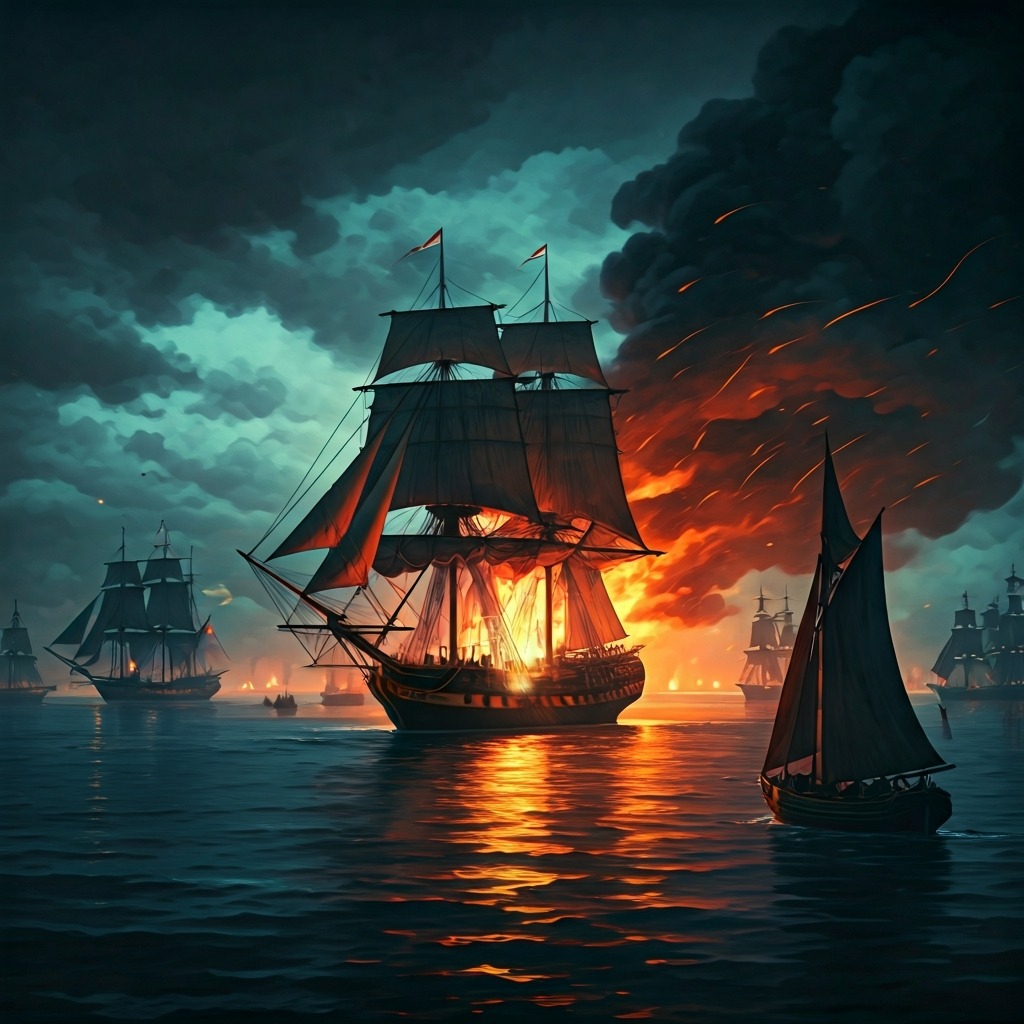
Vane loaded a captured vessel to the brim with explosives, set it ablaze, and sent the floating inferno sailing directly into the British fleet.
In the ensuing chaos, as the Royal Navy scrambled to avoid destruction, Vane and his crew slipped away into the night, firing their cannons at the new governor as they vanished into the dark waters of the Caribbean.
Within a year, the Republic of Pirates was fully dismantled. The forts were rebuilt, the gallows were erected, and the golden age began to bleed out. But for a brief, shining decade, a band of outcasts looked at the brutal world that had discarded them, built their own society from the timber of stolen ships, and proved that even the most terrifying empires could be made to tremble.